Corning (GLW -0.02%) has been one of America's top glass manufacturers since it was founded in 1851. In fact, the company was even the main supplier of glass for Thomas Edison's original lightbulb in 1880. Today, it makes the glass for all of Apple's iPhones.
But Corning's biggest opportunity now lies in manufacturing fiber-optic cables for data centers, which accelerate processing speeds in artificial intelligence (AI) workloads. Amazon and Meta Platforms are two of Corning's top customers in this space, with billions of dollars' worth of long-term deals between them.
Corning stock has exploded higher by more than 120% over the last 12 months, obliterating the 8% return in Nvidia, which is the AI industry's hardware king. Here's why it could go higher over the long term.

Image source: Getty Images.
Fiber is becoming essential for AI connectivity
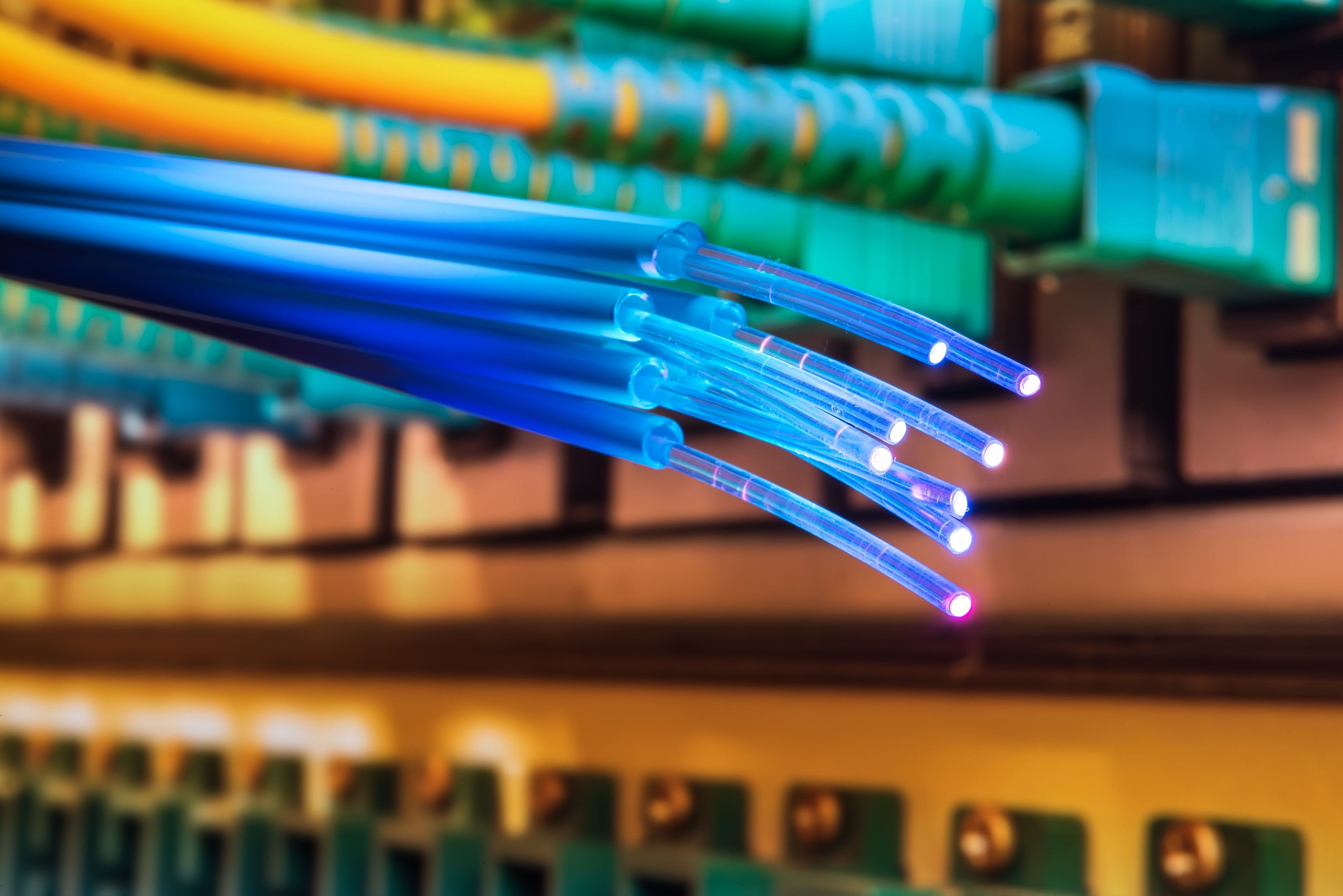
Nvidia's NVLink 72 data center rack includes 72 graphics processing units (GPUs), 36 central processing units (CPUs), and several networking components to create the ultimate AI hardware system. All of this is connected using two miles of copper cables, but there is an accelerating shift toward fiber-optic cables instead, because they can transmit data faster and more efficiently.
Corning recently developed a new product called Multicore Fiber (MCF), which packs four cores into a single 125-micron strand of optical fiber. This allows data center operators to achieve the same performance as a single-core solution with 75% fewer cables, which will be extremely useful as GPU clusters grow larger and more complex.
In fact, Corning says once clusters grow to more than 130,000 GPUs, they will require an additional optical layer, which translates to 50% more fiber content. This is where products like MCF will help data center operators reduce costs and maximize processing speeds.
In January, Corning announced a deal to sell $6 billion worth of its optical connectivity solutions to Meta Platforms over the next few years, and a similar deal with Amazon followed in June. Corning plans to expand its optical connectivity manufacturing capacity tenfold to help fulfill these deals (and others that are in the pipeline), and it has partnered with Nvidia to help unlock the necessary funding and technological expertise to do so.
Corning's optical communications revenue is growing rapidly
Corning generated $4.7 billion in total core revenue during the second quarter of 2026 (ended June 30), which was a 17% increase from the year-ago period. Its optical communications business accounted for $2.1 billion of that revenue, and it grew at a much faster rate of 32%. Zooming in even further, the company says AI-related sales, specifically, nearly doubled.
The soaring demand for data center fiber is giving Corning the power to dictate prices, which is why the net income generated by its optical communications business soared by 77% year over year to $438 million during the quarter. It accounted for almost two-thirds of the company's total core net income of $680 million, which highlights how important this part of the business has become to the bottom line.

NYSE: GLW
Key Data Points
Looking at the bigger picture, Corning now expects to have around $20 billion in annual run rate revenue overall by the end of 2026, and it believes it can double that figure to $40 billion by 2030.
Corning stock isn't cheap, but it could deliver more upside over the long term
Based on Corning's trailing-12-month adjusted (non-GAAP) earnings of $2.87 per share, its stock is trading at a price-to-earnings (P/E) ratio of 44.5. It's significantly more expensive than Nvidia, which has a P/E ratio of 30, so I would normally say further upside from here could be limited.
However, Wall Street thinks Corning could grow its earnings to $4.28 per share in 2027 (according to Yahoo! Finance), placing its stock at a forward P/E ratio of just 29.9. Plus, if the company doubles its revenue by 2030 in line with management's forecast, there could be a similar increase in its earnings, potentially making the stock's forward P/E even cheaper.
Simply put, investors who buy Corning stock today in the hope of generating a strong return over the next few months might be left disappointed, whereas those who are willing to hold it until 2030 give themselves a much better chance of making money. However, Corning will have to execute flawlessly to turn its deal pipeline into revenue and earnings, so investors should closely monitor the company's progress with each quarterly report from here.