When I think about where Qualcomm (QCOM -2.06%) could be in five years, I am really thinking about what kind of company it is becoming, not just how fast earnings grow quarter to quarter. If you own the shares, you're betting that Qualcomm will remain one of the core engines of edge AI, in cars, PCs, robots, and connected devices that never touch a data center rack.
Qualcomm's CEO has been clear that whoever wins edge AI will have a claim on the entire AI opportunity, because so much of what we do every day happens on devices that sit in our pockets, on our desks, or in our driveways. The company is taking that seriously, pushing AI into smartphones, wearables, industrial sensors, and home devices through its Snapdragon platforms and on-device AI capabilities.
Instead of chasing the latest training cluster in the cloud, Qualcomm is focused on running models locally, translating speech, enhancing photos, and making experiences feel real-time without hitting a remote server every time. That kind of role is easy to underestimate, yet it is exactly how a "boring" chip company ends up embedded in millions of daily interactions.

NASDAQ: QCOM
Key Data Points
Cars as rolling computers
The shift in autos might be the most important part of the story. The company's Snapdragon Digital Chassis is a full platform for software-defined vehicles, combining connectivity, digital cockpit, driver assistance, and cloud services into one architecture that carmakers can reuse across models. Qualcomm already works with Volkswagen Group, BMW, Mercedes-Benz, Toyota Motor, and major Chinese manufacturers, and its automotive design win pipeline has grown to about $45 billion in future business.
The idea is simple: Every new car becomes a rolling computer that can be updated, personalized, and monetized over time, and Qualcomm is the set of building blocks that makes that possible. If that vision plays out, the stock in five years will reflect a much larger, more stable automotive business than most investors are used to associating with a "phone chip" name.
PCs and devices in the AI era
On the PC side, Qualcomm is pushing hard into Windows laptops with its Snapdragon X Elite and X2 Elite processors, which pair custom Oryon CPUs with powerful NPUs and long battery life to create Copilot+ class AI PCs. In short, these chips are designed to run generative models and assistant-style features right on the device, while keeping fans quiet and battery life measured in days instead of hours.
In early 2026, the company added the Snapdragon X2 Plus for more affordable laptops and showed off a humanoid robotics initiative built on similar technology, signaling that its ambitions extend beyond phones into entire categories of intelligent machines. If Qualcomm ends up powering a big slice of AI PCs and robots, investors will have to rethink how they value its role in personal computing.

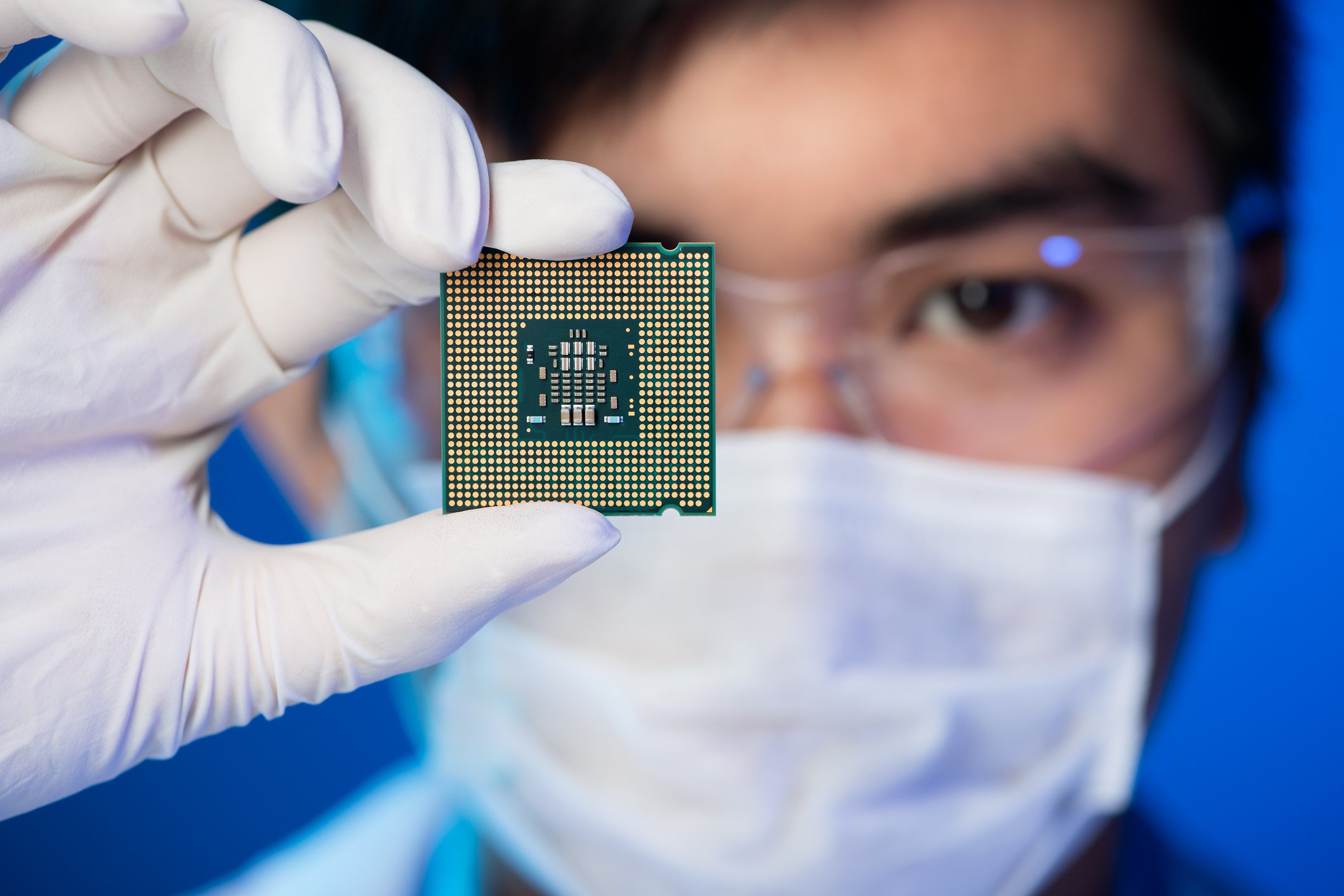
Image source: Getty Images.
Software, robots, and a five-year view
Qualcomm is also investing in software. It bought AI tooling company Modular and has been building out an AI software platform that promises to make it easier for developers to get models running on Snapdragon hardware without wrestling with low-level code. That matters, because the more developers see Qualcomm as a full-stack partner, not just a chip vendor, the stickier its ecosystem becomes across phones, cars, and PCs.
Put all of this together, and you have a company that's steadily trading some dependence on handset royalties for a broader role as the connective tissue of edge AI. In five years, if Qualcomm keeps winning automotive designs, becomes a default choice in AI laptops, and proves it can make real money from its software and robotics pushes, I expect the stock to be roughly two to three times higher than it is today.
Also, the company looks attractive because its stock has fallen some this year while offering a roughly 2.5% dividend yield and strong growth potential from expanding into AI data centers, automotive, and other non-handset markets.