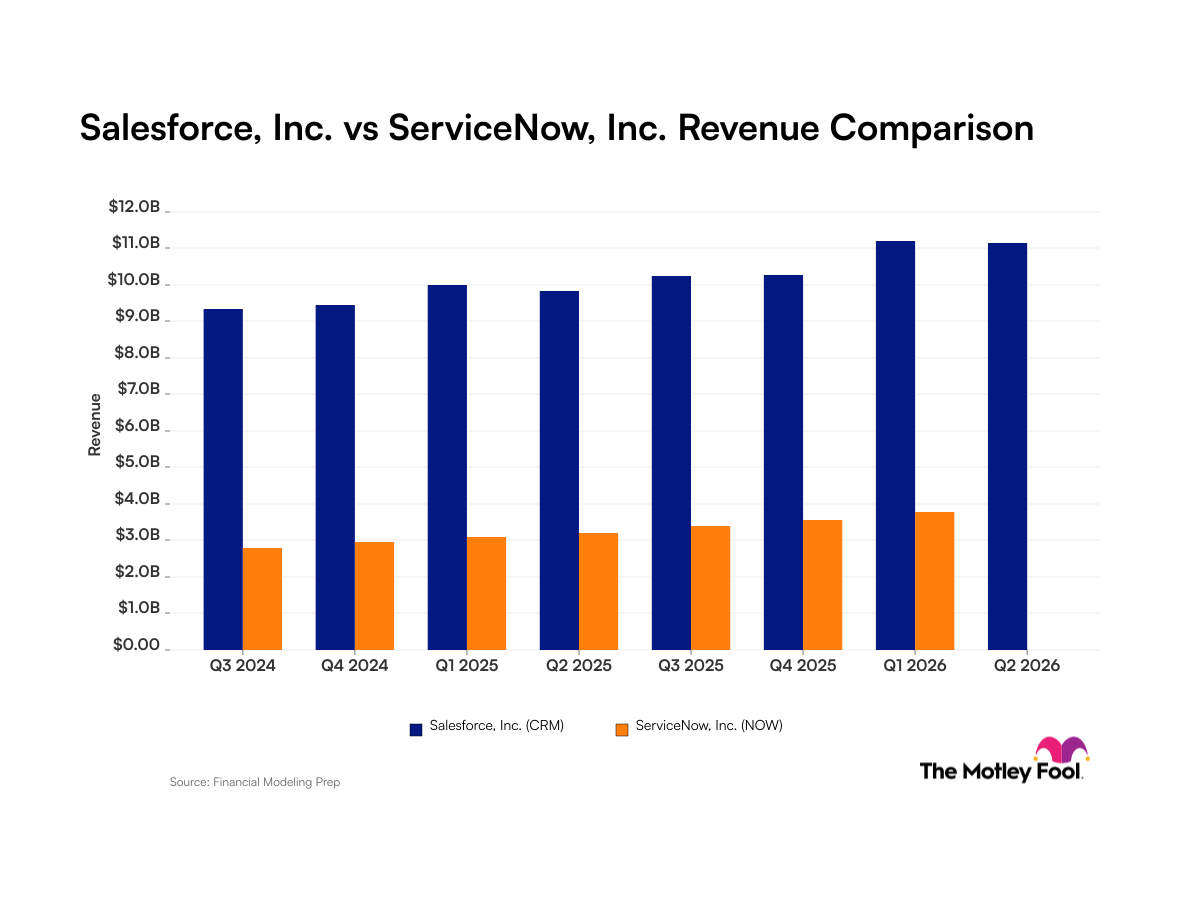
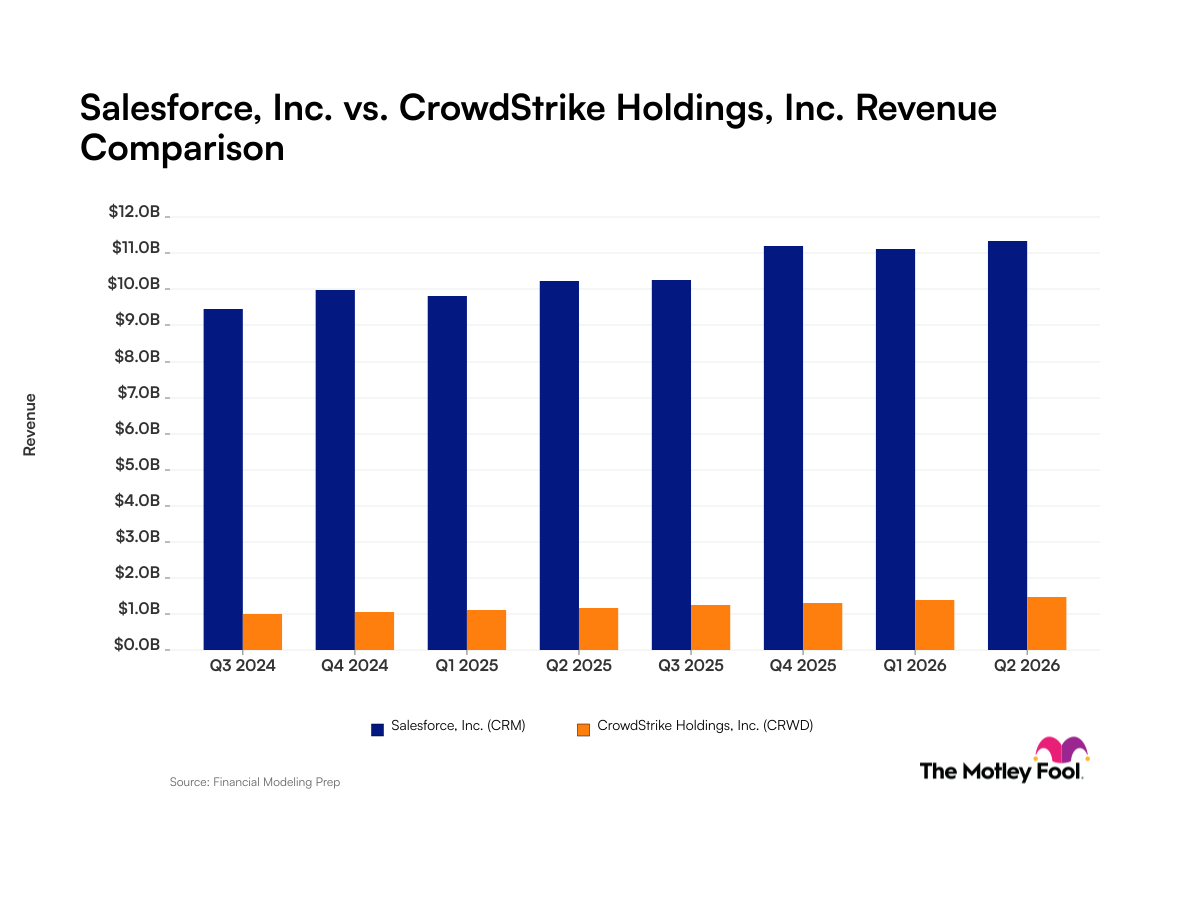
Few companies have been hit as hard by the "SaaSpocalypse" as Salesforce (CRM -0.27%). The company that practically invented the software-as-a-service (SaaS) category is seen as a potentially big loser in the age of generative AI, which could help companies use "vibe coding" to create custom software to do the same sorts of things they previously paid SaaS companies to handle. After AI tools debuted that made that threat look more acute, Salesforce shares fell sharply. By mid-2026, they were down nearly 60% from their high at the start of 2025.
Salesforce CEO Marc Benioff agrees that AI will have a big impact on his company, but he thinks it'll be for the positive. That's why he had the company take on a huge amount of debt to buy the beaten-down stock. The $25 billion in accelerated repurchases, combined with normal repurchases funded by cash flow, brought the total to a record $27 billion in buybacks during the first quarter.
That's a huge bet on the company's future. Here's why it makes sense.
Image source: Getty Images.
Why would Salesforce take on debt?
There are two ways to fund a business beyond using its revenues and earnings: issuing debt or selling new equity. Debt has a concrete cost -- whatever the interest payment is on the bonds the company issues. While some might think that issuing new shares of stock incurs little cost, it can be extremely expensive in the long run. To optimize the funding model, a business should issue stock when its shares are selling at expensive valuations and issue debt when interest rates make that cheap.
Debt isn't exactly cheap right now. The bonds Salesforce issued have interest rates ranging from 4.5% to 6.7%. But Salesforce's stock is arguably even cheaper, or at least, Salesforce's management would say so. To justify issuing debt at a 6.7% rate, management must estimate that the cost of equity is well above that level.
That's a good bet. Salesforce is now trading at a historically low valuation of just 14 times forward earnings. At that level, the market is already pricing in years of sluggish revenue growth before a potential sales contraction. Meanwhile, management is guiding for revenue acceleration in the back half of this year, fueled by its artificial intelligence services: Agentforce and Data 360. Both work together to enable businesses to create custom AI agents within the Salesforce software ecosystem.
CRM Salesforce
NYSE · As of 4:00 PM ET 10/21/26

Combined annualized recurring revenue for Agentforce and Data 360 doubled year over year last quarter, and continues to show strong momentum. The number of tasks completed by an AI agent within Salesforce's software accelerated sequentially last quarter.
Even if revenue growth slows back down, the company should be able to execute on its efforts to expand its operating margin, driving strong earnings-per-share growth. As Agentforce and Data 360 continue to scale and management focuses on keeping overhead low, this should push the business toward its long-term goal of an adjusted operating margin of around 40% by fiscal 2030, up from about 34% today.
The company's higher debt load will weigh on its free cash flow for some years as management now has to pay more interest. But given the cheap cost of equity, front-loading its $50 billion of share repurchases seemed like a smart move. It's impossible to know when the market will properly reflect the value of Salesforce in the price of its shares. For now, buying the stock seems like a great opportunity for patient investors.