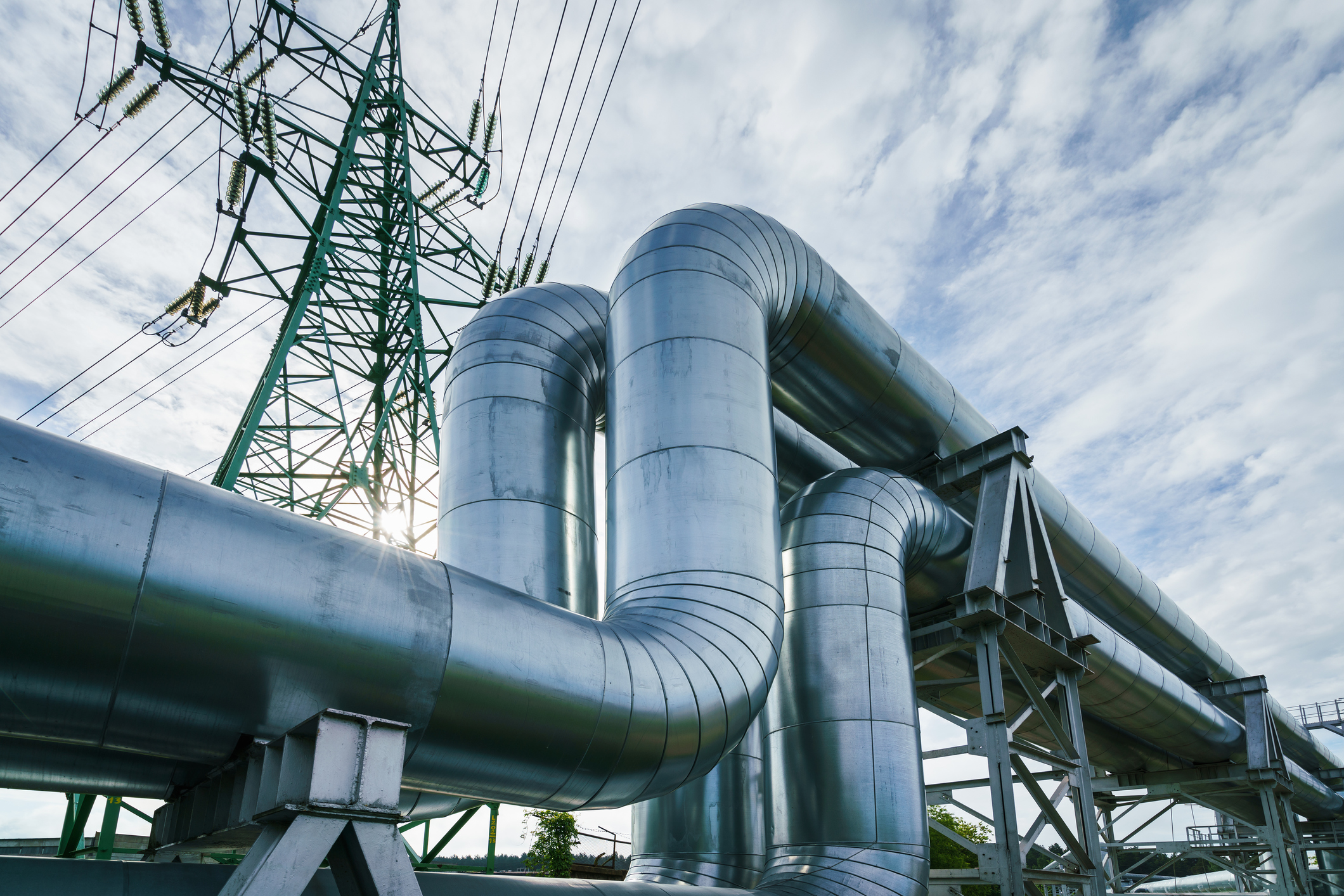
Natural gas remains one of the most important fuels in the global energy system. It plays a critical role in power generation, home heating, and industrial use, and is widely viewed as a bridge fuel as the world transitions toward lower-carbon energy sources.
While natural gas is abundant and versatile, it relies heavily on infrastructure. In its gaseous form, it must move through pipelines, and when shipped overseas, it must first be converted into liquefied natural gas (LNG). That makes midstream and LNG infrastructure essential to the industry.
For investors, this structure matters. Infrastructure-focused natural gas companies tend to be less exposed to commodity price swings and often generate stable, fee-based cash flow -- a “toll booth” model that supports disciplined capital allocation and reliable returns.
Top natural gas stocks to consider
Some of the best natural gas stocks for investors to consider buying include:
| Name and ticker | Market cap | Dividend yield | Industry |
|---|---|---|---|
| Cheniere Energy (NYSE:LNG) | $62.4 billion | 0.71% | Oil, Gas and Consumable Fuels |
| EQT (NYSE:EQT) | $42.2 billion | 0.95% | Oil, Gas and Consumable Fuels |
| Kinder Morgan (NYSE:KMI) | $75.7 billion | 3.44% | Oil, Gas and Consumable Fuels |
1. Cheniere Energy

NYSE: LNG
Key Data Points
2. EQT Corporation

NYSE: EQT
Key Data Points
3. Kinder Morgan

NYSE: KMI
Key Data Points
How to choose natural gas stocks
The International Energy Agency (IEA) projects a 1% annual rise in natural gas demand from 2023 to 2035 in its Stated Policies Scenario (STEPS).
Identifying the best natural gas stocks to invest in involves assessing the key parameters that drive long-term growth. Breaking it down into a discussion of the three categories noted above, the following considerations apply:
- Upstream gas companies must demonstrate that they have low production costs and can grow their reserves over time, since the value in most upstream companies lies in their reserves and the ability to produce from them profitably.
- Midstream gas companies often have long-term contracts with customers, providing them with a reliable stream of income. The key factors here are their customer relationships, ability to develop infrastructure (such as export terminals), and the long-term demand for gas volumes.
- Downstream gas companies are often highly regulated and highly stable. Investors need to keep an eye on interest rates, as downstream businesses typically carry significant debt and are often purchased for their dividend yields. As a result, they can underperform when rates rise.
Why invest in natural gas stocks?
Gas offers a non-intermittent, consistent source of energy to power AI data centers. Until investors can be confident that carbon-free alternatives like solar, wind, or nuclear power can provide enough reliable power, gas is likely to remain a major part of the energy mix. The U.S. also has an opportunity to export LNG as Europe seeks to diversify away from Russian gas.
In addition, reliable contracts, cash flow, and, ultimately, dividend payments are attractive to passive income-seeking investors.
How to invest in natural gas stocks
- Open your brokerage app: Log in to your brokerage account where you handle your investments. If you don't have one yet, take a look at our favorite brokers and trading platforms to find the right one for you.
- Search for the stock: Enter the ticker or company name into the search bar to bring up the stock's trading page.
- Decide how many shares to buy: Consider your investment goals and how much of your portfolio you want to allocate to this stock.
- Select order type: Choose between a market order to buy at the current price or a limit order to specify the maximum price you're willing to pay.
- Submit your order: Confirm the details and submit your buy order.
- Review your purchase: Check your portfolio to ensure your order was filled as expected and adjust your investment strategy accordingly.
Future outlook for natural gas stocks
The medium-term outlook is very positive, with booming demand for gas turbines to power data centers supporting the natural gas investment thesis. In addition, the current administration is actively encouraging and backing LNG exports to reduce trade deficits.
Thinking longer term, ongoing cost reductions and the adoption of renewable energy may challenge the gas industry's growth outlook by making current capacity expansions unproductive.
Related investing topics
FAQ
Natural gas stocks FAQ
About the Author
Lee Samaha has no position in any of the stocks mentioned. The Motley Fool has positions in and recommends Cheniere Energy, Chevron, EQT, and Kinder Morgan. The Motley Fool has a disclosure policy.