Wide-moat stocks are companies with strong, sustainable advantages that protect them from competition. Their competitive advantages ensure long-term profitability, making these companies sound investments.
There are many ways for a business to build a wide moat. Some wide-moat companies have recognizable brands that attract customers or allow them to charge premium prices. A company can build an economic moat if it's able to reduce its fixed costs lower than those of its competitors. Regulatory barriers can also provide a moat by preventing other companies from entering a market.

Best wide-moat stocks in 2026
Here are the five best wide-moat stocks and the competitive advantages they have.
| Name and ticker | Market cap | Dividend yield | Industry |
|---|---|---|---|
| Visa (NYSE:V) | $623.7 billion | 0.75% | Diversified Financial Services |
| Adobe (NASDAQ:ADBE) | $123.6 billion | 0.00% | Software |
| Fair Isaac (NYSE:FICO) | $36.6 billion | 0.00% | Software |
| ASML (NASDAQ:ASML) | $538.4 billion | 0.53% | Semiconductors and Semiconductor Equipment |
| Costco Wholesale (NASDAQ:COST) | $436.4 billion | 0.51% | Food and Staples Retailing |
1. Visa
Here's a quick way to get an idea of the economic moat that Visa (V -0.06%) has. Grab your wallet, pull out your credit and debit cards, and see how many have the word Visa printed on them.

NYSE: V
Key Data Points
Visa isn't the only payment network, but it's the largest and most widely accepted, along with rival Mastercard (MA -1.52%). There are 4.9 billion Visa payment cards worldwide, enough for more than half the population of the planet to carry one.
The key to Visa's business is its worldwide acceptance. In its 2025 fiscal year, Visa processed 257.5 billion transactions, resulting in $14.2 trillion in payments volume. Visa gets a percentage of every transaction, and in 2025, it made $20.1 billion in net income.
2. Adobe
Software company Adobe (ADBE +0.45%) has an impressive portfolio of products for creative design, document management, and marketing. Some of its most notable products include:
- Photoshop for image editing and design
- Premier Pro for video editing and creation
- Adobe Acrobat for viewing and editing PDFs
- Adobe Acrobat Sign for e-signatures

NASDAQ: ADBE
Key Data Points
These are all widely used and highly recognizable products. Photoshop may not be the only image editing software, but it's the first one that comes to mind for most people. Adobe is also constantly innovating. In recent years, it has been incorporating artificial intelligence (AI) tools into its product line.
For its 2025 fiscal year, Adobe reported $7.1 billion in net income, a 28% increase from the prior year. With the strength of its products and its AI upgrades, Adobe still has plenty of room to grow.
3. Fair Isaac Corporation
Fair Isaac Corporation (FICO -0.79%), or FICO for short, is an analytics company that develops credit scoring models. It's the company behind the FICO® Score model, which is the industry standard for lending decisions. While there are other types of credit scores, 90% of top lenders use FICO® Scores.

NYSE: FICO
Key Data Points
FICO charges financial institutions for its credit scores, and it has dozens of different types of scores to serve various markets. There are FICO® Scores for credit card companies, auto lenders, and mortgage lenders. It also has subscription plans that consumers can purchase to stay on top of their credit.
The fact that FICO® Score is the default score option is a significant competitive moat that has helped it increase profits over the years. It reported net income of $651.9 billion in its 2025 fiscal year, a 27% year-over-year increase.
4. ASML
Semiconductors are a vital component of many of the technologies we use daily, including computers and smartphones. ASML (ASML -0.44%) manufactures lithography systems, a key part of semiconductor production. Companies use lithography systems to etch patterns onto the wafers of their semiconductor chips.

NASDAQ: ASML
Key Data Points

NASDAQ: COST
Key Data Points
Costco's negotiating power also comes into play with its payment processing fees. Most major U.S. retailers accept credit cards from all major payment networks. Costco warehouses in the U.S. accept only Visa credit cards. In return for this exclusivity, Costco pays much lower processing fees to Visa than other merchants.
For its 2025 fiscal year, Costco reported $8.1 billion in net income, a 10% increase from what it made in 2024.
How to invest in wide-moat stocks
When you've found a wide-moat company you like, here's how to invest:
- Open your brokerage app: Log in to your brokerage account where you handle your investments.
- Search for the stock: Enter the ticker or company name into the search bar to bring up the stock's trading page.
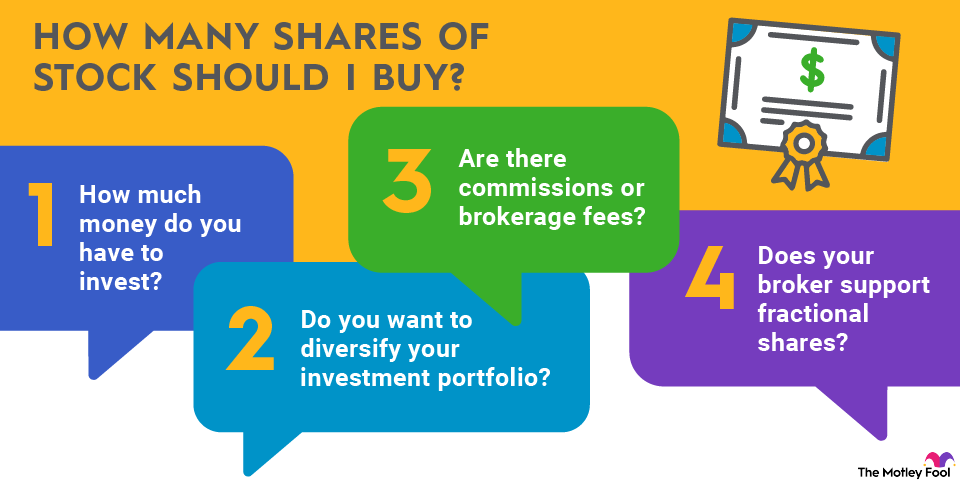
- Decide how many shares to buy: Consider your investment goals and how much of your portfolio you want to allocate to this stock.
- Select order type: Choose between a market order to buy at the current price or a limit order to specify the maximum price you're willing to pay.
- Submit your order: Confirm the details and submit your buy order.
- Review your purchase: Check your portfolio to ensure your order was filled as expected and adjust your investment strategy accordingly.
Characteristics of wide-moat stocks
Here are some of the characteristics often found in wide-moat stocks:
- A dominant market share
- A strong brand with loyal customers
- Year-over-year revenue and net income growth
- High return on equity, ideally at least 15% to 20%
- High gross margin compared to other companies in the same industry
Should I invest in wide-moat stocks?
Wide-moat stocks are some of the most reliable long-term investments. Since these are profitable businesses, they have funds to invest in expansion, which is good for growth. They can also return money to shareholders in the form of dividends or stock buybacks.
These stocks also tend to be resilient during market fluctuations. They're established companies with strong customer bases, which provides them with more protection during economic downturns. They're not immune to a bear market, but they're well equipped to handle it.
Another way to invest in these businesses is through exchange-traded funds (ETFs) with wide-moat stocks. One option is the VanEck Morningstar Wide Moat ETF (MOAT -0.53%), which invests in companies with moats expected to last 20 years or longer.
Whether you go with an ETF or your own hand-picked list of wide-moat stocks, these companies are worth having in your portfolio.
Related investing topics
Future outlook for wide-moat stocks
Wide-moat stocks aren't going anywhere, but now more than ever, companies need to continually innovate to protect their competitive advantages. Technological disruptions are one of the ways companies lose their moats, and AI technology is affecting businesses across every market sector.
All five companies on this list have incorporated AI tools into their operations. For these and other wide-moat businesses, AI can strengthen competitive advantages. For example, Costco uses AI to personalize the member experience and improve operational efficiency.
While a wide moat ideally lasts at least 20 years, that's not guaranteed, especially with AI possibly weakening or eliminating what once seemed like strong moats. Investors in wide-moat stocks should keep an eye out for companies that may lose their moats and others that could take their places.
FAQ
Wide-moat stocks FAQ
About the Author