GE Aerospace (GE +2.66%) is the largest industrials company by market cap, followed by Caterpillar (CAT +0.49%) and RTX (RTX +1.04%). Aerospace and defense companies are well represented at the top of the industrials sector. The top 10 also includes electrical equipment companies.
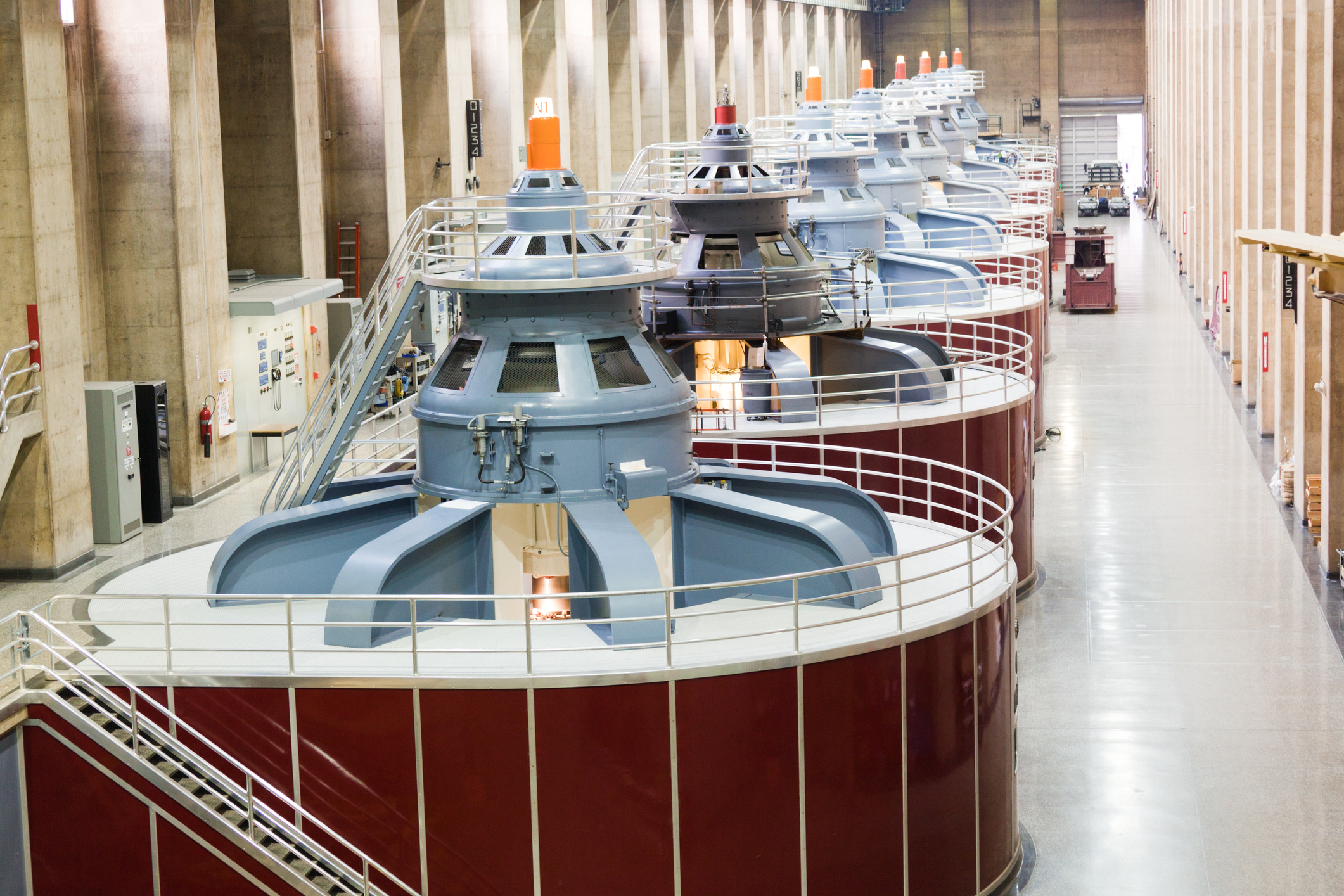
Largest companies by market cap in the industrials sector
(Editor's note: Rankings are as of April 2, 2026.)
| Name and ticker | Market cap | Current price | Industry |
|---|---|---|---|
| Caterpillar (NYSE:CAT) | $333.7 billion | $720.76 | Machinery |
| GE Aerospace (NYSE:GE) | $294.9 billion | $288.63 | Aerospace and Defense |
| RTX (NYSE:RTX) | $263.4 billion | $198.26 | Aerospace and Defense |
| Siemens Aktiengesellschaft (OTC:SIEGY) | $187.7 billion | $123.86 | Industrial Conglomerates |
| Boeing (NYSE:BA) | $163.5 billion | $212.32 | Aerospace and Defense |
| Schneider Electric S.e. (OTC:SBGSF) | $152.0 billion | $278.00 | Electrical Equipment |
| Deere & Company (NYSE:DE) | $155.5 billion | $575.03 | Machinery |
| Airbus SE (OTC:EADSY) | $150.4 billion | $48.13 | Aerospace and Defense |
| Union Pacific (NYSE:UNP) | $145.2 billion | $245.54 | Road and Rail |
| Safran (OTC:SAFRY) | $138.4 billion | $83.30 | Aerospace and Defense |
1. Caterpillar
- Market cap: $335.64 billion (as of April 2)
- Revenue (TTM): $67.6 billion
- Gross profit (TTM): $21.5 billion
- Five-year annualized return: 25.70%
- Year founded: 1925

NYSE: CAT
Key Data Points
Caterpillar is a heavy-equipment company that manufactures construction and mining equipment, off-highway diesel and natural gas engines, industrial gas turbines, and diesel-electric locomotives. Through its global dealer network, Caterpillar does business on every continent. It has also licensed its brand name for a line of clothing and boots, and it provides financing services through Cat Financial.
2. GE Aerospace
- Market cap: $296.57 billion (as of April 2)
- Revenue (TTM): $45.9 billion
- Gross profit (TTM): $16.9 billion
- Five-year annualized return: 34.65%
- Year founded: 1917 (General Electric), 2024 (General Electric Company)

NYSE: GE
Key Data Points
General Electric used to have several divisions, but in 2024, it completed a split into three companies: GE Aerospace, GE Vernova (GEV -0.14%), and GE HealthCare Technologies (GEHC +0.07%).
The legal successor is GE Aerospace, one of the top aerospace companies. It manufactures jet engines and other aerospace technology and provides maintenance, repair, and overhaul services for aerospace equipment.
3. RTX
- Market cap: $264.09 billion (as of April 2)
- Revenue (TTM): $88.6 billion
- Gross profit (TTM): $17.8 billion
- Five-year annualized return: 20.30%
- Year founded: 1922 (Raytheon Company), 1934 (United Aircraft Corporation), 2020 (Raytheon Technologies Corporation), 2023 (RTX Corporation)

NYSE: RTX
Key Data Points
RTX is the aerospace and defense company formed by the 2020 merger of United Technologies and Raytheon. It has three business segments: Pratt & Whitney, Collins Aerospace, and Raytheon. This company manufactures aircraft engines for commercial and military use. It also supplies flight systems, communications solutions, space operations support, and defense systems.
In June 2025, the U.S. Navy awarded RTX a $1.1 billion contract to produce AIM-9X Block II missiles, the largest contract awarded for the missile program. The U.S. Department of Defense has also awarded the company a $50 billion umbrella contract in a 20-year agreement to support the Patriot missile defense system, as well as a $5 billion contract for its Coyote missile system.
4. Siemens AG
- Market cap: $189.36 billion (as of April 2)
- Revenue (TTM): $91.9 billion*
- Gross profit (TTM): $35.7 billion*
- Five-year annualized return: 8.42%
- Year founded: 1847 (Siemens & Halske), 1966 (merger of Siemens & Halske, Siemens-Schuckert, and Siemens-Reiniger-Werke)
*Converted from euros.

OTC: SIEGY
Key Data Points

NYSE: BA
Key Data Points
Boeing (BA +1.97%) manufactures commercial aircraft and provides aerospace services, including training and technical support. It's also one of the largest defense and space companies, providing military aircraft, weapons systems, and satellites.
Boeing has faced several high-profile issues in recent years, including two crashes involving the Boeing 737 MAX (in 2018 and 2019) and multiple worker strikes. On a positive note, Boeing secured a $2.8 billion contract in July 2025 to build two nuclear command, control, and communications (NC3) satellites for the U.S. Department of Defense. It also announced its largest-ever landing gear exchange at the Singapore Airshow in February 2026.
6. Schneider Electric
- Market cap: $158.58 billion (as of April 2)
- Revenue (TTM): $46.3 billion*
- Gross profit (TTM): $19.5 billion*
- Five-year annualized return: 12.19%
- Year founded: 1836
Converted from euros.

OTC: SBGSF
Key Data Points
French company Schneider Electric (SBGSF +2.80%) provides energy management and digital automation solutions. It's responsible for many major innovations, including France's first steam locomotives.
Schneider Electric operates in more than 100 countries. The company is planning to invest heavily in the U.S., specifically $1 billion in U.S. energy and AI infrastructure.
Companies 7-10
7. Deere & Company
- Market cap: $155.50 billion (as of April 2)
- Revenue (TTM): $45.7 billion
- Gross profit (TTM): $16.1 billion
- Five-year annualized return: 8.93%
- Year founded: 1837

NYSE: DE
Key Data Points
Deere & Company (DE -0.12%), more commonly known as John Deere, manufactures agricultural, construction, and forestry machinery. It also offers financial services for its customers. Through John Deere Financial, customers can finance and lease equipment.
The company announced a major U.S. expansion in January 2026. Deere & Company is building a new distribution center in Indiana and a new excavator factory in North Carolina.
8. Airbus
- Market cap: $151.17 billion (as of April 2)
- Revenue (TTM): $84.7 billion*
- Gross profit (TTM): $12.7 billion*
- Five-year annualized return: 10.31%
- Year founded: 1970
*Converted from euros.

OTC: EADSY
Key Data Points
Airbus (EADSY +0.78%) was the world's top airplane manufacturer as of 2025. Commercial aircraft are its main business. It also provides products and services for the helicopter, defense, and space sectors. This aircraft company has an extensive global network spanning more than 180 locations worldwide.
9. Union Pacific
- Market cap: $145.28 billion (as of April 2)
- Revenue (TTM): $24.5 billion
- Gross profit (TTM): $11.2 billion
- Five-year annualized return: 2.00%
- Year founded: 1969

NYSE: UNP
Key Data Points
Union Pacific (UNP +0.34%) is the largest U.S. railroad operator. This holding company has acquired numerous railroads and folded them into its sole subsidiary, Union Pacific Railroad. It now has a network stretching across 23 states and more than 32,000 miles, transporting bulk, industrial, and premium freight.
10. Safran
- Market cap: $138.38 billion (as of April 2)
- Revenue (TTM): $36.0 billion*
- Gross profit (TTM): $16.9 billion*
- Five-year annualized return: 18.86%
- Year founded: 2005
*Converted from euros.

OTC: SAFRY
Key Data Points
Safran :SAFRY) is an aerospace and defense company headquartered in Paris that has a market presence in 27 countries. It designs and manufactures engines for commercial and military aircraft, as well as aircraft equipment and interiors.
Industrials sector takeaways for investors
Industrial companies are cyclical businesses that generally do well when the economy is strong, but are often hit hard during downturns. Some industrial companies are less vulnerable than others, though. Defense contractors with government contracts are often better equipped to handle periods of economic uncertainty.
The Trump administration's import tariffs also pose a potential problem for industrial companies, though their status often changes. Still, considering how essential industrial companies are to the economy, it makes sense to have some in an investment portfolio.
Related investing topics
About the Author

Lyle Daly has no position in any of the stocks mentioned. The Motley Fool has positions in and recommends Boeing, Caterpillar, Deere & Company , GE Aerospace, GE HealthCare Technologies, GE Vernova, RTX, Safran, and Schneider Electric. The Motley Fool recommends Union Pacific. The Motley Fool has a disclosure policy.
Read Next