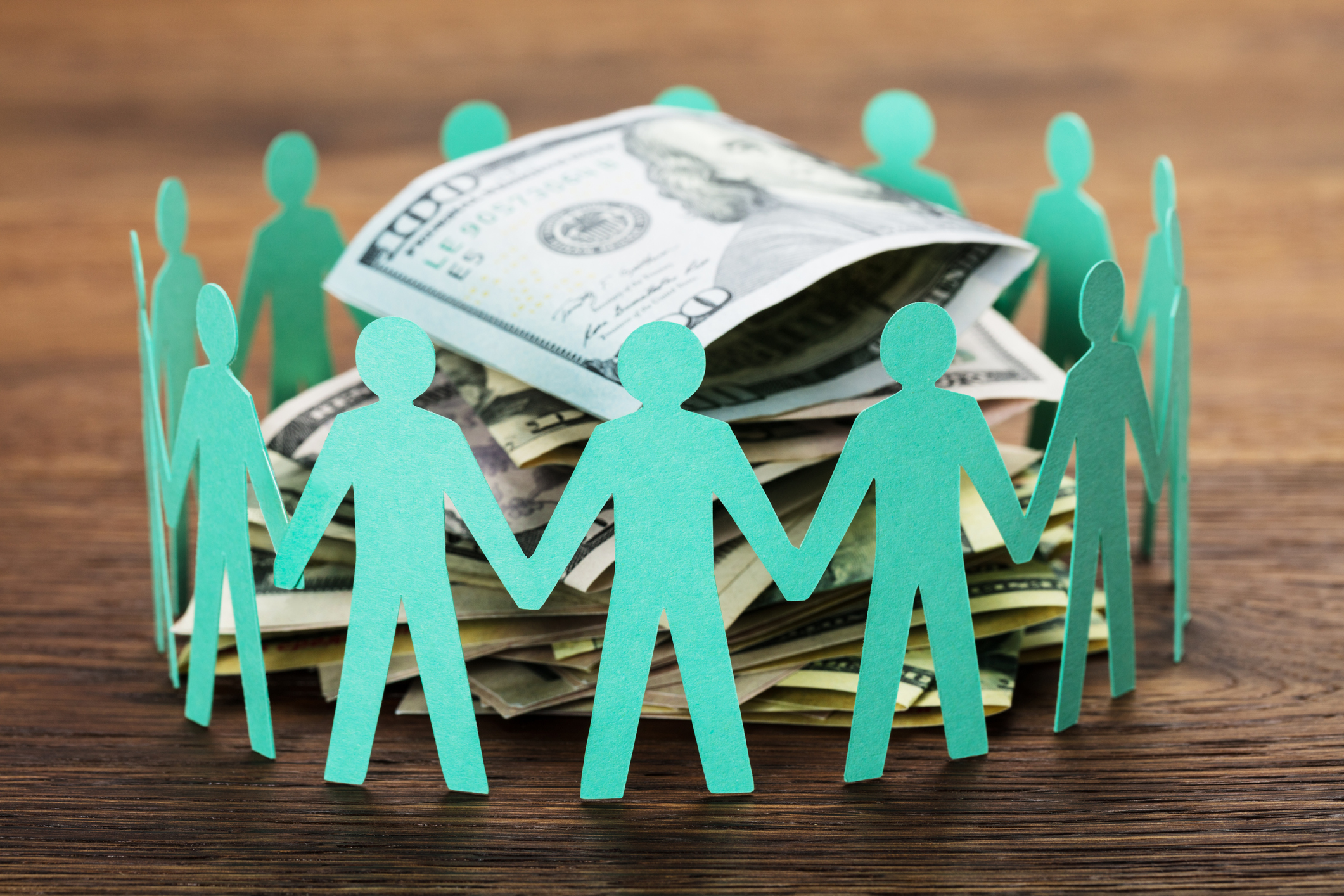
Crowdfunding is the practice of raising a large amount of capital via small pledges from many backers. This method of fundraising is used by individuals in need, content creators, and businesses.

Below, you'll learn all about crowdfunding, including how it works, who uses it, and the good and bad aspects of raising capital from the masses. You'll also meet a company that raised millions via crowdfunding in 2015 and still sells its products today.
Understanding crowdfunding
Websites Kickstarter, Indiegogo, and GoFundMe popularized the concept of crowdfunding. These platforms allow users to set up fundraising campaigns that collect pledges from the public for a defined project. Often, the campaigns promote a business idea or creative project that requires capital to implement.
A good crowdfunding campaign establishes a fundraising goal, describes how the money will be used, and outlines what backers will get if anything. Pledges can be simple donations or made to earn rewards or equity. For example, a reward on a campaign to produce an album could be a digital version of one or more songs.
The platform sets the minimum and maximum pledge amounts per person and by country. For U.S. projects on Kickstarter, the range is $1 to $10,000. Platforms also collect a percentage of the funds raised as a fee. At Indiegogo, the fee is 5%. The payment processor will also collect a percentage of the donations made via credit or debit cards.
Kickstarter and Indiegogo fixed-funding campaigns require the capital goal to be reached. If the goal is not reached, pledges are either not collected, or they're collected and returned. The fundraiser will receive no capital.
Pros and cons of crowdfunding
The advantages of crowdfunding:
- It gives businesses and people alternative funding sources outside traditional equity and debt financing. Note that the Securities and Exchange Commission (SEC) regulates crowdfunding projects that sell equity.
- It can create early excitement about a new business venture.
- It has low up-front costs.
- It can drive feedback on a product, service, or media project before launch. If the fundraising project flops, it could mean the business idea needs to be retooled.
Positive Feedback Loop
The disadvantages of crowdfunding:
- An unmet fundraising goal can reflect negatively on the business or project.
- Some crowdfunding platforms are "all or nothing," meaning the project must reach the fundraising goal or the fundraiser receives no funds.
- It can be difficult for crowdfunding projects to stand out and rally the support of prospective backers.
Glowforge: A crowdfunding success story
Glowforge manufactures 3D laser printers that produce custom goods from materials like leather, wood, foam, and acrylic. The company was founded in 2014 and launched its self-hosted crowdfunding campaign in 2015. Glowforge had previously raised venture capital but chose crowdfunding to build a community around its product.
The crowdfunding project had a goal of $100,000 and functioned as a pre-sale campaign. Backers could buy Glowforge printers at discounted prices, ranging from $1,995 to $3,995. The printers were to be shipped to backers sometime in the first half of the next year.
Related investing topics
After 30 days, Glowforge had raised $27.9 million. The capital raise broke the previous 30-day crowdfunding record of $20 million set by smartwatch company Pebble Technology, which was acquired by Fitbit in 2016.
Glowforge continued to raise venture capital after its crowdfunding success. Today, the company sells three printer models -- the Aura, Plus, and Pro -- with prices ranging from $1,199 to $6,995.
Unfortunately, the crowdfunding success of OculusVR, Glowforge, and Pebble Time is atypical. According to career website Zippia, crowdfunding campaigns typically raise about $5,200.