What is the Russell 2000 index?
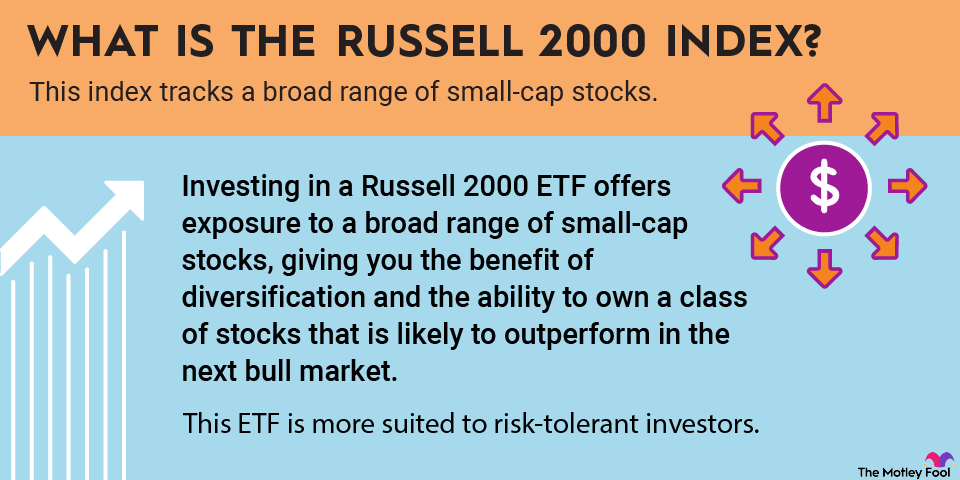
The Russell 2000 index, sometimes abbreviated Russell 2K, is the most widely used index of small-cap stocks, or those with a relatively small market capitalization. There are no hard-and-fast rules for when a stock is a small cap.
The key point here is that there's a broad market index known as the Russell 3000. It is divided into two smaller indexes: the Russell 1000, which comprises the 1,000 largest companies, and the Russell 2000, which comprises the remaining two-thirds.
The largest company in the Russell 2000 has a market cap of roughly $80.6 billion; the average market cap of companies in the index is roughly $4.5 billion.
The Russell 2000 is a market-cap-weighted index, as are most popular stock indexes -- the Dow Jones Industrial Average being the main exception. This means that the 2,000 companies that comprise the index don't contribute equally to its performance. Larger companies have a proportionally greater impact than smaller ones.
How the Russell 2000 compares to other major stock indexes
There are many important stock indexes, each focusing on a different basket of stocks. Here are some of the most common:
- Dow Jones Industrial Average: The Dow, the best-known stock index in the U.S., includes 30 of the largest publicly traded companies. Unlike most indexes, the Dow is price-weighted, meaning stocks with higher share prices contribute more to the index's performance.
- S&P 500: This one includes 500 large U.S. public U.S. companies. Note that they aren't necessarily the largest 500.
- S&P MidCap 400: This index comprises 400 public U.S. companies with market capitalizations between $8 billion and $22.7 billion.
- S&P SmallCap 600: This index includes 600 public U.S. companies with market capitalizations of between $1.2 billion and $8 billion. The S&P 500, S&P MidCap 400, and S&P SmallCap 600 are collectively known as the S&P Composite 1500 index.
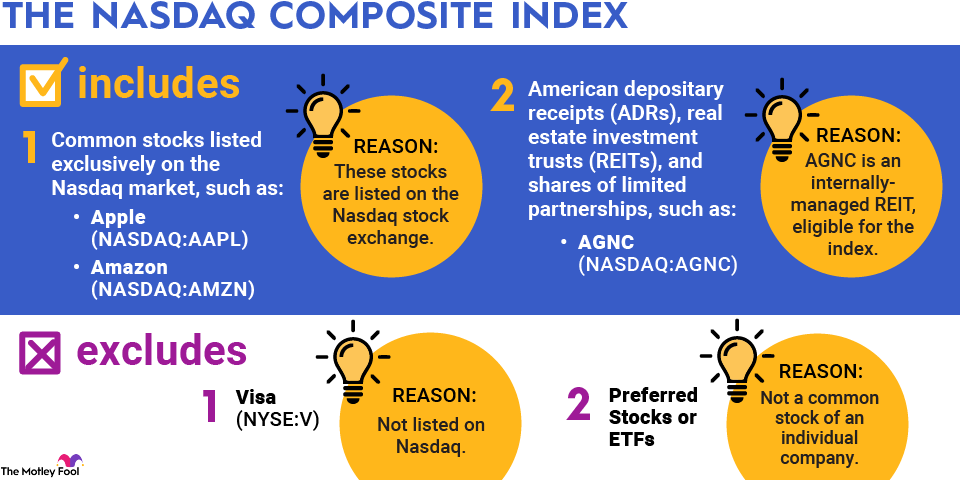
- Nasdaq Composite: This index includes all the companies traded on the Nasdaq exchange.
- Nasdaq-100: The Nasdaq-100 index includes 100 of the largest Nasdaq-listed companies and is widely considered a barometer for tech stock performance.
- Russell 1000: This comprises the 1,000 largest public U.S. companies. The Russell 1000 and Russell 2000, collectively known as the Russell 3000, are regarded as one of the best barometers of the overall U.S. stock market's performance.
Russell 2000 by industry
Industry | Percentage of Index |
|---|---|
Industrials | 19.0% |
Healthcare | 17.7% |
Financials | 16.5% |
Technology | 11.3% |
Consumer Discretionary | 10.3% |
Energy | 7.1% |
Real Estate | 5.6% |
Basic Materials | 4.6% |
Utilities | 3.4% |
Telecommunications | 2.7% |
Consumer Staples | 1.6% |
Exchange-Traded Fund (ETF)
How to invest in the Russell 2000 index fund
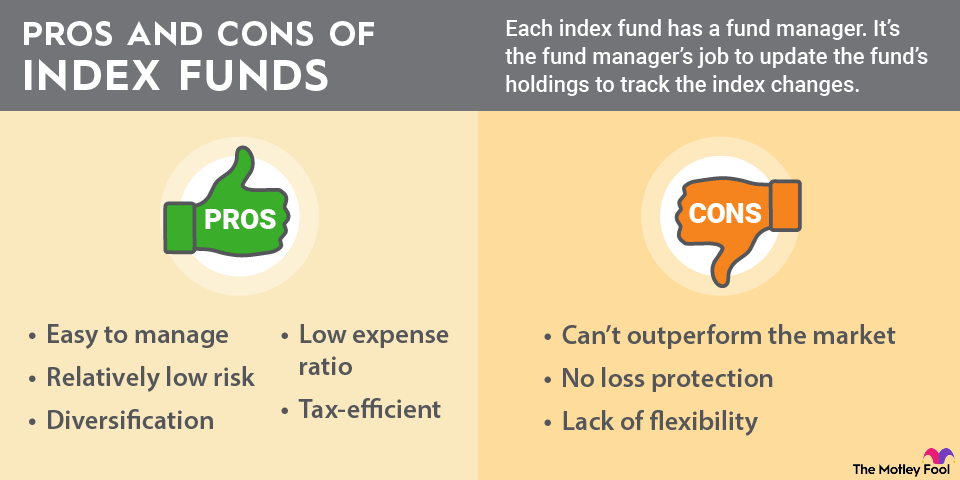
If you want to invest in the Russell 2000 index, you don't need to buy all 2,000 stocks. You can invest in the index easily through a mutual fund or an exchange-traded fund (ETF) that tracks it passively.

Is investing in the Russell 2000 index right for you?
Investing in the Russell 2000 is a great way to gain exposure to the exciting world of small-cap investing without relying too heavily on any single company. The index's broad diversification should help smooth the volatility of investing in smaller stocks while maintaining the potential for market-beating performance.