Investors looking for something outside the artificial intelligence (AI) craze may want to consider hopping across the Atlantic Ocean for a closer look at the European defense industry. Developments there have created a powerful secular trend that could continue for some time, and investors should consider putting their money behind the trend.
February 2026 will mark the four-year anniversary of Russia's invasion of Ukraine, which is considered part of Eastern Europe. This escalation of a conflict into outright war has understandably changed the attitude many European countries have had toward maintaining their own military capabilities.
Members of NATO, Europe's main military alliance, have a collective agreement to defend each other in the event of an attack. As such, they are supposed to commit a percentage of their gross domestic product (GDP) toward defense spending.
But maybe because of an overreliance on the U.S. military, or the fact that Europe has been mostly peaceful for years, that agreement has been loosely enforced. Now, spending is increasing to as much as 5% of GDP for each of NATO's 32 members. The Ukraine war is a big reason defense spending is increasing in Europe.
Here are three suggestions for defense stocks that could grow for years to come.
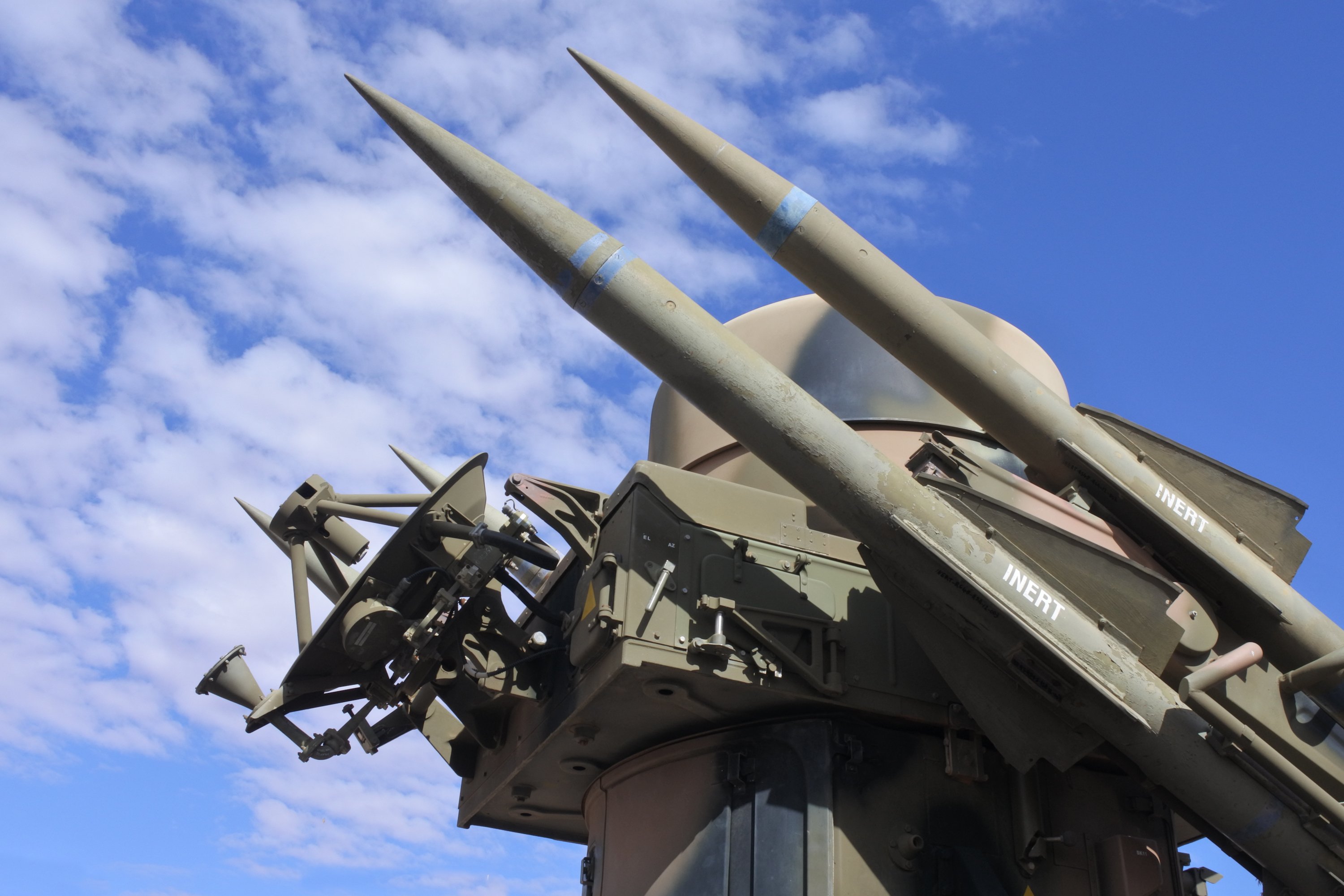
Image source: Getty Images.
1. Rheinmetall
Rheinmetall (RNMBY 0.37%) (RNMB.F 0.39%) is based in Germany, which is the largest economy in Europe (with a GDP of $2.5 trillion). A confluence of factors favors investing in Rheinmetall, which has already been significantly impacted by the Ukraine conflict. Its stock has jumped more than 12 times in value since Russia invaded Ukraine, but it still has plenty of upside. Analysts project annual sales growth above 30% for at least the next couple of years, and annual earnings to jump around 50% over this period.

OTC: RNMBY
Key Data Points
Rheinmetall has already become the largest defense firm in Europe, with an $81.5 trillion market capitalization, but it can continue its growth path. Germany is boosting public spending to help support its economy, which is struggling because it is focused on exporting vehicles, machinery, and electrical equipment, a tough go with higher tariffs, trade wars, and Chinese competition. Germany is also situated very close to Russia and is increasing its NATO spending targets. All these represent more tailwinds for Rheinmetall.
Rheinmetall's only real downside for investors is its valuation. Its current forward price-to-earnings ratio is a lofty 39, which is much higher than the European defense average of 28. In other words, investors have already priced in quite a few more years of rapid growth. But the growth projections are very strong, and the stock is trading 24% below its highs over the past year, so I think it's worth a look.
2. Kongsberg Gruppen
In Northern Europe, Kongsberg (KBGG.Y +3.92%) (NSKFF +3.02%) is sitting pretty as Norway's national defense champion. It too has grown quickly in response to the Ukraine conflict and is projected to grow sales in the midteens over the coming couple of years. It works with drones, missile projects, and air defense systems, including a recent system being deployed to Poland, which shares a border with Belarus, a Russian ally.

OTC: KBGG.Y
Key Data Points
In April 2026, Kongsberg plans to spin off its slower-growing maritime business. This should leave a pure play capable of growing more than 20% annually.
The company has a forward P/E of 28, right on par with the rest of the European defense industry. Its market cap is $21 billion, placing it at half of the industry average of $42 billion, which to me indicates it can grow more easily from its smaller base.
3. BAE Systems
BAE Systems (BAES.F 0.08%) (BAES.Y +0.21%) is based in the United Kingdom and is one of the country's largest defense firms. Annual sales growth is projected to be around 7% over the next two years. This is a slower growth rate than the other companies on my list, but the forward P/E ratio, based on next year's earnings estimate, is a more reasonable 21.
BAE's sales are also arguably more stable and predictable because nearly half of its sales stem from purchased by the U.S. Department of Defense. This is a good hedge, as the relationship between the U.S. and Europe will likely remain close. This includes a position as a leading supplier for the F-35 fighter jet, which has amounted to hundreds of billions of dollars in sales over its lifetime. BAE gets between 13% and 15% of the work on each jet.
My take
For better or worse, defense spending has become big business in Europe. These firms are growing their sales robustly and have reasonable valuations, given the expected growth. They also already generate healthy free cash flow, which offers downside protection.