Early this decade, Toyota (TM 0.07%) dared to be different. While just about every automaker was touting multi-billion-dollar investments in electric vehicles (EVs) and paying minimal attention to hybrid options, Toyota stood its ground. The Japanese automaker believed a slower, more logical hybrid focus initially was the optimal path, especially given that many markets would be slower to mass-adopt EVs than, say, China.
Toyota took intense criticism from investors who said it was too slow to adopt EVs, analysts who said it would trail rivals, and environmentalists who claimed it wasn't doing enough to reduce emissions. Today, these critics might just owe Toyota a big apology.
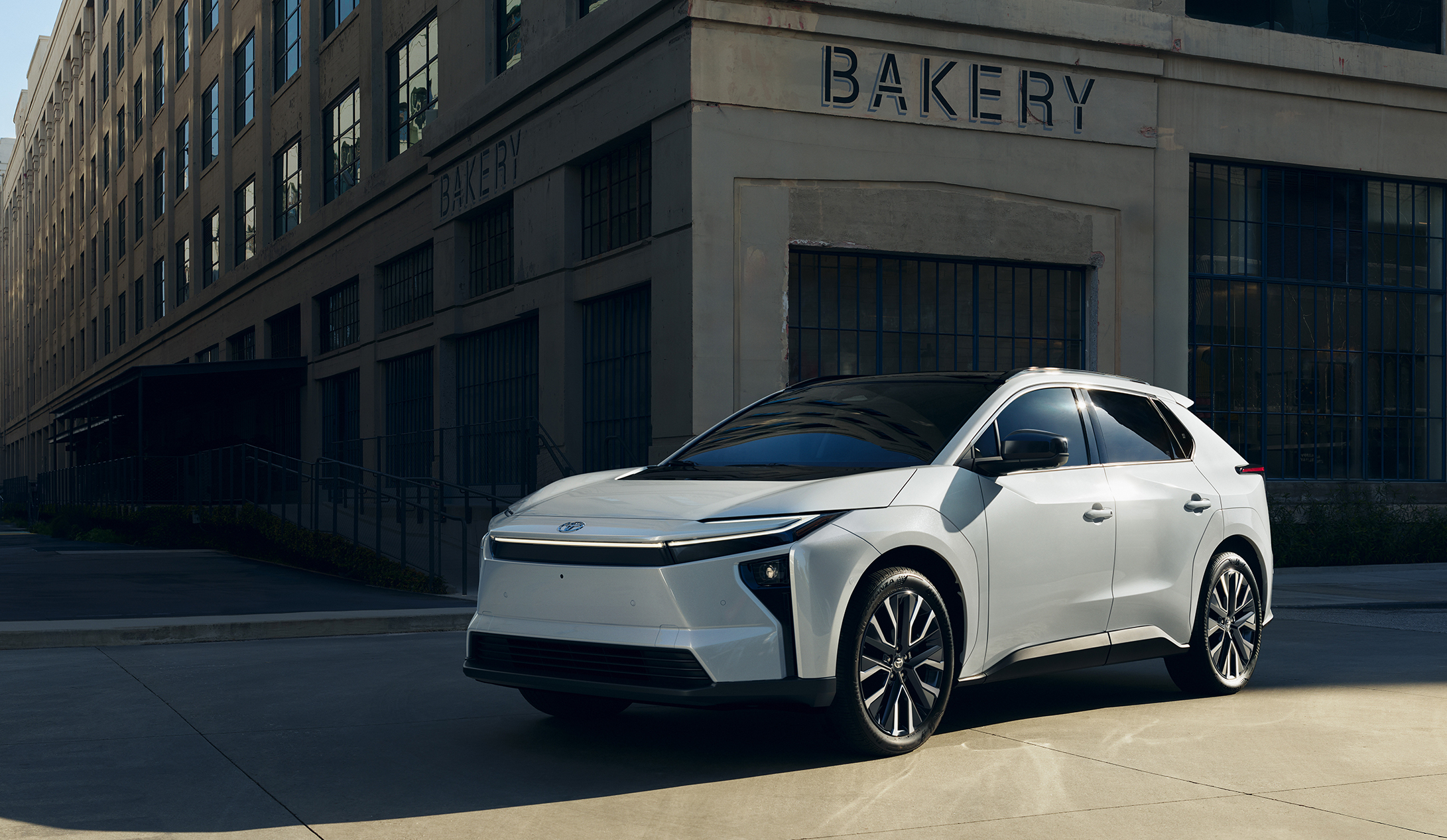
The Toyota bZ. Image source: Toyota.
Hindsight is 20/20
Investors likely noticed the large charges many of Toyota's rivals took in recent months due to misjudging growth in the U.S. EV market. In fact, Toyota's Japanese rival Honda, along with Detroit's General Motors, Ford Motor Company, and Stellantis, all combined to have restructuring costs totaling nearly $70 billion.

NYSE: TM
Key Data Points
Do you know which automaker didn't take a massive charge to pivot its EV strategy? The question is rhetorical, of course. Toyota is only now accelerating a wave of EVs that have been in development for years. Interestingly, despite its slow roll into EVs, it doesn't have much ground to make up.
In fact, even a year ago, few investors expected Toyota to be competing in EV sales volume in the U.S. market. But during the first quarter of 2026, one Toyota EV, the bZ, outsold Ford's entire EV lineup. The difference one year can make looks substantial when you look at the data. More specifically, Toyota's bZ sold over 10,000 vehicles in the U.S., up a surprising 79% from the prior year. Meanwhile, Ford sold 6,860 EVs during Q1, 70% fewer than it did the previous year, as it said goodbye to production of the F-150 Lightning in its current form.
"I don't expect Toyota to suffer major EV setbacks because they have a better pipeline of affordable EVs and a good network of dealers who are on board for selling them," said Sanshiro Fukao, executive at the Itochu Research Institute in Tokyo, according to Automotive News. "And given that gasoline prices are so high in the U.S., people really want to buy them."
Is Toyota stock a buy?
Toyota's pragmatic approach to EV launches proved valuable for its investors and sets the company up well for when the U.S. EV market rebounds after losing the $7,500 federal tax credit, among other policy effects. Toyota also offers investors much more than a well-positioned automaker, as it boasts roughly twice the cash on hand as it has debt. Much of Toyota's large total debt figure belongs to its finance division. It's moderately valued at roughly 11 times price-to-earnings, and has returned value to shareholders by reducing outstanding shares while increasing its dividend.
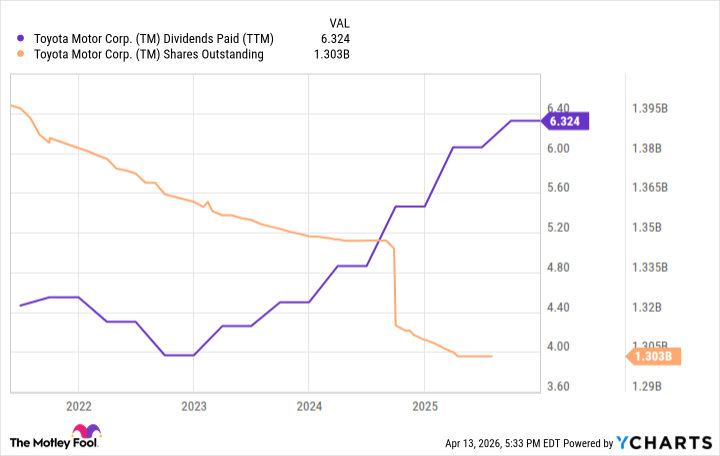
Data by YCharts.
Investors looking for a well-positioned, long-term, dividend-paying, fairly valued juggernaut global automaker could certainly start a position in Toyota. The rest of us might owe Toyota a big apology.