Blue Origin's bold vision seems like something from a science fiction movie. The company envisions a time when millions of people will live and work in space for the benefit of Earth.
Amazon (AMZN +1.60%) founder Jeff Bezos is behind the company's ambitious vision. He founded Blue Origin in 2000. It's one of Bezos' many investments.
The company is a long way from achieving its vision. Its current focus is on aerospace manufacturing and providing space services. It also has a space tourism business.
The sky is the limit for Blue Origin. That has many investors eagerly anticipating its initial public offering (IPO). Here's a guide to everything you need to know about how to invest in Blue Origin ahead of its eventual IPO.

Is Blue Origin publicly traded?
Blue Origin is a privately held company. It doesn't trade publicly on major stock exchanges like the NYSE or Nasdaq.
When will Blue Origin IPO?
As of late 2025, Blue Origin didn't have an IPO on the calendar. The company also had yet to announce plans to go public. Bezos currently prefers to keep his space company private.
IPO
Is Blue Origin profitable?
Privately held companies like Blue Origin don't need to disclose their financial data publicly. As a result, there isn't currently much publicly available information on Blue Origin's revenue or profitability.
It likely isn't profitable yet. Founder Jeff Bezos said in late 2024 that his space company “is not a very good business yet.” The company took a notable step to improve as a business in early 2025 by launching a sizable layoff.
Although Blue Origin isn't making money yet, Bezos sees a bright future. “I think it’s going to be the best business that I’ve ever been involved in, but it’s going to take a while,” he said in 2024. That immense promise is what has investors so excited by its potential IPO.
Alternatives to Blue Origin Stock
Those interested in space stocks can consider investing in a Blue Origin alternative. Here are three top options in the space sector that interested investors can buy right now:
Boeing
Boeing (BA -0.31%) is a leading aerospace company. It develops and builds airplanes, defense products, and space systems. The company's defense, space, and security business unit develops and produces commercial and government satellites and human spaceflight programs. The company has an illustrious history as part of various space programs, including Apollo and the space shuttle program. Boeing is working with NASA on the Space Launch System Rocket that will eventually carry people to Mars.
L3Harris Technologies
L3Harris Technologies (LHX -0.74%) is an aerospace and defense company providing solutions in the space, air, land, sea, and cyber sectors. The company enhanced its space technology segment in 2023 by closing its acquisition of Aerojet Rocketdyne, a leader in propulsion systems. Aerojet Rocketdyne has a long history of innovation in the space exploration sector, adding to L3Harris Technologies' expertise in the industry.
Virgin Galactic Holdings
Virgin Galactic Holdings (SPCE -5.79%) is an aerospace and space travel company. As with Blue Origin, its founder is a well-known entrepreneurial billionaire (Richard Branson). The company pioneered human spaceflight for individuals, making it a direct competitor to Blue Origin. Virgin Galactic plans to launch a new Delta Class SpaceShips for commercial space tourism in 2026.
How to buy similar stocks to Blue Origin
People who want to buy one of these Blue Origin alternatives can purchase shares in any brokerage account. Here's a step-by-step guide to investing in these space stocks.
- Open your brokerage account: Log in to your brokerage account where you handle your investments. If you don't have one yet, take a look at our favorite brokers and trading platforms to find the right one for you.
- Search for the stock: Enter the ticker or company name into the search bar to bring up the stock's trading page.
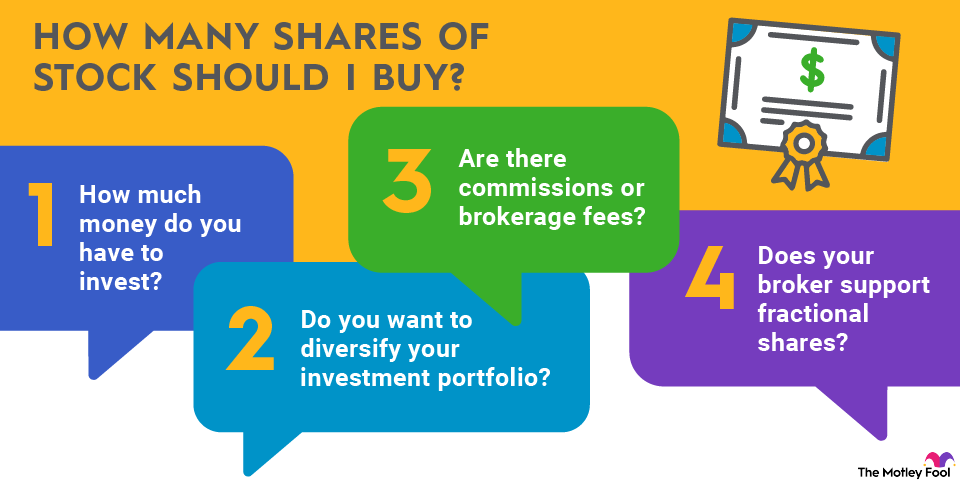
- Decide how many shares to buy: Consider your investment goals and how much of your portfolio you want to allocate to this stock.
- Select order type: Choose between a market order to buy at the current price or a limit order to specify the maximum price you're willing to pay.
- Submit your order: Confirm the details and submit your buy order.
- Review your purchase: Check your portfolio to ensure your order was filled as expected and adjust your investment strategy accordingly.
Investors would follow a similar process to buy an IPO stock like Blue Origin when it goes public. Once shares become available, select Blue Origin's chosen stock ticker to buy shares through your brokerage account.
How to invest in the space sector through ETFs
Since Blue Origin isn't a publicly traded company, investors can't gain passive exposure to its stock by investing in an exchange-traded fund (ETF).
Exchange-Traded Fund (ETF)
The bottom line
Blue Origin has a bold vision of supporting millions of people living and working in space to benefit the planet. The company is working toward achieving that mission by building a space services and tourism company that's becoming a major revenue generator. Its profits could skyrocket as it continues to press forward, making it an interesting potential IPO to watch.
Related investing topics
FAQ
Investing in Blue Origin FAQ
About the Author