Starlink is the world's largest satellite operator. It provides high-speed satellite internet from satellites orbiting Earth, especially to rural and underserved areas where high-speed internet isn't available or reliable. It's currently part of SpaceX, the rocket company founded by Elon Musk.

There have been reports in recent years that SpaceX will spin off Starlink and complete an initial public offering (IPO) of that entity. However, the Musk-led SpaceX was preparing for an IPO of the entire company in 2026. It could come as early as June and raise over $25 billion.
IPO
Here's a look at what you need to know about Starlink, how to invest in its stock if it completes an IPO, and some alternatives to investing in the space company.
Is Starlink publicly traded?
Starlink wasn't a publicly traded company as of early 2026. The satellite internet provider is part of SpaceX, a privately held company controlled by Musk.
When will Starlink IPO?
Starlink didn't have an IPO on the calendar in early 2026. While there has been some speculation that Musk might take Starlink public, he's preparing to take its entire parent company, SpaceX, public in 2026. The IPO could raise more than $25 billion to help fund the company's expansion initiatives.
Is Starlink profitable?
Starlink is a subsidiary of the privately held SpaceX. Neither entity needs to disclose its financial results publicly. However, Forbes estimated that Starlink's subscription revenue was on track to surpass $10 billion in 2025 (skyrocketing 60% from 2024's level), accounting for about two-thirds of SpaceX's revenue. Meanwhile, Starlink has reportedly been profitable on a stand-alone basis since 2024.
Alternatives to Starlink
Since Starlink isn't a publicly traded company, you can't buy shares of the satellite internet service provider. And because it's a unit of SpaceX, investors can't buy pre-IPO shares of Starlink on secondary platforms that trade shares of start-ups.
However, investors who really want to gain early access to Starlink could see whether they can buy shares of SpaceX on a secondary platform that trades pre-IPO shares, such as Rainmaker Securities or Forge Global (FRGE -0.20%). These platforms enable accredited investors (i.e., high-net-worth individuals and those with high incomes) to buy shares of pre-IPO companies when they're available.
While nonaccredited investors must wait for Starlink's IPO to buy shares, they still have options, including investing in a publicly traded space stock. Here are three Starlink alternatives to consider:
Boeing
Boeing (BA +0.24%) is a leading global aerospace company. It develops, manufactures, and services commercial aircraft, defense products, and space systems.
Boeing produces many space products, including satellites, building them for government and commercial operators. Its satellites enable companies to deliver digital communications, mobile communications, broadband internet connectivity, streaming entertainment, and direct-to-home entertainment worldwide.
Lockheed Martin
Lockheed Martin (LMT -0.52%) is a leading aerospace and defense contractor. The company operates four business segments: aeronautics, missile and fire control, rotary and mission systems, and space. Its space division produces space transportation systems, defense systems, and satellites, including those for early-warning weather and climate observation and GPS.
Iridium Communications
Iridium Communications (IRDM -0.09%) is a global satellite communications company. It provides voice and data service anywhere in the world through its 66 low-earth-orbit satellites. Iridium's satellites serve the maritime, aviation, government, land-based handset, and Internet of Things (IoT) markets.
Shareholder
How to buy stocks similar to Starlink
Investors who want to buy one of these Starlink alternatives can purchase shares in any brokerage account. Here's a step-by-step guide on how to invest in stocks like Starlink.
- Open your brokerage account: Log in to your brokerage account, where you handle your investments.
- Search for the stock: Enter the ticker or company name into the search bar to bring up the stock's trading page.
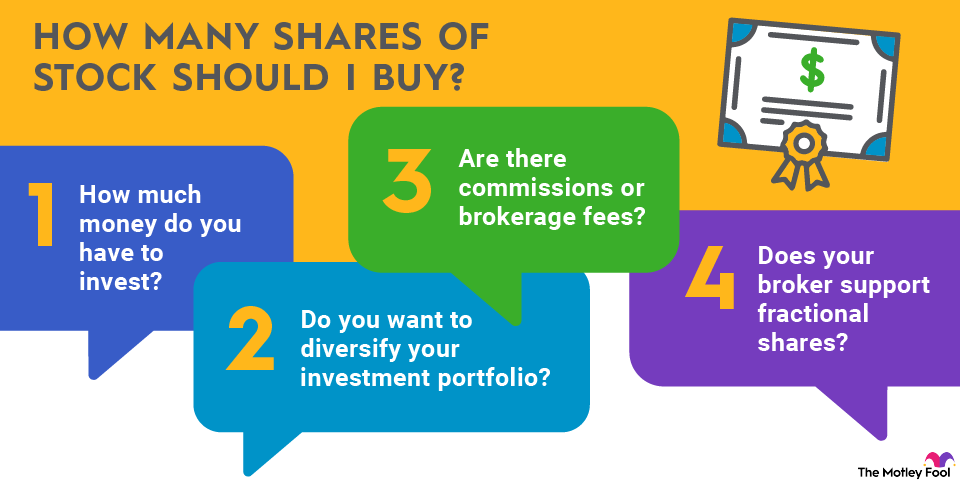
- Decide how many shares to buy: Consider your investment goals and how much of your portfolio you want to allocate to this stock.
- Select order type: Choose between a market order to buy at the current price or a limit order to specify the maximum price you're willing to pay.
- Submit your order: Confirm the details and submit your buy order.
- Review your purchase: Check your portfolio to ensure your order was filled as expected and adjust your investment strategy accordingly.
ETFs with exposure to Starlink
Because Starlink remains a privately held company, you can't passively invest in its stock through an exchange-traded fund (ETF).
Exchange-Traded Fund (ETF)
However, people interested in investing in the space sector could consider going the ETF route instead of trying to pick a space stock alternative to Starlink. Three space-related ETFs to consider are:
- ARK Space Exploration & Innovation ETF (ARKX -0.59%): Actively managed by the well-known asset manager Cathie Wood, the fund concentrates on holding companies engaged in space exploration and innovation. This ETF aims to hold between 35 and 55 stocks. Iridium Communications was its 11th-largest holding in early 2026, at 3.4% of the fund's assets. The fund had a 0.75% ETF expense ratio.
- Procure Space ETF (UFO +0.21%): This fund holds stocks of companies in space-related industries. In early 2026, it owned more than 50 stocks, including Iridium Communications, Lockheed Martin, and Boeing. The fund had a 0.75% expense ratio.
- State Street SPDR S&P Kensho Final Frontiers ETF (ROKT +0.33%): This ETF concentrates on holding companies that make products or provide space travel and exploration services. In early 2026, the fund held 35 stocks, with Lockheed Martin and Boeing both in the top 10. The fund had a 0.45% expense ratio.
Pros and cons of investing in Starlink
There are several potential benefits and risks of investing in Starlink's parent company, SpaceX. Some of the pros are:
- The potential for significant share price appreciation once it goes public.
- The ability to invest in the final frontier of outer space.
- The potential of investing in a company delivering skyrocketing revenue and profitability.
- The ability to invest in another company led by Elon Musk.
- Benefiting from the growth in satellite internet through Starlink.
On the other hand, some potential risks of investing in SpaceX are:
- SpaceX trades at a high valuation, which would likely only increase in the immediate aftermath of an IPO.
- Shares of the space company could be very volatile.
- Elon Musk's political views could affect the company's ability to win government contracts.
- SpaceX isn't a pure-play on the growth in satellite internet.
Related investing topics
The bottom line on Starlink
Starlink is a leader in providing satellite internet services. The company is rapidly growing its revenue and is already profitable. It has much more growth ahead. Starlink's growth potential has many investors eagerly anticipating its IPO, which could come in 2026 through the IPO of its parent company, SpaceX.
FAQ
Investing in Starlink FAQ
About the Author