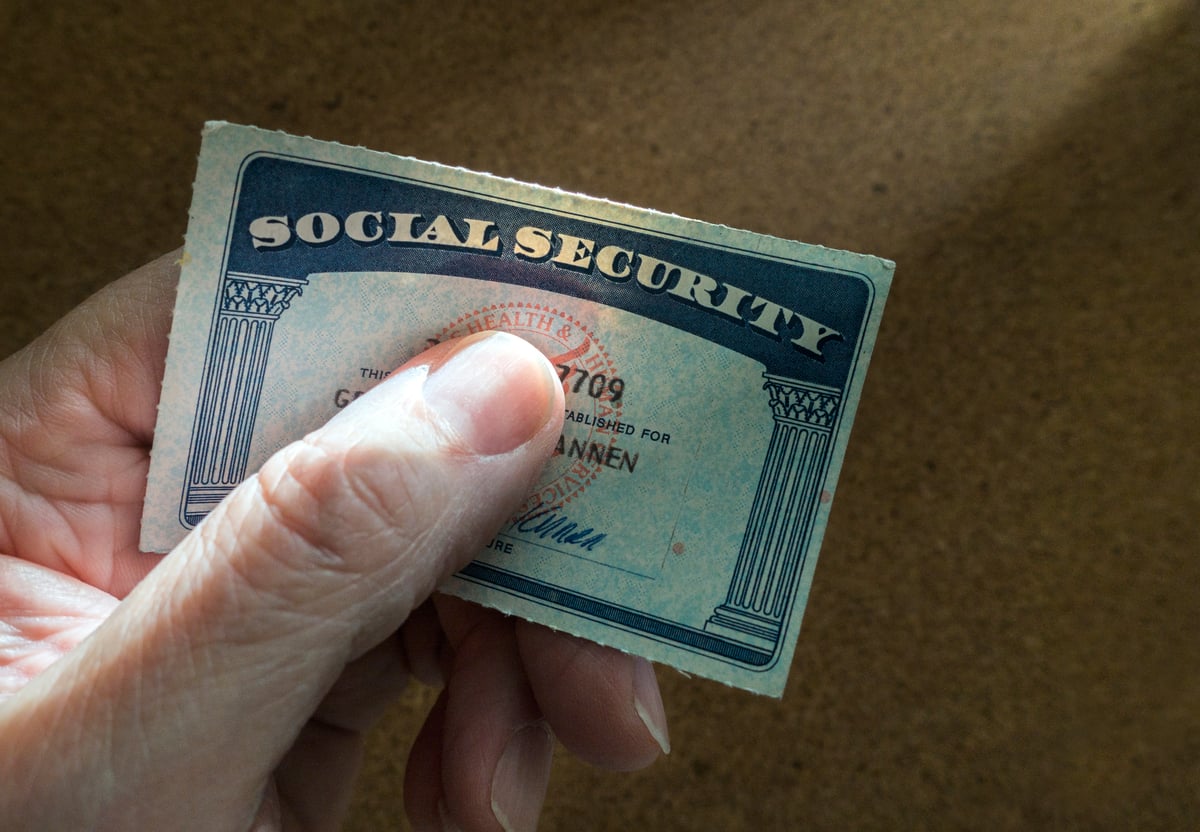
Social Security cost-of-living adjustments (COLAs) are designed to ensure Social Security benefits keep pace with inflation. While they may not always feel like enough, COLAs can help ease the sting of higher prices.
Here are five critical facts about COLAs that can help explain the ins and outs of this significant Social Security benefit.
Image source: Getty Images.
1. It all comes down to the CPI-W
CPI-W stands for the Consumer Price Index for Urban Wage Earners and Clerical Workers, one of the key inflation measures that tracks roughly 30% of the U.S. population. It's the measure that determines whether there will be a COLA increase announced for the upcoming year and, if so, how much it will be.
2. History paints an interesting picture
By looking back at the history of COLAs since 1975, it's easy to get an idea of what was going on with the economy in the months before COLAs were announced. For example, when the 1980 COLA was announced, it was a staggering 14.3%. It made sense, given that the rate of inflation that year was 13.5%.
Since 1975, there have only been three years with no COLA increase -- 2009, 2010, and 2015. Again, it makes sense when you consider that the inflation rate in 2009 was -0.4%.
3. There may be a better way to calculate COLAs
Groups representing older Americans and Social Security recipients have offered alternative methods of calculating COLAs that they say would be fairer to seniors. The Senior Citizens League (TSCL) points out in its 2024 Loss of Buying Power report that the average Social Security payment has lost roughly 20% of its buying power since 2010. According to TSCL, a lot of that comes down to how COLAs are calculated.
The CPI-W measures the cost of more than 200 everyday expenses, grouped into categories. In other words, there are categories for housing, food, transportation, and so on. The issue, says the TSCL, is that the CPI-W measures changes in these prices for urban wage earners, and urban wage earners' budgets look very different than the budget of a typical senior receiving Social Security benefits.
Instead, TSCL suggests using the Consumer Price Index for the Elderly (CPI-E). Like the CPI-W, the CPI-E measures prices. However, it weights the categories differently to resemble a typical American senior's budget. For example, seniors spend a higher percentage of their income on housing, medical care, and recreation. Urban wage earners spend a greater percentage of their income on transportation, food and beverages, education, and apparel.
Senior advocacy groups believe that using the CPI-E would more accurately reflect the percentage of COLA seniors require to keep pace with inflation.
4. Benefits never decrease
Let's say we experience another year like 2009 or 2015, when inflation fell below 0%. No matter what happens, Social Security recipients don't lose previous COLAs, and benefits are not cut to take the lower rate of inflation into account. Like some retirement annuities that pay a guaranteed rate, seniors don't have to worry about receiving less due to deflation.
5. There is a wide range of COLA recipients
It's not just traditional retirees who receive benefit increases. The adjustment also helps other groups, including:
- Disabled people: Social Security Disability Insurance (SSDI) recipients also receive COLA adjustments.
- Survivors: Widows, widowers, and other beneficiaries of workers who have died also get a boost in benefits when COLA increases are announced.
- SSI recipients: Those who receive Supplemental Security Income (SSI) also receive COLA increases. SSI is a program designed for elderly, low-income, blind, or disabled people.
COLAs may be imperfect, but right now they're a Social Security recipient's best chance of outrunning inflation.