It was during the 43-day government shutdown in the fall of 2025 that an issue affecting many Social Security Administration (SSA) employees came to light. The majority of Social Security employees are categorized as "essential employees," meaning they had to report to work, even though they were not being paid.
While higher-paid employees might have been able to get through those 43 days by withdrawing money from an emergency fund, others live too close to the edge to build a substantial emergency fund. Reports of evictions, car repossessions, and employees going without purchasing groceries became common.
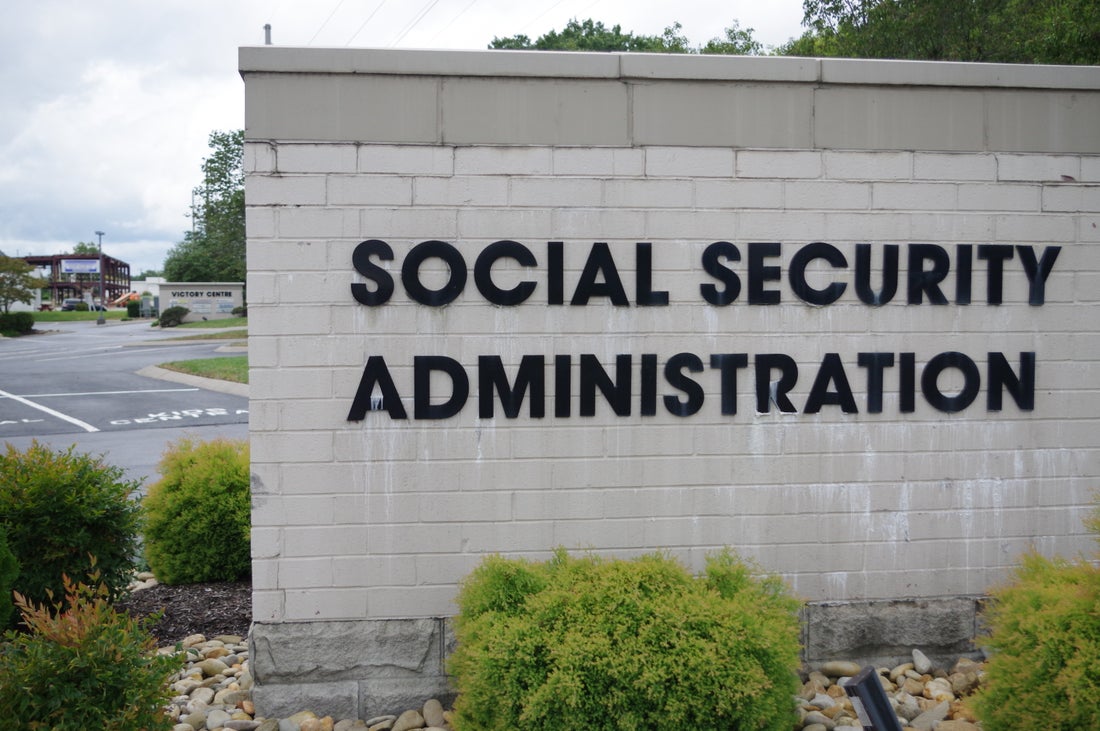
Image source: Getty Images.
What an investigation found
In response to news of economic struggles among Social Security workers, the Strategic Organizing Center (SOC) -- a U.S. labor coalition of unions -- decided to conduct an analysis of how much money more than 36,000 SSA frontline workers earn.
The analysis found that among SSA workers represented by the American Federation of Government Employees (AFGE), more than half (54%) are paid less than a living wage. "Living wage" refers to the minimum income a full-time employee needs to cover housing, healthcare, food, transportation, and other basic necessities. Depending on where an employee lives, the living wage can vary dramatically.
In other words, 54% of full-time SSA employees don't earn enough to pay for necessities in their area. Compounding the issue, among those who have at least one dependent, 75% of SSA employees reported being the primary income earner in their households.
While they work with retirees every day, these are people who might find it particularly difficult to plan for their own retirement.
Poor pay and more work
Early in 2025, the SSA slashed 7,000 jobs, leaving those who weren't cut with more work to do.
Wendell Primus, a visiting fellow at the Center on Health Policy at the Brookings Institution, an independent think tank, said: "They can't make up for the loss of 7,000 staff with this method. Even before all the changes, we needed more staff. We had backlogs."
No easy answer
While federal worker unions like AFGE can bargain over working conditions, federal workers are forbidden to bargain over wages or job classifications.
This table shows how many of those titles are paid below a living wage in their respective areas, as of August 2025.
|
Job Title |
Total Workers |
Workers Not Earning a Living Wage |
Percentage of Workers Not Earning a Living Wage |
|---|---|---|---|
|
Social insurance specialist |
19,178 |
6,139 |
32% |
|
Contact representative |
8,246 |
8,025 |
97% |
|
Legal administrative specialist |
3,252 |
2,888 |
89% |
|
Legal assistant |
1,459 |
1,411 |
97% |
Data Source: Strategic Organizing Center.
For thousands of SSA employees, it may be challenging to plan for their financial future when wages don't keep pace with the cost of living.