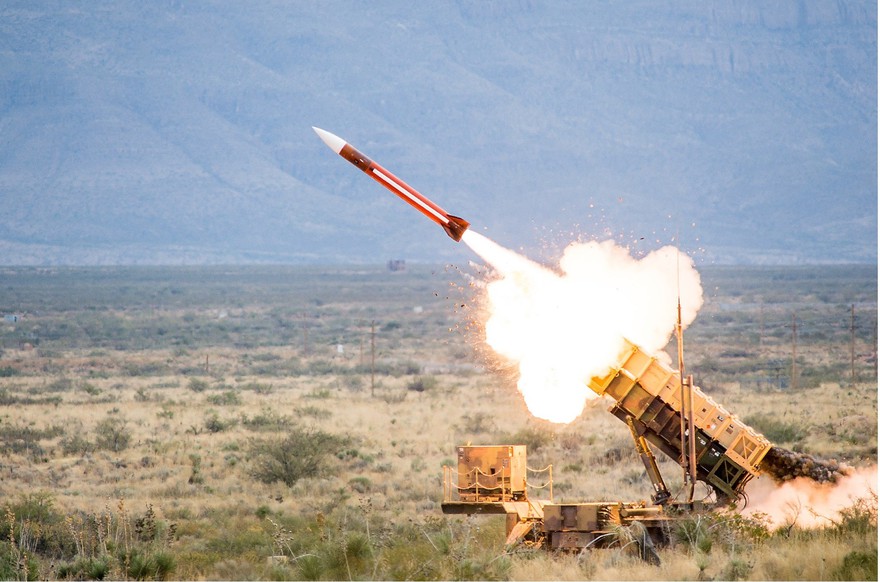
Defense companies get the bulk of their revenue from one customer -- the U.S. government. Fortunately, that customer has deep pockets and a long history of paying its bills. The federal government’s stability gives defense companies and investors some predictability when it comes to managing cash and projecting growth.
Companies in the defense sector offer a wide range of products and services to their main customer, and some are better investments than others. Here's what you need to know about investing in the defense sector and how to pick where your money should go.
Top eight defense stocks to consider
| Name and ticker | Current price | Market cap |
|---|---|---|
| Lockheed Martin (NYSE:LMT) | $629.05 | $138.2 billion |
| Boeing (NYSE:BA) | $236.37 | $189.2 billion |
| Northrop Grumman (NYSE:NOC) | $693.36 | $98.4 billion |
| General Dynamics (NYSE:GD) | $347.44 | $96.3 billion |
| RTX (NYSE:RTX) | $199.41 | $267.4 billion |
| Leidos (NYSE:LDOS) | $187.00 | $24.0 billion |
| L3Harris Technologies (NYSE:LHX) | $354.81 | $67.4 billion |
| AeroVironment (NASDAQ:AVAV) | $289.45 | $15.3 billion |
Let's look closer at these standout companies.
1. Lockheed Martin

NYSE: LMT
Key Data Points
Lockheed Martin (LMT +5.32%) is the world's largest defense company and the U.S. government's biggest contractor. It's also the lead contractor on the F-35 Joint Strike Fighter, the world's most expensive airplane.
Lockheed's legendary Skunk Works research facility in California is world-renowned. The company has leveraged its research muscle to become a leader in advanced fighter planes, high-tech missiles, and cutting-edge electronics.
2. Boeing

NYSE: BA
Key Data Points
Boeing (BA -2.16%) is best known for its commercial airplanes, but its defense business -- although accounting for just one-third of total company revenue -- is large enough to rank among the industry's titans. Boeing makes several aircraft and helicopters for the Pentagon and is involved in space pursuits. The company's defense business has also branched out into autonomous submarines and other products.
Boeing has been a tough stock to own since the beginning of the decade, and the shares are still significantly below their 2019 high. Troubles remain on the commercial side of Boeing, but the company remains an important vendor to the U.S. government. If Boeing can successfully work through the operational troubles that have plagued it, there is a lot of upside potential for the stock.
3. Northrop Grumman

NYSE: NOC
Key Data Points
Northrop Grumman (NOC +0.61%) is responsible for stealth bombers and has a large space portfolio. The company is closely tied to the nuclear triad -- a combination of nuclear missiles, bombers, and submarines able to strike back if the nation is attacked.
Northrop is the second-largest stand-alone defense contractor, and in years past would sometimes be overlooked in favor of Lockheed Martin. But Northrop Grumman's portfolio is more closely tied to key Pentagon priorities, including the triad, making it a good option for investors seeking predictable growth in the years to come.
4. General Dynamics

NYSE: GD
Key Data Points
General Dynamics (GD -2.59%) is one of two primary military shipbuilders and has a portfolio of tanks and land vehicles, making it one of the go-to vendors for the U.S. Army. General Dynamics also has one of the largest defense-focused IT and services businesses, giving it some revenue stability at times when the Pentagon cuts back on equipment purchases.
Ship construction is complex, and individual vessels can take years to complete, creating some quarter-to-quarter revenue inconsistency. General Dynamics tries to offset that choppiness via its more-predictable IT business, but investors should be aware that the mix of businesses can make it difficult to predict quarterly results.
5. RTX

NYSE: RTX
Key Data Points

NYSE: LDOS
Key Data Points

NYSE: LHX
Key Data Points

NASDAQ: AVAV
Key Data Points
How to find the best defense stocks
The defense sector tends to be a stable group of companies with a few failures and a few standouts. Here are some tips for evaluating individual defense companies.
Listen to the customer
The Pentagon has an insatiable appetite for new equipment. But with aircraft carriers costing more than $10 billion and F-35 fighters priced at $100 million or more, the government can only buy so much. To figure out the likely winners and losers, pay attention to the budgeting process.
Early in the year, the Pentagon sends a funding request to Congress, which then holds hearings to discuss priorities and make final allocation choices throughout the spring and into the summer. An investor need not hang on every word. However, the budget request, available on the Pentagon's website, and commentary elsewhere can provide clues about which billion-dollar programs are administration priorities.
Follow the numbers
Companies often highlight massive contract awards in press releases without explaining that those big-dollar figures are often spread out over many years and may depend on Congress approving the funds. Pay attention to these metrics when evaluating defense stocks:
- Free cash flow: This is important for any business, but free cash flow can vary for defense contractors based on whether their projects are new or well established. Companies often spend more in the early stages of a production contract, temporarily depressing cash flow.
- Corporate backlogs: Investors should pay close attention to corporate backlogs, which are future contracts that have been awarded but not yet executed. How much of a backlog has been funded and how much must go through the congressional budgeting process can vary greatly.
- Book-to-bill ratio: This metric compares the value of orders received in a given quarter to the amount billed and indicates a company's growth potential. A growing company should have a book-to-bill ratio of at least 1.0, implying that orders for future products are being booked at a rate that equals or exceeds what is being shipped today.
Defense companies know investors are focused on these metrics and typically provide the relevant information in quarterly earnings reports or conference calls.
Benefits and risks of investing in defense stocks
There are pros and cons to investing in defense stocks. Here are some of the factors to consider before making them part of your portfolio.
Benefits:
- Stable and predictable demand from a customer that invests in national security at all stages of the cycle.
- Long-term contracts give management teams strong revenue visibility, allowing for planning, and provide stability.
- High barriers to entry due to the specialized nature of the products and the difficulties of dealing with the government as a customer
- A history of technological innovation that can translate outside of defense. From Velcro to the Internet, a lot of products we take for granted today originated either within or adjacent to the aerospace sector.
Risks:
- Politics can be unpredictable, and changes in government priorities or a new administration can force management teams to rethink their long-term planning.
- Cost overruns are increasingly a problem for the contractor. If a company is not well run and does not keep its costs under control, it can eat into earnings.
- Supply chain chaos can lead to program delays. Large defense platforms rely on dozens of suppliers, and those suppliers each have layers of smaller vendors below them. An issue anywhere in that chain can lead to cost overruns or delays for the entire program.
- Ethical concerns are a common reason to avoid defense stocks. These companies make lethal weapons, and not all investors want that in their portfolio.
Are defense stocks right for your portfolio?
Defense companies manufacture lethal products and can be involved in supporting operations or intelligence-gathering that some find unsettling. Some investors don't want to support those activities and may want to avoid becoming shareholders of defense stocks.
Like many industrial stocks, defense stocks tend to be more plodding than high-flying technology or biotech stocks. But that also means they are less volatile than some sectors. Defense stocks are best suited for income-oriented investors seeking steady growth and rising dividends rather than immense valuation increases.