Inflation is the change in prices over a period of time. A 1% inflation rate implies that an item that cost $100 last year would cost $101 this year. Of course, inflation doesn't affect every type of purchase in the same way, and there is quite a bit more to inflation than the basic idea of things getting more expensive over time. In this article, we'll take a look at what inflation is, what causes it, how it is calculated, and what it means to investors.
What is inflation?
Inflation refers to rising prices over time, but the real story is how those price changes affect your purchasing power, your savings, and your investments.
Put simply, inflation means that the same amount of money buys less in the future. If inflation runs at 3% this year, something that cost $100 last year now costs $103. That may not sound dramatic, but over time, inflation quietly erodes the value of cash.
Inflation doesn’t hit every expense equally, and it doesn’t affect every household the same way. That’s why understanding how inflation is measured, what causes it, and how it impacts investing decisions matters more than just knowing the headline number.
How inflation is measured
The most common measure of inflation in the U.S. is the Consumer Price Index (CPI), published by the Bureau of Labor Statistics. CPI tracks changes in the prices of a representative “basket” of goods and services, including housing, food, transportation, healthcare, and more, to show how costs are changing over time.
- Headline inflation reflects overall CPI changes.
- Core inflation removes food and energy prices, which tend to be volatile, to give a clearer view of underlying trends.
According to our Motley Fool Inflation Rate research, as of September 2025, U.S. inflation is running at 3%, with core inflation also at 3% -- still above the Federal Reserve’s long-term target of 2%, but far below the highs reached earlier this decade.
Historical inflation rates
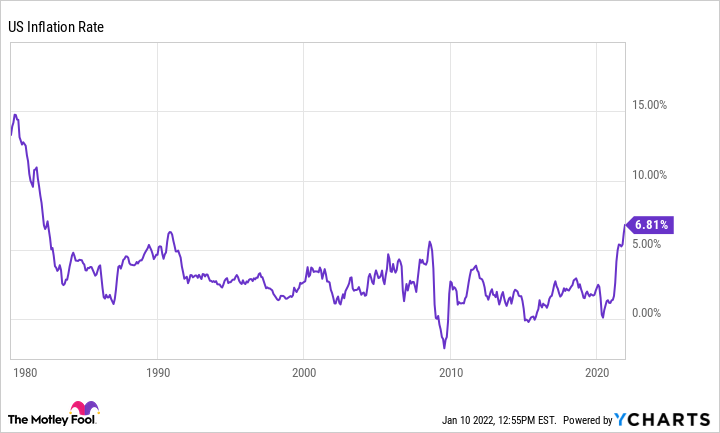
Over the past century, U.S. inflation has averaged about 3.2% per year, though the path has been anything but smooth.
At one extreme, the inflation rate was as high as 18% in 1910, and it has reached double digits again eight times since then. On the other end of the spectrum, we have experienced negative inflation rates, particularly in the wake of the Great Depression and the 2008-09 financial crisis.
Inflation in the 1970s
Inflation was rather elevated throughout the 1970s, with full-year inflation at 3.2% or greater every year of that decade and reaching 11% or more in 1974 and 1979.
Inflation in the 1980s
The worst inflation in recent U.S. history occurred in the late 1970s and early 1980s, mainly caused by a global disruption in oil supplies. The inflation rate hit 11.3% in 1979, increased to 13.5% in 1980, and remained above 10% in 1981. The Fed took aggressive interest rate actions to finally get inflation under control.
Inflation in the 1990s
The 1990s were a relatively tame decade for inflation, with full-year inflation rates ranging from 5.4% in 1990 to 1.6% in 1998. For the most part, inflation stayed between 2% and 4% throughout the decade.
Inflation in the 2000s
The 2000s saw the first deflation in decades, with a negative 0.4% inflation rate in 2008 caused by the financial crisis that sent shockwaves throughout the economy. Excluding the crisis, however, inflation ranged from a low of 1.6% to a high of 3.8%.
Inflation in the 2010s
The 2010s were another decade of relatively tame inflation, with full-year inflation rates ranging from 0.1% in 2015 to 3.2% in 2011. For the most part, this was a strong decade of economic growth, and there were few inflation-driving catalysts.
Inflation now
After several decades of tame inflation, we're starting to see multi-decade highs for price increases. Inflation in 2020 was just 1.2% as the COVID-19 pandemic dramatically disrupted economic activity all over the world, but the gradual return to normalcy, combined with trillions of dollars in economic stimulus, led to a 4.7% inflation rate in 2021. Inflation has continued to rise, however, and (for now) peaked at 9.1% in June 2022, marking the highest level in more than 40 years.
Why inflation looks different depending on where you live
Inflation is a national statistic, but regional inflation can vary noticeably, driven largely by housing costs.
As of mid-2025, 12-month inflation rates by region were:
- West: 3.3%
- Midwest: 3.1%
- Northeast: 3.1%
- South: 2.7%
Research from the Federal Reserve Bank of Chicago shows that housing prices are the biggest driver of regional inflation differences, especially in the West and South. Other spending categories tend to play a much smaller role.
What causes inflation?
Inflation usually comes from a mix of factors, but economists generally group them into two main types:
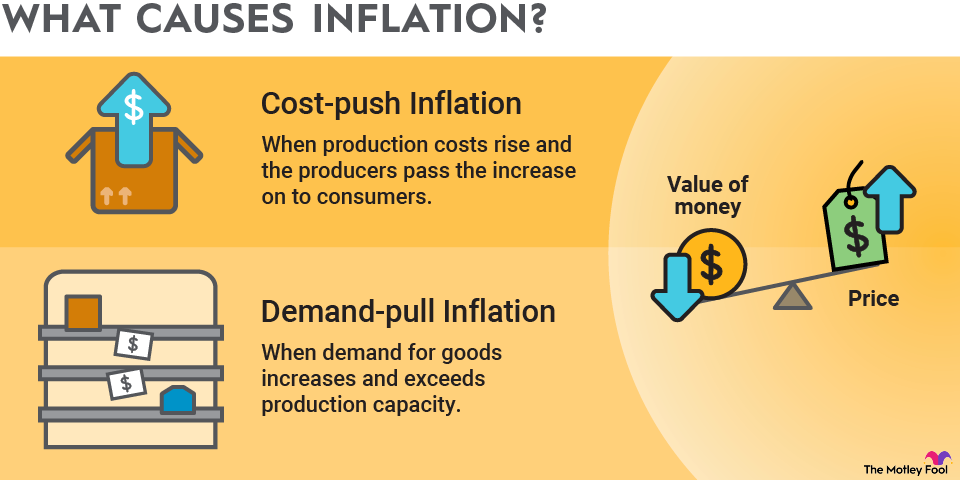
- Cost-push inflation: This occurs when production costs rise for certain goods, and the producers pass the increased costs on to consumers. For example, if the price of lumber rises, it typically leads to a rise in home prices since it costs more for builders to produce homes. Labor costs are also in this category since a more expensive labor force adds to the cost of producing items.
- Demand-pull inflation: This happens when demand for goods increases and causes prices to rise. Continuing with the real estate inflation example, a low inventory of homes for sale relative to the number of buyers in the market is a good example of demand-pull inflation.
In reality, inflation often feeds on itself. Rising costs lead to higher wages, which increase demand, which pushes prices even higher, creating a feedback loop.
The inflation surge of the early 2020s is a textbook case: massive stimulus spending, supply-chain disruptions, labor shortages, and geopolitical shocks (including the Russia-Ukraine war) all collided at once.

The primary way inflation is determined is by comparing the Consumer Price Index, or CPI, to its historical values.
Inflation by spending category (why your grocery bill feels worse)
Not all prices rise evenly:
- Energy: The most volatile category. Energy inflation swung from +41.6% in 2022 to sharp declines as oil prices cooled.
- Food: Food inflation peaked above 11% in 2022 and remained elevated into 2023.
- Vehicles: Car prices were relatively stable long-term, but supply-chain disruptions caused a sharp spike in 2021–2022.
A good example is eggs. Prices surged due to avian flu outbreaks, peaking above $6 per dozen in early 2025. By September 2025, the average price had fallen to $3.49, showing how individual items can dramatically distort how inflation feels in everyday life.
How does the U.S. combat inflation?
The Federal Reserve’s primary tool for controlling inflation is interest rates.
When inflation runs too hot, the Fed raises rates to slow borrowing and spending. Higher rates make loans more expensive, cool consumer demand, and reduce the money flowing through the economy. The Fed can also sell assets from its balance sheet to further tighten financial conditions.
These actions don’t work instantly, which is why inflation often lags policy decisions by many months.
How does inflation affect stocks?
Different companies are affected by inflation in different ways. If a company can raise prices without significantly affecting demand, inflation could lead to higher corporate profits.
On the other hand, if rising prices result in a decline in demand for a company's product, or make producing a product more expensive, a high rate of inflation could be a negative catalyst for a stock.
Some companies can directly make more money from inflation, such as banks. Think of it this way: As prices rise, customers take out larger loans for purchases. Larger loan balances equal more interest income. Plus, since inflation is typically accompanied by rising interest rates, banks tend to generate more net interest income as a result of inflationary environments.
Having said all that, inflation is a generally negative catalyst for the stock market. Inflation tends to cause consumer spending to drop, and investors have less cash available to invest in the stock market due to the need to spend an increasing percentage of their income on everyday expenses.
Why inflation matters so much to investors
The biggest takeaway is simple: cash loses value over time.
Savings accounts, CDs, and money market funds may feel safe, but historically they struggle to keep up with inflation, especially after taxes. Stocks, bonds, and real estate have been far more effective at preserving and growing purchasing power over the long run.
You don’t need complex strategies to combat inflation. Broad index funds and diversified portfolios have done the job for decades. The real risk isn’t short-term market swings -- it’s letting inflation quietly eat away at money that never gets invested.
Bottom line
Inflation isn’t just an economic headline. It shapes how far your paycheck goes, how your savings grow, and how your investments perform. Understanding why inflation happens, and how it shows up differently across regions and spending categories, helps you make smarter financial decisions.
You can’t control inflation, but you can control how exposed you are to it. And over time, staying invested has proven to be one of the most reliable ways to keep inflation from winning.
Related Investing Topics
Why inflation is so important to investors
The main thing to understand is that cash actually loses value over the long run. This is why investing is so important. Stocks, bonds, and even real estate have historically produced gains significantly above the inflation rate, which is why many investors focus on assets designed to hold up better during inflationary periods, often referred to as inflation-proof investments.
It's absolutely true that the stock market tends to perform better during periods of lower inflation than it does with higher inflation. However, the market does tend to produce strong returns relative to savings accounts and fixed-income investments such as bonds even in inflationary times. In fact, during the 1979-81 period of double-digit inflation, the S&P 500 increased by 28%, and that's not even including dividends.
So if you have a bunch of cash sitting around in a savings account, or, worse yet, under your mattress, you should seriously consider putting that money to work. You don't need to be a stock market expert either. A few basic index funds can do the job just fine. Whatever you do, don't let your money lose its value over the years. By not investing, you're literally asking to lose your money's purchasing power.
About the Author