International Business Machines (IBM -3.74%) is a vastly different business from the one founded a century ago, which is something investors need to know before investing in IBM stock. In the beginning, the company focused on punch cards used to manually process data, including tabulating census records.
Over the years, it gradually diversified into a plethora of seemingly unrelated business ventures, including the well-known Weather Channel. This is now changing.
Today, IBM is narrowing its focus to hybrid cloud computing, artificial intelligence (AI), and quantum computing. Now that it's focused on these more exciting industries, investors naturally want to know how to benefit from these trends by investing in IBM stock. Keep reading to find out more.
How to buy IBM stock
- Open your brokerage app: Log in to your brokerage account where you handle your investments. If you don't have one yet, take a look at our favorite brokers and trading platforms to find the right one for you.
- Search for IBM: Enter the ticker "IBM" into the search bar to bring up the stock's trading page.
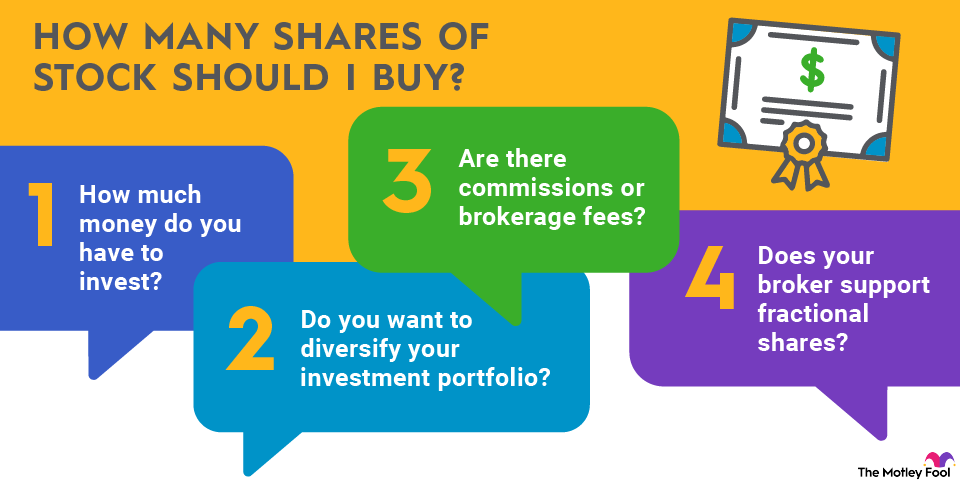
- Decide how many shares to buy: Consider your investment goals and how much of your portfolio you want to allocate to this stock.
- Select order type: Choose between a market order to buy at the current price or a limit order to specify the maximum price you're willing to pay.
- Submit your order: Confirm the details and submit your buy order.
- Review your purchase: Check your portfolio to ensure your order was filled as expected and adjust your investment strategy accordingly.
Should you invest in IBM?
Whether IBM belongs in your portfolio depends on your goals. The stock lagged the S&P 500 over the past decade, even including dividends, but its performance has improved markedly more recently. Over the three years leading up to June 2025, IBM roughly doubled the S&P 500’s return as it reshaped its business.
IBM is now focused on hybrid cloud computing, AI, and emerging technologies such as quantum computing. To support that shift, it has divested lower-margin or noncore businesses, including spinning off Kyndryl (KD +0.04%) in 2021, selling its healthcare software assets in 2022, and divesting The Weather Company in 2023.
The strategy aligns with powerful tailwinds. IDC projects public cloud spending to reach $1.6 trillion by 2028, growing at nearly 19% annually, while AI spending is expected to grow even faster. IBM believes large enterprises will adopt hybrid cloud and AI approaches rather than relying on a single provider, and its software, consulting, and infrastructure offerings are built around that view.
IBM is also investing heavily through acquisitions and continued work in semiconductor and chip design to support AI workloads. While these trends could benefit shareholders, executing a broad transformation through acquisitions and divestitures carries meaningful risk.

NYSE: IBM
Key Data Points
Is IBM profitable?
IBM is a profitable business, continually reporting net income on a trailing-12-month basis for over 30 years. Still, IBM's financials deserve a fresh look, considering all of the changes it's undergone in recent years.
IBM's software business has grown faster in comparison to its consulting and infrastructure businesses, accounting for roughly two-thirds of the profits in the first quarter of 2025. In other words, there's good reason to believe the company's overall profits can grow because its best growth supplies most of the profits.
As IBM's software business continues to take off, the company's cash flows are improving. However, investors do need to be aware that some of these cash flows are being poured right back into the business for research and development and acquisitions.
IBM is adapting its business to better address the global growth trends in cloud and AI. However, these spaces are highly competitive and subject to rapid changes as technology advances at breakneck speeds. It's imperative to spend money to stay ahead of the curve, a common need for tech stocks.
In summary, IBM is a profitable business, and its future cash-flow potential is promising. Investors must be aware that the company could find itself spending more money than anticipated to stay relevant in a rapidly advancing world.
Does IBM pay a dividend?
IBM stock has a long history of paying dividends. It's paid a dividend every quarter for more than a century. Adjusting for stock splits, the dividend was increased for the 30th consecutive year in 2025, landing IBM in elite company.
As of this writing, IBM is projected to pay dividends of $6.72 per share annually ($1.68 per share quarterly), which amounts to a 2.4% dividend yield based on the stock's current trading price.
The bottom line
IBM has been in business for more than a century, but it's not the same company it was even five years ago. Management removed parts of the business and acquired other companies, building its vision of enabling hybrid cloud-computing solutions and a hybrid approach to AI.
IBM has a strong history of profitability and rewarding shareholders. But it will need to work hard and spend heavily to ensure it remains competitive.
Related investing topics
FAQ
Investing in IBM FAQ
About the Author