From a financial standpoint, an index tracks the performance of a market, asset, sector, or strategy. Indexes are extremely useful metrics that affect everything from the rates of return on market-linked certificates of deposit (CDs) to consumer sentiment about the state of the economy. Read on to learn more about this basic concept and how an index can influence your financial future.
What is an index?
What is an index?
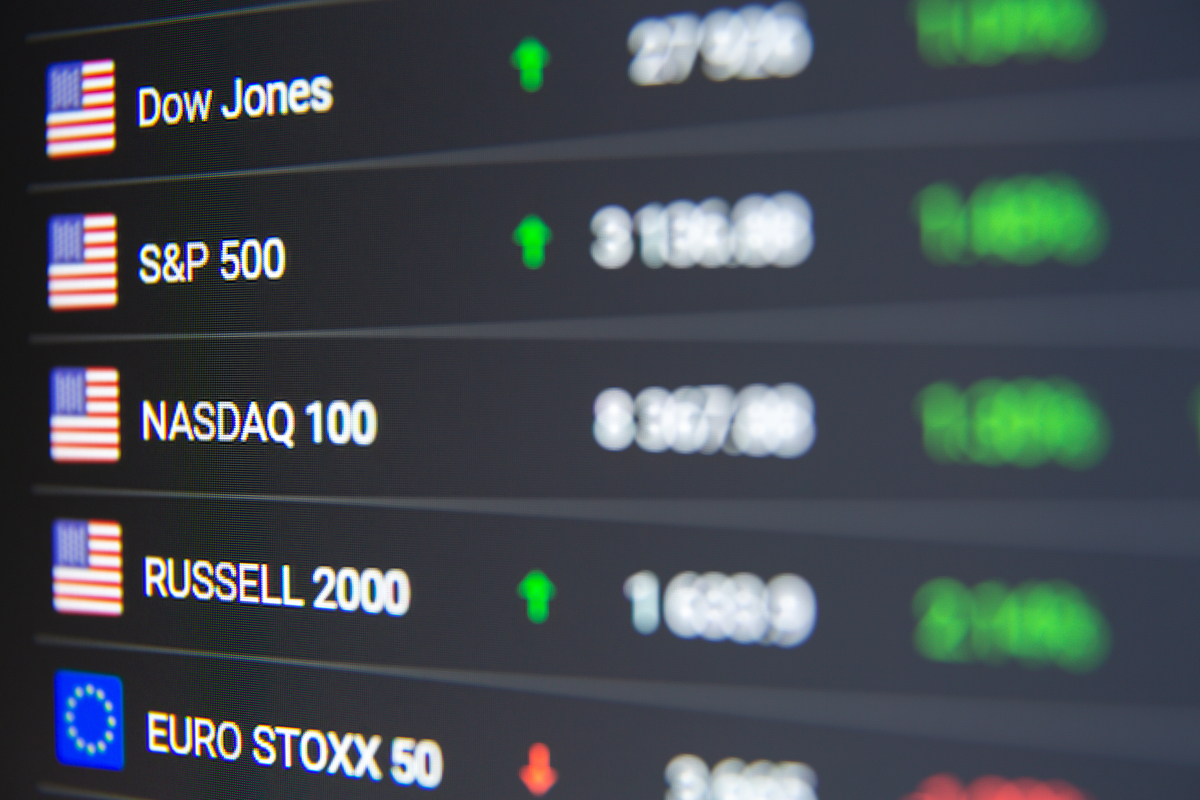
An index is simply a number that represents the value of a basket of financial instruments. The investing world is full of them. Examples include:
- The S&P 500
- The Dow Jones Industrial Average
- The Russell 2000
- The Nasdaq Composite Index
- The Hang Seng
- The price of almost any exchange-traded fund (ETF)
All of these have one thing in common: They help investors gauge the performance of financial assets.
By itself, however, the value of an index doesn't mean much. Instead, the daily oscillations of indexes like the S&P 500 and the Dow Jones Industrial Average are used as a proxy for the health of the economy in general and large corporations in particular. To a certain degree, it's a defensible use. The start of the Great Depression was tied to Black Monday in 1929, when the Dow lost almost 13% of its value. During the 2007-09 financial crisis, the S&P 500 lost 9% of its value in a single day in late September 2008.
But an index is a fairly blunt tool when it comes to analyzing particular events. Instead, an index is best used to gauge sentiment within a broad market over an extended period. Fortunately, there are enough financial indexes to provide trends for almost any market, sector, asset, or strategy.
Examples of an index
Examples of an index
If the Dow is up, the economy must be booming. If the Nasdaq is down, tech stocks must be having a rough time. Some indexes have become so ingrained in the general conversation that they're used as shorthand for parts or all of the economy. For example:
S&P 500: Although it's an extremely common shorthand reference for the U.S. business environment, the S&P 500 is a good measure of the environment for very large corporations -- the largest 500, to be precise. It's also weighted by market capitalization, or the value of its shares multiplied by the number of shares outstanding. Since it's weighted by market cap, there's much more emphasis on companies at the top, such as Apple (AAPL -1.45%) and Microsoft (MSFT -2.44%), than relatively smaller operations such as Ralph Lauren (RL -1.53%) or Campbell Soup Company (NYSE:CPB).
Dow Jones Industrial Average: The venerable index tracks the performance of 30 blue chip companies that are part of either the New York Stock Exchange or the Nasdaq Stock Exchange. It's been calculated since 1896, making it the second-oldest index after its cousin, the Dow Jones Transportation Average. Because it's been around for so long, the Dow is one of the more frequently cited indexes when the daily movements of the broader U.S. stock markets are mentioned.
Nasdaq Composite Index: The index includes all stocks that are listed exclusively on the Nasdaq exchange. The market-weighted index includes more than 3,000 different securities. Because it has a large number of young, fast-growing companies, the Nasdaq index is generally considered to be an excellent barometer of the overall performance of the tech industry.