Benefits and risks of investing in travel stocks
Here are some benefits of putting cash into travel stocks:
- Companies with strong brand recognition can raise prices to offset rising fuel or labor costs without losing their customer base.
- High-end consumers are less sensitive to economic downturns, allowing premium travel brands to maintain more stable returns.
- Travel tech companies that earn fees across flights, car rentals, and hotel stays avoid relying on a single volatile niche.
- Companies with ample cash reserves and manageable debt can withstand cyclical drops and sudden market disruptions.
That said, you should keep the following risks of investing in travel stocks in mind before you put money to work:
- Travel is a discretionary expense, meaning recessions or drops in consumer confidence can cause a sharp decline in demand.
- The travel sector is highly exposed to unpredictable global crises that can instantly halt consumer mobility and booking volumes.
- Profitability can be heavily squeezed by sudden fluctuations in fuel prices and ongoing labor market pressures.
- Because the industry is highly cyclical, companies carrying massive debt face severe financial strain when revenues dry up.
Methodology: How these stocks were chosen
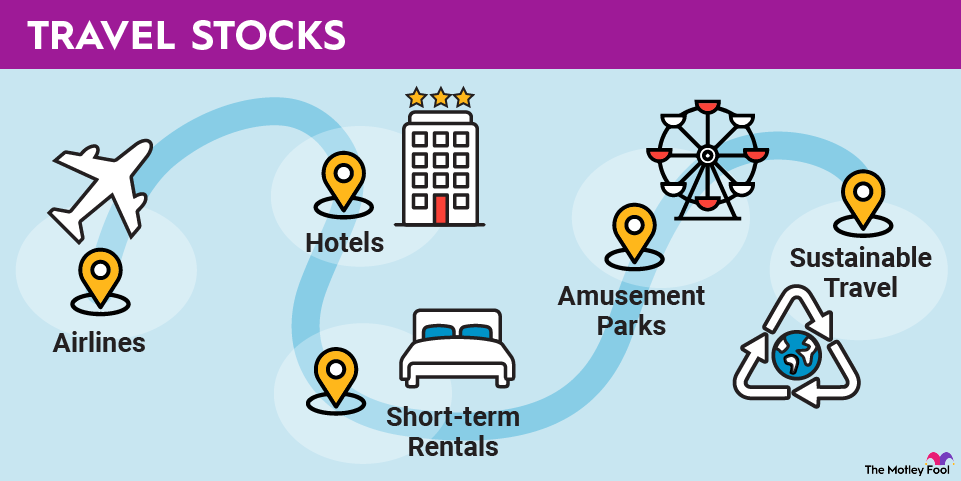
The travel industry is broad, encompassing everything from airlines and hotels to cruise lines and online travel agencies, which we feel are well represented on this list. Instead of putting all your money into one company, consider diversifying across different types of travel businesses or using a travel-focused ETF to manage your portfolio's risk exposure.
The bottom line
Travelers seem to be increasingly prioritizing unique, authentic, and immersive experiences over simple sightseeing. This is driving trends like culinary tourism, outdoor adventures, and travel to off-the-beaten-path destinations. A significant number of travelers plan trips around major events, such as the Olympics, Formula 1 races, or large concerts and festivals.
Film and TV filming locations are also driving destination choices. There's a growing demand for wellness retreats focused on physical and mental well-being, including digital detoxes and spa weekends. Families are planning large trips that cater to all ages.
Remote work has made it easier for people to work while traveling. Travelers are increasingly using AI tools for itinerary suggestions, budget management, and translation assistance. Consumers are seeking a seamless booking experience and are often willing to book directly with providers to access better deals, loyalty perks, and highly customized options. This creates a wide range of tailwinds for the best travel stocks.