The entrepreneur Elon Musk founded Space Exploration Technologies Corp., or SpaceX, in 2002 to reduce space transportation costs so humanity could eventually colonize Mars. While Musk's ultimate dream for the company has yet to become a reality, SpaceX has become one of the world's most valuable start-ups. As of early 2026, it ranked as the second-most valuable start-up in the world, with a valuation of $800 billion. SpaceX is reportedly pursuing an initial public offering (IPO) that could occur sometime in 2026.

The company is growing increasingly valuable as its revenues and profits soar. Many retail investors are likely wondering when they'll get their chance to invest in the company. Here's a look at what to consider if that opportunity ever arises.
What does SpaceX do?
SpaceX is a groundbreaking company. It was the first private company to develop a liquid-propellant rocket that reached orbit, the first to send astronauts to the International Space Station, and the first to achieve a vertical propulsive landing.
SpaceX has a growing commercial operation. It develops and manufactures spacecraft, provides launch services, and operates a commercial satellite-based internet service from its Starlink satellites.
The company has grand growth ambitions. It wants to deploy AI data centers in space, build Moonbase Alpha, and send uncrewed and crewed missions to Mars. An IPO would give the company the capital to accelerate its growth plan.
Is SpaceX publicly traded?
SpaceX doesn't currently trade publicly on major stock exchanges like the New York Stock Exchange (NYSE) or the Nasdaq stock exchange. So, retail investors can't buy shares of the space exploration company through their brokerage accounts.
Elon Musk controls the company and owns a significant stake. It's one of Musk's top investments, with reports estimating that he holds more than 40% of its shares. Employees and venture capital investors own the rest of the company's outstanding shares.
Outstanding Shares
Will SpaceX IPO?
As of early 2026, SpaceX was preparing for a possible initial public offering (IPO). The company was seeking to raise more than $25 billion in an IPO that could come as early as June.
Meanwhile, the company has an active internal trading program to allow employees and existing investors to sell shares. In late 2025, SpaceX opened a secondary share sale that enabled employees to sell their shares at a $800 billion valuation, more than double the prior level. These negotiated sales provide employees with liquidity for their shares so that the company wouldn't need to complete an IPO to allow insiders to sell shares.
Is SpaceX profitable?
Since SpaceX isn't publicly traded, it isn't required to disclose its financial results. However, given the company's popularity, it has revealed some financial data.
A report by the Wall Street Journal in late 2025 highlighted the financial strength of SpaceX. It noted that the company was on track to generate $16 billion of revenue for the year. Further, it was sitting on more than $3 billion of cash at the time. The company's strong revenue and cash positions enabled it to expand without needing to raise new capital from investors. A big driver of SpaceX's financial strength is Starlink, which doubled its revenue in 2024 to $2.7 billion.
If SpaceX can continue growing its revenue and profitability at high rates, its stock will have the fuel to skyrocket in the future.
Alternatives to SpaceX
Because SpaceX isn't publicly traded, investors can't buy shares through their brokerage accounts. However, some investors can still buy shares through other platforms that offer secondary trading of pre-IPO companies.
For example, Rainmaker Securities is a platform that makes private securities transactions possible. It lets institutions and accredited investors (i.e., high-net-worth individuals or people with a high income) buy and sell shares of privately held companies.
High Net-Worth Individual (HNWI)
Since most investors don't meet the accreditation qualifications, they can't buy shares of SpaceX directly until it goes public. However, they do have options to consider.
For example, the ARK Venture Fund (ARKV.X -0.42%), a public venture capital fund, held shares of SpaceX and several other private companies. Additionally, the XOVR ETF (XOVR -0.18%) held shares of private companies, including SpaceX, which was its top holding at 10% of its assets. Investors interested in getting in on the ground floor of some top pre-IPO companies should check out these funds.
Another option is to invest in some of the top space stocks to gain exposure to the markets SpaceX seeks to capture.
L3Harris Technologies
L3Harris Technologies (LHX +1.28%) is a leading defense contractor. It provides technology solutions across space, air, land, sea, and cyber. The company provides a variety of space solutions and capabilities, including solid rocket motors, responsive launch solutions, satellite technology, and deep space exploration engine capabilities.
Rocket Lab
Rocket Lab (RKLB +6.47%) is an integrated space company founded in 2006. It provides government and commercial customers with launch services, spacecraft manufacturing, satellite components, and on-orbit management solutions.
The company started out focusing on small launch capabilities, developing the Electron launch vehicle, which is now the second-most frequently launched U.S. rocket. It's currently developing Neutron, a larger, next-generation launch vehicle. Rocket Lab has also invested in diversifying its operations into additional space-related solutions.
Virgin Galactic Holdings
Virgin Galactic Holdings (SPCE +2.02%) is an aerospace and space travel company founded by well-known entrepreneur Richard Branson. It pioneered human spaceflight for private individuals and researchers.
The company went public in 2019 when it merged with a special purpose acquisition company (SPAC) run by famous investor Chamath Palihapitiya. After many delays, the company launched its first test spaceflight in 2021. It finally launched commercial services for scientific research in 2023. Virgin Galactic plans to launch a new class of spaceships for commercial space tourism services by the fall of 2026.
How to buy stocks similar to SpaceX
- Open your brokerage app: Log in to your brokerage account where you handle your investments.
- Search for the stock: Enter the ticker or company name into the search bar to bring up the stock's trading page.
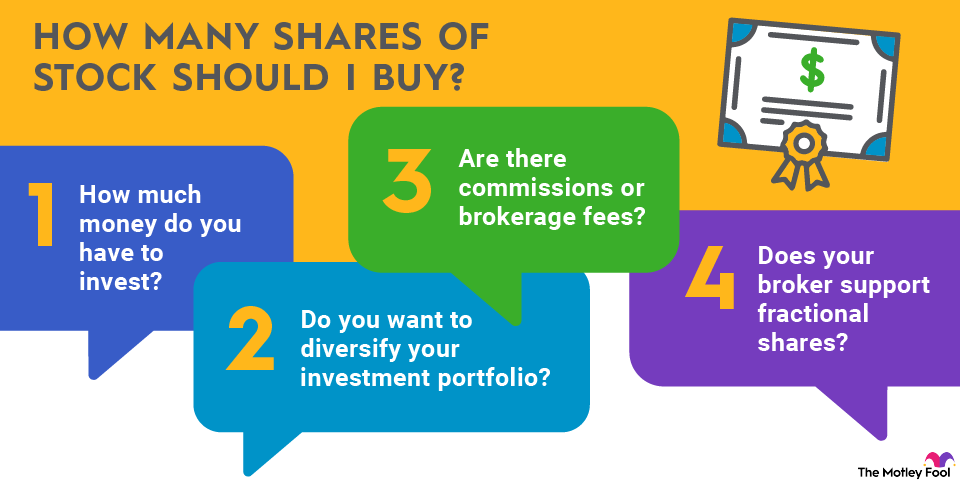
- Decide how many shares to buy: Consider your investment goals and how much of your portfolio you want to allocate to this stock.
- Select order type: Choose between a market order to buy at the current price or a limit order to specify the maximum price you're willing to pay.
- Submit your order: Confirm the details and submit your buy order.
- Review your purchase: Check your portfolio to ensure your order was filled as expected and adjust your investment strategy accordingly.
ETF options
Another alternative to consider for investors interested in SpaceX stock is an exchange-traded fund (ETF) focused on the space sector. As of early 2026, three ETFs focused on this sector:
Exchange-Traded Fund (ETF)
- ARK Space Exploration & Innovation ETF (NYSEMKT:ARKX): The fund, actively managed by Cathie Wood, focuses on companies engaged in space exploration and innovation, aiming for between 35 and 55 holdings. It has a reasonable ETF expense ratio of 0.75%. As of late 2025, the ETF had more than $500 million in assets under management (AUM). Rocket Lab and L3Harris Technologies were among its top holdings (second- and fourth-largest in early-2026, at 9.4% and 8.1% of its net assets, respectively).
- Procure Space ETF (NASDAQ:UFO): The ETF owns shares of companies involved in space-related industries. Although small (roughly $292.5 million in AUM as of early 2026), this fund had over 50 holdings, including Rocket Lab USA (the second-largest, at 6% of its assets). It also has a 0.75% expense ratio.
- State Street SPDR S&P Kensho Final Frontiers ETF (NYSEMKT:ROKT): This passively managed fund focuses on companies that make products or provide space travel and exploration services. The tiny ETF had only about $54.5 million in AUM and a 0.45% gross expense ratio as of early 2026. The fund held around 35 stocks, including Rocket Lab and L3 Harris Technologies (the third- and ninth-largest holdings at 4.4% and 3.4% of its assets, respectively).
Benefits and risks of buying SpaceX stock
There are several potential pros and cons of investing in SpaceX stock. Some of the benefits are:
- The potential for significant price appreciation.
- The ability to invest in the final frontier of outer space.
- The potential of investing in a company delivering skyrocketing revenue and profitability.
- The ability to invest in another company led by Elon Musk.
On the other hand, some potential risks of investing in SpaceX are:
- It trades at a high valuation, which would likely only increase in the immediate aftermath of an IPO.
- Shares of the space company could be very volatile.
- Elon Musk's political views could affect the company's ability to win government contracts.
What is SpaceX's valuation?
Valuation is another crucial factor investors should consider before buying any stock. Paying too high a price could cause them to lose money, even if profits take off.
As of early 2026, SpaceX's private market valuation was a staggering $800 billion based on a share sale the company opened for employees. That was double its prior valuation. That makes SpaceX more valuable than leading U.S. defense contractors Boeing (BA -3.43%), Lockheed Martin (LMT +0.40%), and Northrop Grumman (NOC -0.13%).
With the company on track to generate $16 billion of revenue in 2025, it trades at about 50 times sales. That's a hefty valuation.
SpaceX could grow into its valuation if its revenue and profits continue to skyrocket in the coming years. So, it could be trading at a more reasonable valuation if and when it goes public.
Related investing topics
The bottom line on SpaceX
SpaceX isn't currently publicly traded, so most investors can't buy shares of Musk's space exploration company. However, the company was preparing to go public in 2026.
If that happens, interested investors should carefully consider the company's profitability and valuation because they will be key drivers of its stock price in the future. If both appear poised to skyrocket, the stock could also soar.
FAQ
Investing in SpaceX: FAQ
About the Author