As self-driving technology advances, some investors are looking toward autonomous vehicle companies like Wayve.
Founded in 2017, the London-based startup focuses on end-to-end AI systems for autonomous driving and says it was the first to test this approach on public roads. Wayve has raised about $1.3 billion in funding and aims to bring scalable self-driving technology to millions of vehicles.
Before investing, it’s worth understanding whether and when Wayve might go public, how to gain exposure if it does, and what alternative investments exist in the autonomous driving space.

Is Wayve publicly traded?
As a privately held company, Wayve stock is not publicly traded.
In addition to the equity in the company that insiders own, there are a variety of other organizations that have investments in Wayve. When the company completed a $1.05 billion Series C funding round in May 2024, investors included SoftBank Group (SFTB.Y -2.36%), semiconductor powerhouse Nvidia (NVDA -2.82%), and Microsoft (MSFT -2.86%), which had also participated in a Series B funding round.
When will Wayve IPO?
Between the explosion in popularity of artificial intelligence (AI) stocks and the unique growth opportunities that IPO stocks represent, it's no wonder that many investors are keenly focused on the possibility of buying Wayve stock at its IPO.
However, investors who are interested in Wayve will have to wait since the company is not on the IPO calendar, and there's no indication that it plans to launch an IPO anytime soon.
IPO
Alternatives to consider
For people who still seek exposure to autonomous mobility companies, take a look at these alternatives.
Tesla
At the vanguard of autonomous driving, Tesla (TSLA +0.04%) is often the focus of conversations regarding self-driving cars. Available on vehicles made after September 2014, Tesla's Autopilot provides cruise control assistance that matches the car to the speed of nearby traffic and steering assistance in marked lanes. Tesla's Full Self-Driving (FSD) provides a variety of autonomous features such as changing lanes, stopping at signs and traffic lights, as well as remotely moving the vehicle out of tight parking spaces.
The coming months may prove to be pivotal for the company and its autonomous driving endeavors. In its 2024 10-K, Tesla said it planned to begin launching a Robotaxi business in 2025 as a ride-hailing network that would eventually operate fully autonomous vehicles.
To provide a superior autonomous driving solution, Tesla requires significant amounts of actual driving time with FSD employed to train the software. At the end of 2024, Tesla reported that drivers of its vehicles had logged almost 3 billion miles driving with FSD.
And it's not only Tesla vehicles where FSD may be available. On the 2024 fourth-quarter conference call, CEO Elon Musk said that the company has received "significant interest from a number of major car companies about licensing Tesla full self-driving technology." This story is worth following since licensing the FSD software to automakers could ultimately be a new revenue source for Tesla.
Nvidia
The fact that Nvidia now has an equity stake in Wayve makes it a compelling choice for investors seeking autonomous driving stock exposure. Nvidia is also an AI powerhouse that recently announced that its DRIVE Thor, a computing platform used in automobiles designed for generative AI applications, is gaining traction in the industry.
In January 2025, self-driving truck developer Aurora (AUR +1.11%) announced a partnership with Continental to produce Level 4 autonomous trucks at scale in 2027 using Nvidia's DRIVE platform Thor. BYD (BYDDY -1.90%), one of the largest electric vehicle (EV) companies in the world, is incorporating DRIVE Thor into its future EVs and relying on Nvidia's products for its AI development and training. Other leading EV manufacturers, such as Li Auto (LI +2.90%) and XPeng (XPEV +4.06%), have stated plans to build future EV models with DRIVE Thor.
In fiscal 2025, Nvidia booked $1.7 billion in revenue from its automotive business, and the company projects that automotive revenue will grow to $5 billion in fiscal 2026.
Since the company has demonstrated enthusiasm for seeking growth through acquisitions, it wouldn't be surprising if Nvidia pursued future acquisitions to strengthen the company's AI position.
Qualcomm
Like Nvidia, Qualcomm (QCOM -3.55%) is another semiconductor stock closely tied to the AI industry, and it is making a concerted effort to advance the self-driving car industry. Accomplishing this through its Snapdragon Ride platform, Qualcomm characterizes this platform as "designed to enable rapid development of future-proof automated driving solutions."
Expanding its relationship with Qualcomm, Trimble (TRMB -4.80%) announced in January 2025 that it would use the Snapdragon Digital Chassis to provide advanced positioning capabilities for a variety of automated vehicles. The connectivity platform that will result from the collaboration is expected to be found in vehicles starting in 2028.
While Qualcomm has supplied legacy automakers such as General Motors (GM +1.54%) and BMW (OTC:BMWYY) with its semiconductors, it announced in April 2024 a partnership with Momenta, a company focused on autonomous driving solutions to develop advanced smart driving solutions for a variety of vehicle types.
In the first quarter of 2025, Qualcomm reported revenue of $961 million from its automotive business, representing a year-over-year increase of 61%, and its sixth consecutive quarter of record automotive revenues. Management sees this driving significantly higher in the coming years. The pipeline for the company's Snapdragon Digital Chassis solution, a complete platform for vehicle connectivity and advanced driver assistance system (ADAS), was valued at about $45 billion as of mid-2024.
How to buy stocks similar to Wayve
Here are the steps to take to invest in one of these alternatives:
- Open your brokerage app: Log into your brokerage account where you handle your investments. If you don't have one yet, take a look at our favorite brokers and trading platforms to find the right one for you.
- Search for the stock: Enter the ticker or company name into the search bar to bring up the stock's trading page.
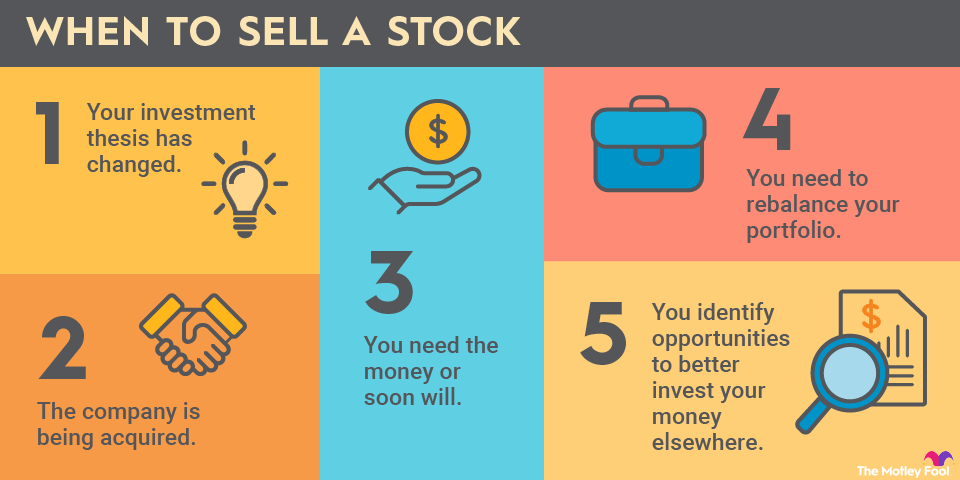
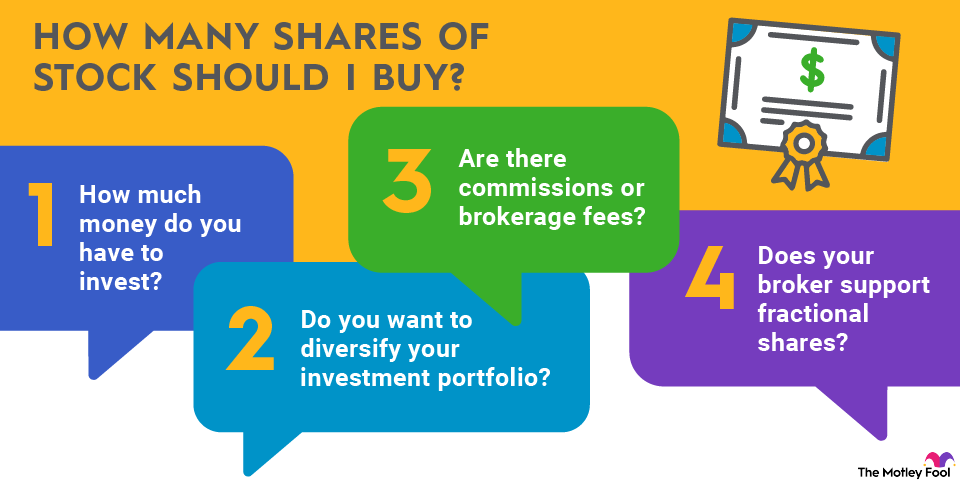
- Decide how many shares to buy: Consider your investment goals and how much of your portfolio you want to allocate to this stock.
- Select order type: Choose between a market order to buy at the current price or a limit order to specify the maximum price you're willing to pay.
- Submit your order: Confirm the details and submit your buy order.
- Review your purchase: Check your portfolio to ensure your order was filled as expected and adjust your investment strategy accordingly.
Artificial Intelligence
Is Wayve profitable?
Because it's a privately held company, Wayve isn't required to submit regulatory filings like its publicly traded peers. As a result, it's unclear whether the company is generating revenue, let alone making a profit.
But it's quite possible that Wayve will be earning revenue before long. According to the company, the completion of the recent Series C funding round will help the company launch its first product with L2+ ADAS. Nvidia characterizes Level 2 (L2) automated driving as systems that provide steering and brake/acceleration support, as well as lane centering and adaptive cruise control. L2+ includes intelligent cockpit services, such as driver monitoring, AI copilot technology using voice and gesture recognition, and advanced in-cabin visualization.
ETFs with exposure to companies like Wayve
There are several ETFs that provide exposure to stocks closely related to Wayve.
- iShares Self-Driving EV and Tech ETF (IDRV +0.53%): In addition to self-driving car stocks, the 49 holdings in the iShares Self-Driving EV and Tech ETF include battery stocks and stocks related to EVs in general. The ETF may also rev the heartbeats of income investors since the fund makes distributions on a semi-annual basis and has a yield of about 2.6% to help cover the expense ratio of 0.47%.
- Global X Autonomous & Electric Vehicles ETF (DRIV +0.69%): For investors interested in AI and tech industry leaders in general, the Global X Autonomous & Electric Vehicles ETF is a great option. Representing 6.5% of the portfolio, Toyota Motor (TM -0.13%) is the largest holding in the ETF; Microsoft is the second-largest position. Qualcomm, Alphabet (GOOGL -1.12%), and Nvidia round out the ETF's top five of the ETF's 75 holdings. The Global X Autonomous & Electric Vehicles ETF has $333 million in net assets and a 0.68% total expense ratio.
- ARK Autonomous Technology & Robotics ETF (ARKQ +3.27%): While some investors may want concentrated exposure to self-driving car stocks, others may want more measured exposure to the burgeoning industry. For them, the ARK Autonomous Technology & Robotics ETF is a smart choice. While autonomous mobility represents about 42% of the Cathie Wood-backed ETF, there are a variety of other industries represented by the holdings: battery technologies, neural networks, and smart devices, to name a few. With an 11.7% weighting, Tesla is the fund's largest holding. The ETF has $1.01 billion in net assets, and it has an expense ratio of 0.75%.
The bottom line
Fully autonomous vehicles may not appear in traffic now, but Wayve is making progress toward making this stuff of the future a reality sooner rather than later.
Wayve is still a privately held company, though, and there's no sign of an IPO coming down the road, so investors will have to find alternative investment opportunities. They have options to consider, such as the indirect exposure afforded by Nvidia, Tesla, Qualcomm, and ETFs that focus on autonomous mobility companies.
Related investing topics
FAQ
Investing in Wayve: FAQ
About the Author