Among the three major U.S. stock exchanges -- the Nasdaq Stock Exchange, New York Stock Exchange (NYSE), and over-the-counter (OTC) markets -- there are more than 12,000 publicly traded stocks available for investors. However, many of these are rather tiny, up-and-coming businesses.
If you limit your search to companies with valuations of $250 million or more, the number comes to about 3,600. And if we look at companies with market capitalizations (the value of all of a company's shares combined) of $1 billion or higher, there are about 2,500 to choose from.

These are still some big numbers. But as we increase the size threshold, we'll find fewer companies there. With that in mind, here are the biggest companies listed on the stock market, as well as the biggest private companies that choose not to list their shares to trade publicly for one reason or another.
What is the stock market?
Stock markets facilitate the buying and selling of stocks by investors. Individual investors, corporations, and institutional investors use stock markets to buy and sell shares of publicly traded companies with one another.
Decades ago, stock markets were exclusively physical places where trading activity took place by human traders actively negotiating prices on behalf of themselves or their clients. But in the modern era, most stock trading activity takes place electronically.
What are public companies?
Public companies, also known as publicly traded companies, are companies whose shares are available for purchase on major stock exchanges by the general public.
Publicly Traded Company
Companies become public by completing an initial public offering, or IPO, selling shares to the public to raise capital. Once its shares are public, investors can buy and sell shares from one another on the open market.
Public companies in the United States are required by the Securities and Exchange Commission (SEC) to comply with certain reporting requirements. For example, public companies are required to submit both annual and quarterly financial statements and must have a board of directors to supervise the company's management team.
Pros and cons of going public for companies
There are some good reasons companies choose to go public, but there are also some major drawbacks.
Advantages of going public
- Access to capital - Public companies can raise money through their IPO as well as through additional share offerings.
- Liquidity - Being public makes it easy to buy and sell shares whenever investors want.
- Talent retention - Being able to offer publicly traded stock and options as part of compensation can be a valuable recruiting and retention tool.
Drawbacks of going public
- Regulatory scrutiny - Publicly traded companies are required to comply with far more laws and regulations than private companies.
- Loss of control - It doesn't happen in all cases, but publicly traded shares have voting rights, and founders and insiders can lose control of the company after going public.
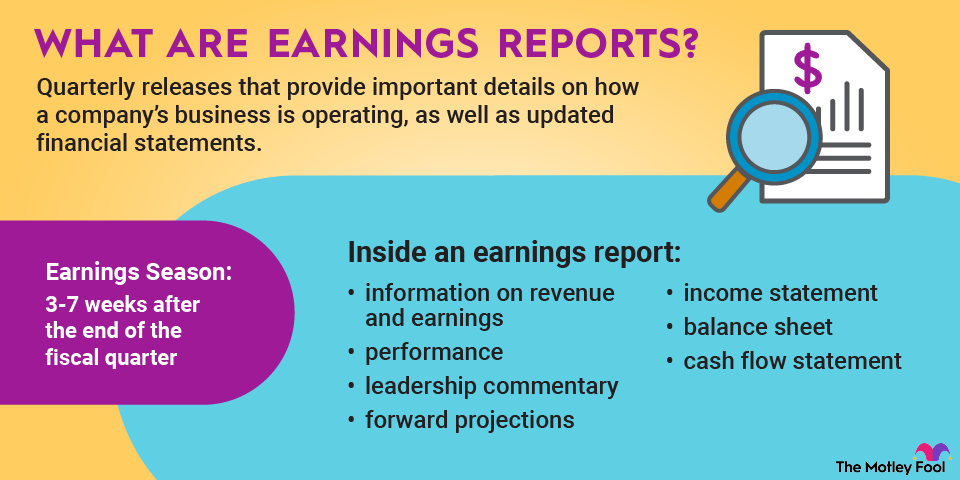
- Short-term focus - Public companies issue quarterly earnings reports and can be pressured to achieve certain short-term goals.
What are private companies?
Private companies are those not listed on a major stock exchange with shares available to be traded by the public. This doesn't mean that members of the public cannot invest in private companies. Quite the opposite: Private companies regularly raise capital from investors to help fund their growth. The term venture capital refers to investors putting money into private companies.
Market capitalization
A company's market capitalization, or market cap, is the sum of the value of all of its outstanding shares. Think of market cap as the stock market's "valuation" of that specific company. For example, if a stock trades for $100 per share and there are 10 million shares outstanding, that company has a market cap of $1 billion.
Companies with different market caps are often grouped into specific categories. Large-cap, mid-cap, and small-cap classifications are often used.
Understanding stock exchanges
Stock exchanges are places (online or physical) where investors buy and sell shares of stock. There are several types of stock exchanges, including auction markets like the New York Stock Exchange, where buyers and sellers are matched to complete transactions, and dealer markets like the Nasdaq Stock Exchange, where dealers buy and sell shares to facilitate maximum liquidity.
There are several stock exchanges in the U.S. and many more internationally. Collectively, stock exchanges make up the stock market.
The five largest Nasdaq companies
The Nasdaq Stock Exchange is a tech-heavy index and includes several of the world's largest companies. In fact, the five largest Nasdaq companies were the five largest companies that traded on U.S. stock exchanges as of November 2025, and by a wide margin.
- Nvidia (NASDAQ:NVDA): Nvidia became the first $5 trillion market cap company in 2025 and has a valuation of about $4.7 trillion as of November 2025. It literally invented the graphics processing unit (GPU), and it remains the dominant leader in the space. Its chips have use cases in the most compelling technology trends, such as data centers, autonomous vehicles, mobile gaming, and artificial intelligence (AI).
- Apple (NASDAQ:AAPL): With a market cap of $4.03 trillion, Apple was the second-largest company in the stock market in late 2025. This is a business that needs no introduction since Apple is the company behind some of the most popular consumer electronics products in the world, such as the iPhone, iPad, Apple Watch, and more.
- Microsoft (NASDAQ:MSFT): Microsoft has a $3.74 trillion market cap as of November 2025. The company is a designer and manufacturer of both hardware and software, and provides services to customers. It is the company behind the Windows operating system, the Microsoft Office suite of productivity tools, the Azure cloud infrastructure platform, and much more.
- Alphabet (NASDAQ:GOOG)(NASDAQ:GOOGL): Alphabet isn't a household name itself, but its main subsidiary, Google, certainly is. The company had a $3.48 trillion market cap with two main divisions, Google Services and Google Cloud. Google Services consists of the dominant internet search business, Gmail, Google Maps, Android, the Google Chrome browser, and much more. Google Cloud is one of the big three cloud services platforms, with Amazon's AWS and Microsoft's Azure being the other two.
- Amazon.com (NASDAQ:AMZN): Amazon has a $2.65 trillion market cap, and while it is best known for its dominant e-commerce platform, it is also the clear leader in cloud services through its Amazon Web Services (AWS) platform, which has a commanding market share lead over rivals from Microsoft and Alphabet.
The five largest NYSE companies
The New York Stock Exchange, or NYSE, lists thousands of companies as well. Here are the five largest as of July 2025.
- Taiwan Semiconductor (NYSE:TSM): Taiwan Semiconductor is a chipmaker that makes components for personal computers, mobile devices, servers, data centers, and more. It has a market cap of $1.5 trillion and is emerging as one of the biggest winners of the surge in AI investment.
- Berkshire Hathaway (NYSE:BRK.A)(NYSE:BRK.B): Berkshire Hathaway is a conglomerate with more than 60 subsidiary businesses, including GEICO, Duracell, Dairy Queen, Pilot Travel Centers, and dozens more. It also owns a massive portfolio of common stocks worth more than $300 billion and has a staggering $382 billion in cash and short-term investments on its balance sheet as of the third quarter of 2025. Berkshire was the first non-technology company in the U.S. stock market to reach a trillion-dollar market cap.
- Eli Lilly (NYSE:LLY): With an $882 billion market cap, Eli Lilly is a pharmaceutical manufacturer with a long list of products to treat a variety of conditions. Applications of the company's major drugs include treatments for diabetes, oncology, immunology, neuroscience, and more.
- JPMorgan Chase (NYSE:JPM): JPMorgan Chase is the largest bank in the United States in terms of asset size, and it has a $861 billion market cap in late 2025. It has $2.4 trillion in deposits and $1.3 trillion in loans, and it operates more than 4,000 banking branches under the Chase brand.
- Walmart (NYSE:WMT): Walmart is the largest physical retailer in the United States, and it also has a substantial e-commerce operation. With an $820 billion market cap as of November 2025, Walmart has generated $693 billion in merchandise sales over the past 12 months.
The five largest OTC companies
Many of the largest companies that trade on the over-the-counter (OTC) markets are foreign companies that are also listed on other major stock exchanges around the world. In fact, all of the top five are in this category.
- LVMH Moet Hennessy Louis Vuitton (OTC:LVMUY): LMVH is a massive conglomerate of luxury brands. In addition to those that make up the company's name, LMVH owns the brands Tiffany & Co., Christian Dior, Fendi, Marc Jacobs, TAG Heuer, and more.
- Nestle SA (OTC:NSRGY): Nestle is best known for its chocolate brand, but it also owns a large portfolio of other food brands that are well-known in the U.S. and abroad, including Perrier, Gerber, Poland Spring, Deer Park, Nespresso, Hot Pockets, DiGiorno, Häagen-Dazs, Purina, and many others.
- Roche Holding AG (OTC:RHHBY): Roche is a Swiss healthcare company that makes pharmaceuticals and medical diagnostics. It is the world's largest producer of cancer treatments and has a massive portfolio of pharmaceutical products.
- Siemens AG (OTC:SIEGY): A German technology conglomerate, Siemens develops and manufactures automation solutions, infrastructure products, mobility products such as trains, healthcare solutions, and more.
- Deutsche Telekom AG (OTC:DTEGY): Deutsche Telekom is a German telecommunications company and the largest telecom in Europe. For American investors, it is most significant as the former owner of T-Mobile, and it still owns a majority (50.2%) of the company.
The five largest private companies
Again, private companies are those whose shares don't trade on any public stock exchange. These companies may occasionally raise money from investors, but their shares are not liquid and may be available only to certain investors. As of November 2025, the five largest private companies in the United States by revenue were:
- Cargill: A global company that produces food service products, nature-based pharmaceuticals, risk management solutions, nutritional supplements, and more.
- Koch Industries: A conglomerate with many subsidiaries in various manufacturing, chemical, energy, minerals, and paper industries, among others.
- Publix Super Markets: A large chain of supermarkets throughout the Southeastern U.S., with an especially large presence in Florida and Georgia, and a total of almost 1,400 stores.
- State Farm: A massive insurance company that holds the No. 1 market share in auto insurance and is a major provider of other types.
- Mars: A food manufacturer best known for its candy products, including M&Ms, Skittles, Snickers, and more. It also owns several other popular food brands, such as Combos, and some of the most popular pet food brands, including Pedigree, Whiskas, and Nutro.
Related investing topics
The bottom line on the top stock market companies
There are thousands of companies listed on the U.S. stock market's various exchanges. As of 2025, there were about 3,450 different stocks listed on the Nasdaq (including cases where the same company has more than one class of stock), about 2,200 on the NYSE, and almost 6,500 on the OTC markets. The companies mentioned here, although the largest, make up only a tiny fraction of all publicly traded companies.