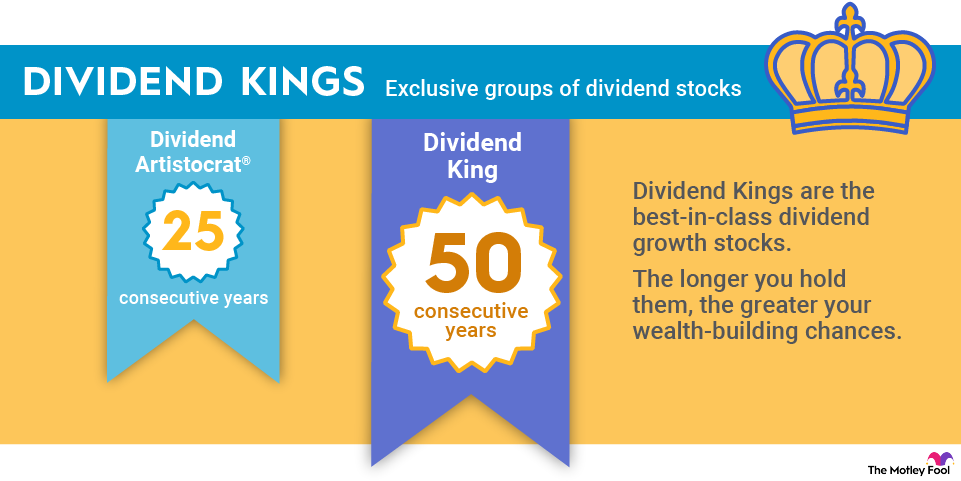
Dividend stocks are shares of companies that make regular distributions to their shareholders, usually in the form of cash payments. Dividend stocks can be a useful source of income, but the best dividend stocks can also be an excellent way to build wealth over the long term.
However, not all dividend stocks are great investments, and many investors are unsure how to start their search. With that in mind, here's a list of dividend-paying stocks you might want to consider and some of the most important things to look for in the top dividend stocks.
Nine top dividend stocks to consider
Here are nine top dividend stocks to consider buying now.
| Name and ticker | Market cap | Dividend yield | Industry |
|---|---|---|---|
| Lowe's Companies (NYSE:LOW) | $161.2 billion | 1.65% | Specialty Retail |
| Realty Income (NYSE:O) | $60.4 billion | 4.92% | Retail REITs |
| Chevron (NYSE:CVX) | $370.0 billion | 3.72% | Oil, Gas and Consumable Fuels |
| Target (NYSE:TGT) | $52.4 billion | 3.92% | Food and Staples Retailing |
| Starbucks (NASDAQ:SBUX) | $106.9 billion | 3.27% | Hotels, Restaurants and Leisure |
| Brookfield Infrastructure (NYSE:BIPC) | $6.5 billion | 3.47% | Gas Utilities |
| Microsoft (NASDAQ:MSFT) | $3.0 trillion | 0.85% | Software |
| American Express (NYSE:AXP) | $231.7 billion | 0.97% | Consumer Finance |
| Clearway Energy (NYSE:CWEN) | $4.9 billion | 4.34% | Independent Power and Renewable Electricity Producers |
1. Lowe's
Home improvement giant Lowe's (LOW +0.59%) may not seem like a very exciting stock. And that's true -- unless you like dividend growth. The company has raised its dividend almost every year since going public in 1961 and has raised the payout by more than 300% over the trailing decade alone.

NYSE: LOW
Key Data Points
Investors worried about the housing downturn shouldn't fret. When the housing supply is tight, homes are harder to buy, so people tend to spend more to upgrade their existing homes. So, any cyclical weakness in its results will likely return to growth over the long term, even if short-term shifts in consumer spending cause an overall slowdown in renovations.
2. Realty Income
If you're looking for a simple way to invest in high-quality real estate for income and growth, Realty Income (O +1.36%) might be the perfect stock. The company owns an array of largely e-commerce-resistant properties, earning strong cash flow from tenants on long-term leases.

NYSE: O
Key Data Points
Realty Income boasts an exceptional streak of monthly payments and more than three decades of annual dividend increases since its 1994 initial public offering (IPO). Since its founding, Realty has declared 667th consecutive monthly dividends and just raised its monthly dividend for the 134th time since the real estate investment trust (REIT) was publicly listed.
3. Chevron
For years, Chevron (CVX +0.73%) has been a solid stock to own and a big winner for investors, especially for dividend investors. It has maintained a steady track record of generating strong cash flows and growing payouts modestly every year for 39 years and counting.

NYSE: CVX
Key Data Points

NYSE: TGT
Key Data Points
At the same time, its focus on increasing its e-commerce business and expanding in-store offerings has helped stabilize its top line while improving profitability. While it's facing some near-term struggles, Target's balance sheet remains well shored up to support its commitment to paying dividends to shareholders.

NASDAQ: SBUX
Key Data Points

NYSE: BIPC
Key Data Points

NASDAQ: MSFT
Key Data Points

NYSE: AXP
Key Data Points

NYSE: CWEN
Key Data Points
The company invests in, acquires, and operates renewable energy facilities, selling the power on long-term contracts -- think decades, not years -- to utility companies and large power consumers. Its dividend yield was around 4.4% in early 2026.
Highest dividend stocks
Whether you're looking to generate income you'll use today or the capital you can reinvest to increase your wealth, there's a good chance you're looking for a big dividend payout. If you're hoping to maximize the value of dividends you earn, here are a couple of suggestions.
First, consider dividend yield above dividend size. The dividend yield is a percentage of the share price you paid for the stock, paid in dividends annually. Second, don't make owning high-dividend-yielding stocks your No. 1 priority. Focus first on the quality of the business and the company's ability to maintain and increase the payout.
How dividends affect a stock's share price
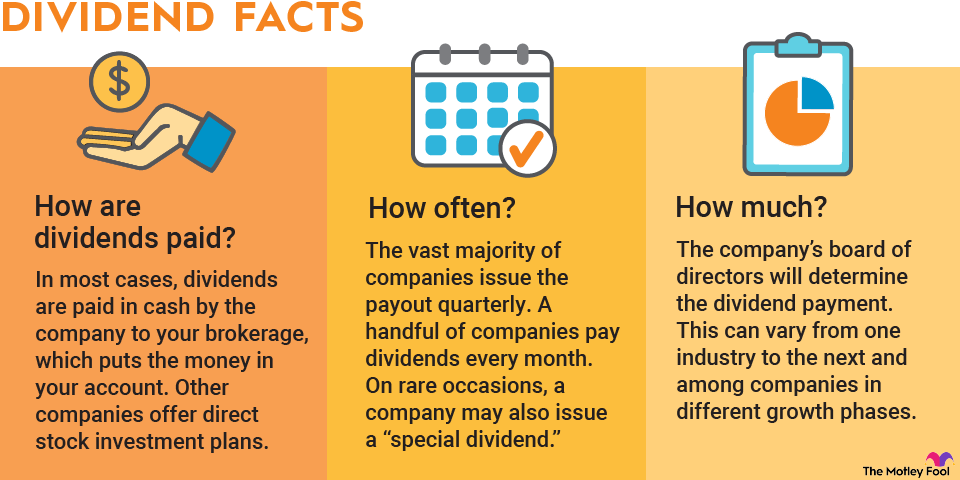
Dividends typically cause a stock's share price to drop by approximately the dividend amount on the ex-dividend date, since the cash payout reduces the company's value, and new buyers are not entitled to the payment. While the price drops on this date, the stock may rise in the days leading up to it due to increased demand.

Dividend investors should focus not on dividend size but on dividend yield.
Why invest in dividend stocks?
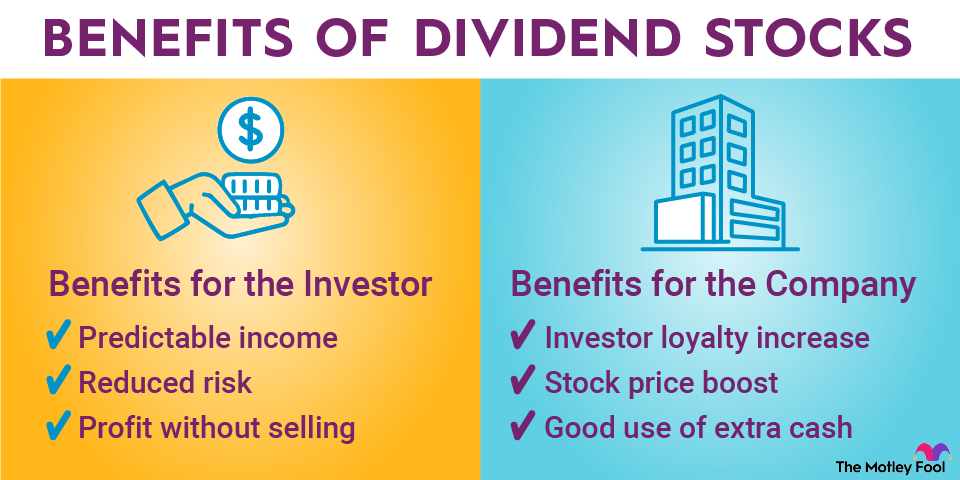
Dividend stocks can be an attractive option for long-term investors who want to generate a reliable, passive income stream and potentially reduce the overall volatility of their portfolio. Quality dividend stocks can provide something of a portfolio cushion during market downturns because they are issued by well-run, stable, (and often) older companies. Plus, you can reinvest your dividends to maximize the power of compounding returns in your portfolio.
How to choose dividend stocks
Here are some key things to look for when investing in dividend stocks.
- Identify dividend stocks that meet your criteria. You may be looking for yield, history of dividend growth, or something different.
- Research the history of earnings growth. Dividend growth is sustainable only if a company's earnings have also steadily grown at a similar or higher rate over time.
- Consider valuation. While paying a modest premium for a high-quality business can sometimes be justified, overpaying can significantly weigh on long-term returns.
- Determine position sizing. Consider how much exposure you want to a particular stock, how much income you expect it to generate, and other factors to ensure you buy an appropriate amount.
- Focus on the long term. Dividend stocks deliver best when you buy and hold them for many years. Having patience and letting exceptional managers run great companies while you just sit back and own them is how you get the best returns from dividend stocks.
Strategies for investing in dividend stocks
If you're going to successfully invest in dividend stocks, you need to focus on the quality of the underlying business, the sustainability of its dividend, and diversifying your capital across multiple companies rather than solely chasing high yields. Sometimes, a high yield can signal a sell-off of the underlying stock and reflect a company in trouble.
Dividends are generally taxable income, even if reinvested. Qualified dividends are often taxed at lower rates than ordinary income, so consider this when planning your strategy.
If you need current income (e.g., in retirement), you may prioritize stable, higher-yield stocks with financials to support a robust payout. If you are growth-oriented with a long time horizon, focus on companies with lower initial yields but strong dividend growth rates.
Dividend stocks versus dividend funds
Dividend stocks and dividend funds are both popular ways to generate income and potentially grow your investments.
- Dividend funds, such as mutual funds and exchange-traded funds (ETFs), invest in a portfolio of multiple dividend stocks.
- Dividend funds can offer diversification and professional oversight by investment managers who carefully select the underlying stocks.
- With a dividend fund, it's important to pay attention to the expense ratio to determine how much of your investment goes toward fees.
Both types of investments can offer advantageous returns for a long-term investor with a well-diversified portfolio and a durable time horizon.
Best sectors for dividend investing
Dividend investors often prefer to focus on companies in a range of sectors with stable cash flows and predictable earnings. The best market sectors can offer different advantages, from high yields to steady dividend growth.
However, the right mix really does depend on your investment goals. The utilities, energy, healthcare, consumer goods, and financial sectors contain some of the top dividend-paying companies to consider.
Related investing topics
FAQ
Best dividend stocks: FAQ
About the Author