Investing and taxes: what new investors should know
There are some important tax rules involving investing, but there are two considerations that are especially important for new investors to know:
- Capital gains: When you sell an investment at a profit, the gains can be taxable (unless you sell the investment in a retirement account). This is known as capital gains tax. Long-term capital gains, which occur when you sell an investment you've owned for more than a year, are taxed more favorably.
- Dividends and interest: Many stocks distribute some of their profits to investors as dividends or interest. Other types, like bonds and CDs, pay interest. Dividends and interest income can be taxable. Most stock dividends get favorable tax treatment if they meet the IRS definition of qualified dividends.
How to track your investments
First, you don't need to check your investments every day. One of the biggest rookie mistakes is paying too much attention to your long-term investments and making emotional decisions based on short-term performance.
According to several studies, the average investor underperforms the market. A key reason is that they act on impulse rather than leaving investments alone.
Having said that, tracking your investments (reasonably often) is an important part of the journey. Your brokerage app or website should allow you to view your entire investment portfolio and set up alerts. For example, I get a push notification on my smartphone if any of my stocks move up or down by more than 5% in a single day.
Common myths about investing
Before we go any further, let's take a moment and address some of the common misconceptions about investing:
- You need a lot of money to get started investing. With the emergence of zero-commission brokers and fractional shares, it is easier than ever to start investing with minimal capital. In fact, it's possible to construct a diversified investment portfolio with as little as $100 or even less. The key is adding to it consistently over time.
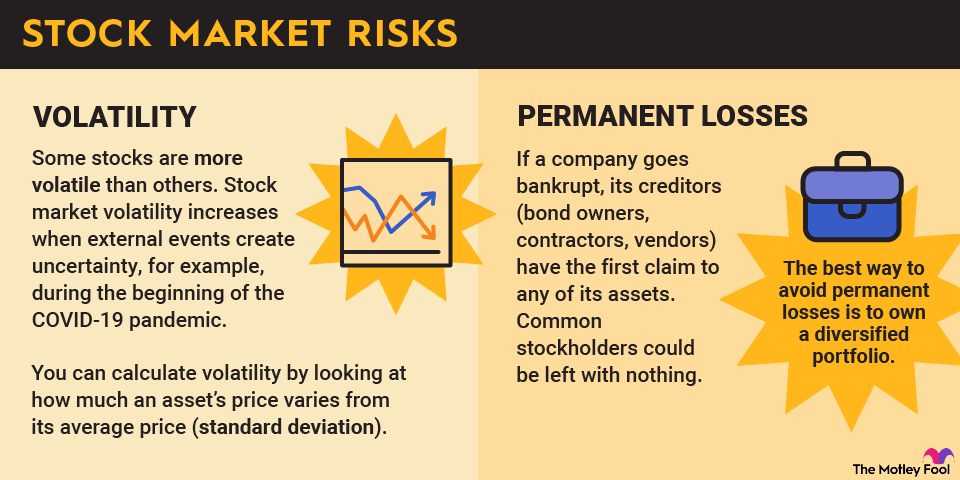
- Investing is too risky. Over short periods, investing can be volatile. But over the long term, investing can be a great way to build wealth without taking excessive risks.
- Day trading is the best way to make money. Short-term trading is best left to the pros. The most surefire way to produce strong returns is to buy great investments and hold them for as long as they remain great investments.
Now, let's get to the steps you'll need to take to invest money effectively.
Mistakes first-time investors should avoid
As we've discussed, knowing how to invest money is extremely important for building wealth and creating financial security. But it can be even more important to know how not to invest.
For one thing, avoid over-trading. I've mentioned this elsewhere in the article, but it's worth repeating. One of the most common reasons for poor investment performance is the constant in-and-out of stocks and funds.
There's a good reason for this. It's common knowledge that the goal of investing is to buy low and sell high, but our emotions tell us to do the exact opposite. When stocks rise, and we see others making money, that's when we want to buy. And when stocks drop, it's our instinct to sell before things get any worse.
Other common mistakes for first-timers to avoid:
- Don't try to day trade, meaning buying stocks that are going to go up over the next few hours or days. Leave that to professional traders.
- Don't invest with margin (borrowed money). Not only do you pay interest on the money you borrow, but using margin can also amplify your losses if things don't work out.
- Don't even touch options trading until you really know what you're doing.
- Don't confuse investing with speculating. There can be room for both, but it's important to know when you're taking a risk that could wipe out your entire investment.
How to maintain your investments for long-term wealth
Here's an important takeaway from this article. The best way to build wealth over the long term is to put your money to work in excellent investments and hold them for as long as they remain excellent.
Obviously, the best practices for maintaining your investments depend on what types of investments you make. But here are some general guidelines:
- Avoid selling stocks, mutual funds, or ETFs just because they go up or down. There are some good reasons to sell, but price movements alone aren't among them.
- It's a smart idea to periodically check in on your investments to see if you need to rebalance your portfolio. For example, if your goal is to invest 60% of your money in stocks and, due to market movements, you now have 70%, rebalancing involves selling some of your stock investments and allocating the proceeds to other investments.
- On the other hand, avoid checking your investments too often. This helps avoid making emotional or impulsive investment decisions.