About the Author
Frank Bass has no position in any of the stocks mentioned. The Motley Fool has positions in and recommends Costco Wholesale and Walmart. The Motley Fool recommends Five Below. The Motley Fool has a disclosure policy.
Invest better with The Motley Fool. Get stock recommendations, portfolio guidance, and more from The Motley Fool's premium services.

Dollar store stocks are companies that carry a range of cheap household products and random merchandise that fit even the tightest family budgets. While inflation has pressured the "everything costs $1 or less" niche, the concept of everyday staples at bargain prices endures nonetheless.
Let's explore three dollar store stocks so you can decide which one fits your investment portfolio.
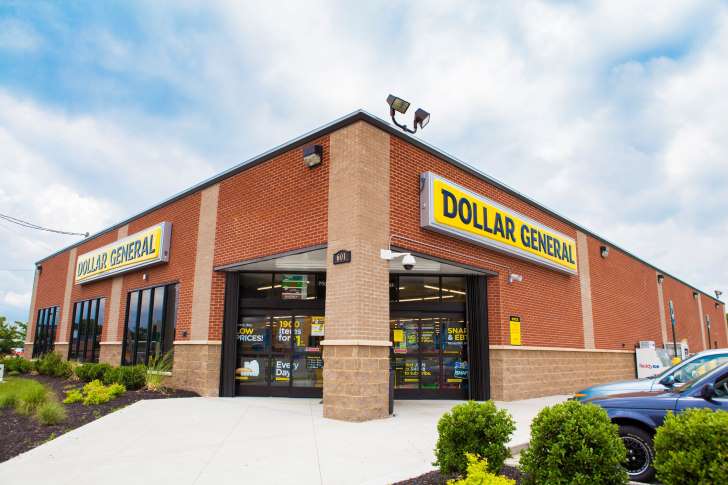
Dollar General is the largest dollar store operator by annual sales and total store count. The company also has the longest history among its competitors. Dollar General opened its first store in 1955 after founder Cal Turner was inspired by department store "dollar days" promotions. Thirteen years later, Dollar General went public on the New York Stock Exchange for $16.50 per share. Today, the company operates more than 20,000 stores around the U.S.
Dollar General has a long track record of revenue growth. In 2015, the company produced sales of about $18 billion. By fiscal year 2025, net sales had risen to $42.7 billion, a 5.2% year-over-year increase. The growth has come primarily from its expanding store footprint. During the same time, the chain added roughly 8,700 stores.
More recent periods have been challenging, with budget-constrained customers feeling the impact of inflation, inventory management issues, and weather events that have increased selling, general, and administrative (SG&A) expenses.
It's been a slow but steady recovery for Dollar General's share prices. Between early 2023 and early 2025, the stock price plunged from more than $250 to about $75. In 2026, prices had rebounded to around $150 before retreating to $100 at the end of the first quarter, then bouncing back to $125 in mid-July. So, in brief: It's been volatile.
Dollar Tree is Dollar General's closest competitor in terms of store footprint and annual sales. Dollar Tree acquired Family Dollar in 2015 and 170 stores from the 99 Cents Only chain in 2024. Today, Dollar Tree and its subsidiary Family Dollar operate more than 16,500 stores in the contiguous United States and Canada. It generated about $19.4 billion in revenue during the 2025 fiscal year, which ended Jan. 31, 2026.
Like Dollar General, Dollar Tree has posted strong long-term sales growth. Same-store sales rose 5.3% in 2025, and the company noted that an increasing number of its customers made $100,000 or more. Of the 3 million new households shopping at its store in late 2025, the company estimated that 60% earned at least six figures.
Like Dollar General, Dollar Tree stock has been on a bumpy ride lately amid weak consumer spending, stiff competition from big-box stores, and lowered analyst expectations. After falling into the mid-$60s in late 2024, share prices had rebounded to roughly $140 by early 2026, then plunged to around $90 in early summer 2026 before rebounding to $120. As with its larger competitor, its performance has been volatile.
Five Below opened its first store in 2002, which makes it a relative newcomer in the retail industry. The company targets young shoppers with an assortment of toys, party supplies, and other household basics -- many priced below $5.
Five Below trails its peers in store footprint and sales. The company has about 1,800 stores in the U.S. and reported net sales of $4.76 billion in 2025.
Five Below has largely been a growth story since its 2012 initial public offering. Between fiscal years 2015 and 2019, the company delivered annual sales growth of 20% or more. By fiscal year 2024, the rate had leveled off somewhat to about 15% before rebounding to 22.9% in 2025.
The company has the best operating margins of the three dollar stores, delivering more than 10% on this metric in most years. Its trailing 12-month operating margin stood at roughly 12% at the end of the first quarter of 2026.
Five Below's stock dove in mid-2023, dropping from more than $200 per share to the mid-$60s in early 2025. The stock was buoyed by strong Q4 2025 results, topping $230 per share by the end of the first quarter, but had retreated to the low $200s by mid-2026. Not to sound like a broken record, but its investors have also had a bumpy ride.
Investing in dollar store stocks follows the same process as buying any other publicly traded company. To do so, just follow the steps below.
1. Open your brokerage account: Log in to your brokerage account where you handle your investments. If you don't have one yet, take a look at our favorite brokers and trading platforms to find the right one for you.
2. Search for the stock you want to purchase: Enter the ticker into the search bar to bring up the stock's trading page.
3. Decide how many shares to buy: Consider your investment goals and how much of your portfolio you want to allocate to this stock.
4. Select order type: Choose between a market order to buy at the current price or a limit order to specify the maximum price you're willing to pay.
5. Submit your order: Confirm the details and submit your buy order.
6. Review your purchase: Check your portfolio to ensure your order was filled as expected and adjust your investment strategy accordingly.


As with almost any investment, there are pros and cons to investing in dollar stores. Some of the pros include:
Despite their advantages, dollar store stocks aren't without risks:
It's easy enough to consider any one of the 151,975 convenience stores in the U.S. to be dollar stores. Companies that operate 500 or more stores account for less than 25% of the total; according to the National Association of Convenience Stores, almost two-thirds are single-store operations, and most rely heavily on gasoline sales.
Dollar stores, however, are a different breed. Our analysis began with publicly traded companies with more than 1,000 stores and a negligible reliance on gas sales (although Dollar General began a pilot program to sell gas in some locations in mid-2025). We also considered strategy, focusing only on companies that focus on value pricing for low- and middle-income households.
Finally, we focused on market capitalization, where the leaders in the dollar-store sector are clear. Only three have market caps exceeding $10 billion, considerably narrowing the field.
Dollar store stocks have been on a bumpy ride since 2024, largely due to inflation that has weakened consumer spending. While they've traditionally been defensive stocks, it's important to remember there's a Goldilocks zone for dollar stores. If the economy is too weak, consumers cut back spending across the board, and if it's too strong, they may trade up to more expensive options.
Having said that, dollar stores have posted relatively strong growth despite economic headwinds and continue to expand, especially in rural markets. If you believe they have room for more growth, dollar stores can be a sound buy-and-hold investment.


| Name and ticker | Market capMarket cap calculated using publicly traded shares outstanding only. Does not include unlisted, private, or dual-class non-traded shares. Implied market cap may vary. | Current price | Dividend yield |
|---|---|---|---|
| Dollar General (NYSE:DG) | $27.5 billion | $124.75 | 1.89% |
| Dollar Tree (NASDAQ:DLTR) | $24.3 billion | $126.38 | 0.00% |
| Five Below (NASDAQ:FIVE) | $11.3 billion | $204.14 | 0.00% |