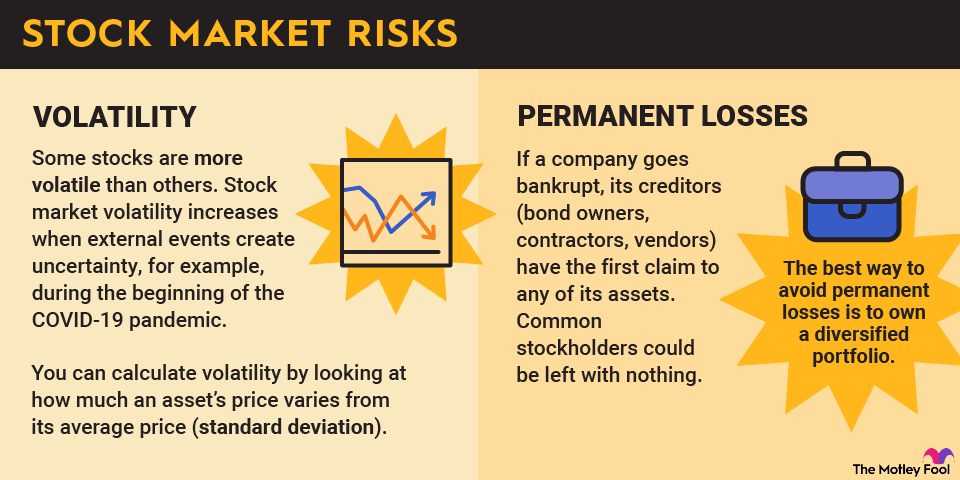
A few years ago, inflation spiked to its highest rate in more than four decades. It has cooled off quite a bit since then, but it remains above the Federal Reserve's 2% target, and there's no guarantee that it won't rise again.
Inflation can cause significant volatility and stock market declines, and it isn't hard to see why. Inflation negatively affects consumers' purchasing power and makes it more expensive for individuals and businesses to borrow money. So, it also leads to lower demand for homes, automobiles, and other large purchases.
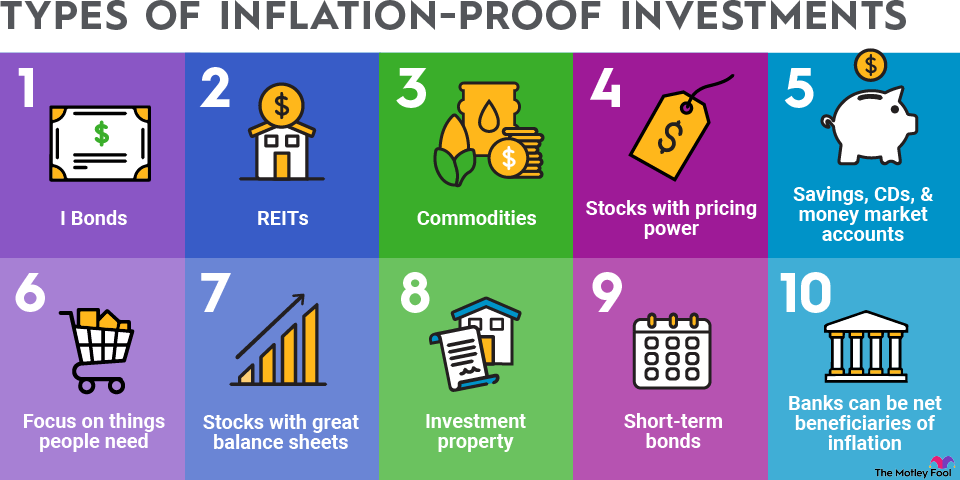
6. Focusing on things people need
When inflation rises, consumers tend to pump the brakes on spending. However, the biggest cutbacks happen in discretionary spending; that is, people stop buying things they don't need. On the other hand, businesses that sell things people need typically do just fine during inflationary periods. Utilities, consumer staples, and insurance are just a few examples of sectors that generally fall into this category.
Walmart (NYSE:WMT) is a great example since it not only sells things people need (such as groceries) but also does so at lower prices than most competitors. When consumers feel the need to cut back, Walmart's sales tend to grow.
7. Stocks with great balance sheets
When inflationary environments come along, cash is king. If you're running a business, you don't want to have to borrow money or refinance debt at high interest rates. So, one great strategy is to look for companies with cash-rich balance sheets and relatively low debt loads.
Berkshire Hathaway (BRK.A +0.45%)(BRK.B +0.53%) is a great example. Berkshire has not only a portfolio of subsidiary businesses that generally sell things people need but also a stockpile of cash on its balance sheet as of mid-2025 -- more than $380 billion in late 2025. This has allowed Berkshire to avoid borrowing money at high rates and enabled the company to earn billions of dollars in interest income annually.
More importantly, the cash gives it plenty of ammunition to acquire competitors or buy stocks at discounted prices during tough times. There's a reason Berkshire typically outperforms the market in years when the S&P 500 is down, and its inflation resistance has a lot to do with it.
8. Investment properties
Owning an actual investment property isn't for everyone. Even if you hire a property manager, owning real estate is a more hands-on type of investment than buying REITs or other stocks.
However, rental properties can be an excellent way to build wealth over time and can protect against inflation. Historically, both home prices and rental rates have kept pace with inflation -- or slightly more -- over long periods of time.
9. Short-term bonds
Short-term bond investments are typically not only less price-sensitive than long-term bonds but also pay more in inflationary periods. Let's say you bought a 30-year Treasury bond paying 2.5% interest a couple of years ago. If the yield on new 30-year Treasuries rises to 4%, your bond becomes intrinsically less valuable. You'll still collect your interest payments (at the 2.5% rate), but the market value of the bond -- if you need to sell it -- will drop significantly.
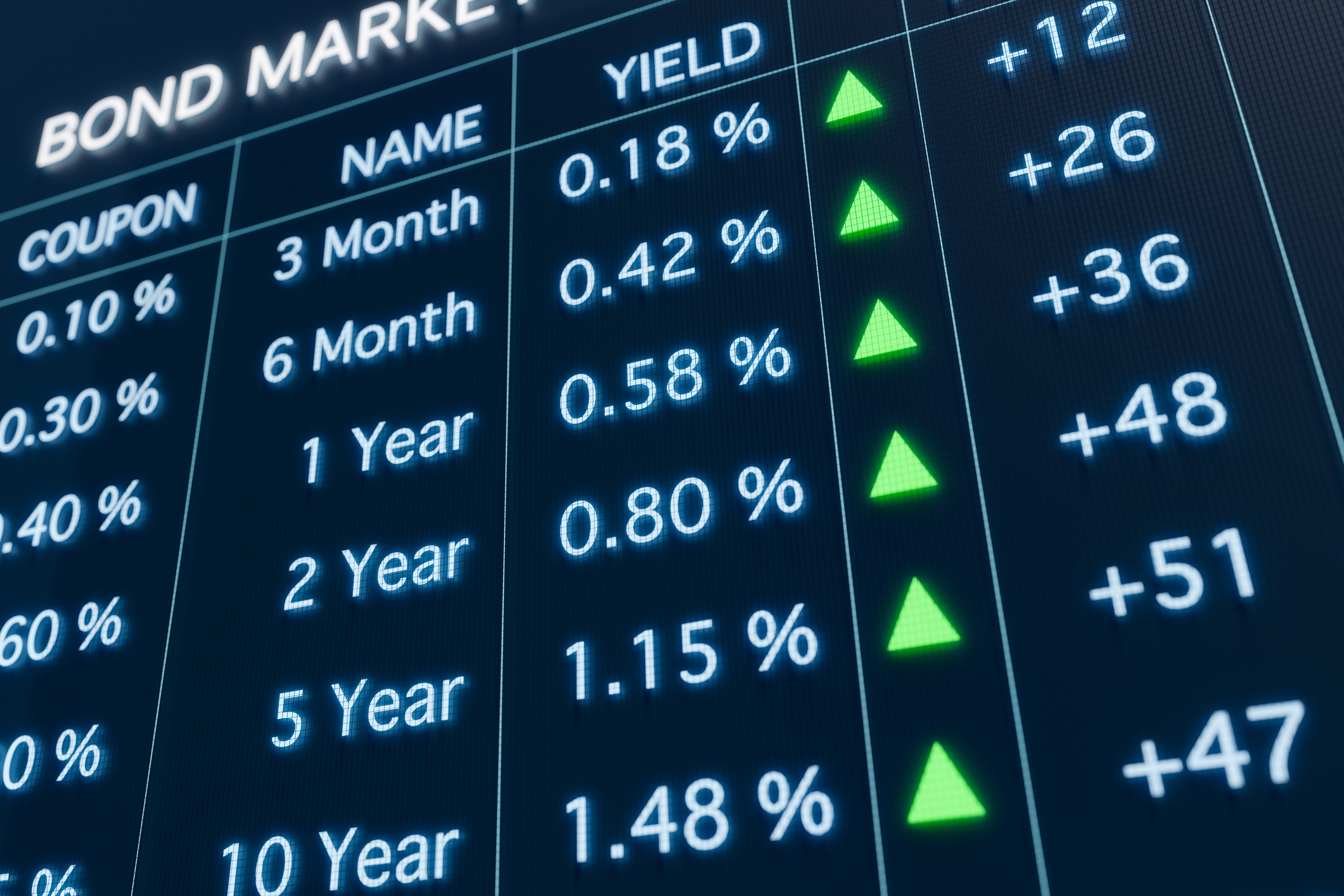
On the other hand, you don't see the same price fluctuations in short-term bonds. As of late November 2025, the one-year Treasury yield was about 3.65%. If interest rates were to rise, it wouldn't have much of an effect on your bond's value since it's already so close to maturing.
10. Banks as net beneficiaries of inflation
Elevated inflation can certainly be a negative for bank stocks since it can lead to lower demand for loans and an uptick in consumer defaults. But there's also another side to the story.
Inflation usually leads to rising interest rates (as we've seen over the past year or so), which can lead to higher profits for banks. After all, the core business of banks is to take deposits and lend out the money to collect interest. This can be an especially big benefit for the largest banks, which tend to pay low rates on deposits, even in higher-rate environments.
Building an inflation-resistant portfolio
To be perfectly clear, if your goal is to build an inflation-resistant portfolio, you don't have to invest only in the things on this list. But by incorporating them into a diversified investment strategy, you can prepare your portfolio to not only weather the effects of inflation but also come out even stronger on the other side.
Common mistakes and myths about inflation investing
There are some common misconceptions about inflation that can lead to mistakes for investors. So, let's take a minute to clear them up:
- Inflation is always bad: This is 100% false, and in fact, manageable inflation is widely considered to be good for the economy. In fact, the Federal Reserve sets its monetary policy with a goal of 2% inflation in mind, and if it gets too far below that, it has been known to adjust accordingly.
- Inflation causes recessions: To be sure, out-of-control inflation is no good for the economy and can certainly lead to recessions as consumers pump the brakes on spending. But that isn't always the case. There have been many examples throughout history, including as recently as 2009, where a spike in inflation immediately preceded a bull market. So, don't think you need to get out of stocks just because inflation is elevated.
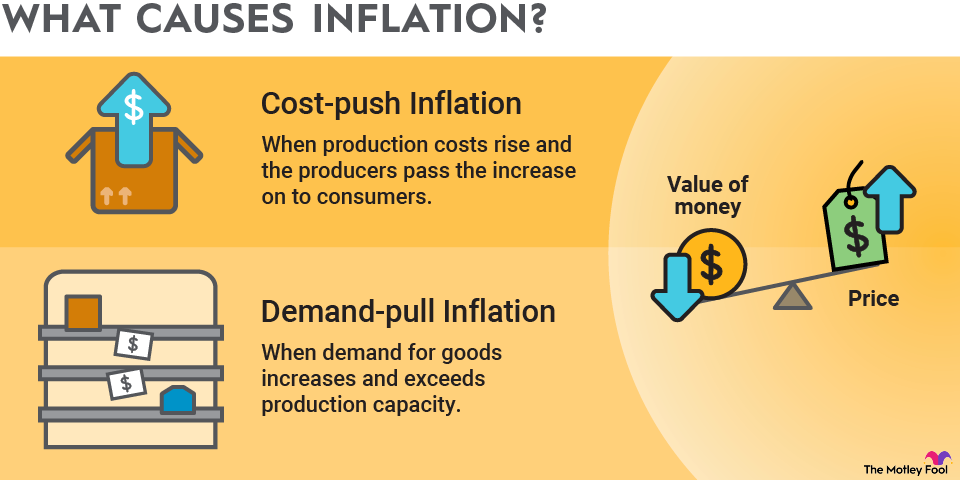
- Inflation is caused by corporate greed or government policies: Here's one big takeaway. There is no single factor that causes inflation. There are a lot of contributing factors that are potentially working at the same time, and every inflationary period has a unique set of causes.
The bottom line
As you can see, there are plenty of ways you can invest in an inflationary environment. Obviously, not all of these are right for every investor, but there are quite a few choices. Using this list, you can decide which are the best fit for your particular goals and risk tolerance and help protect your portfolio from the effects of rising consumer prices.
Related investing topics
FAQ
About the Author