Retail stocks are shares in publicly traded businesses that sell products or services to the public. Some retailers sell non-discretionary products (things people need), while others sell discretionary items (things people want), and still others sell services and experiences.
Many investors buy retail stocks because they allow them to own portions of the businesses where they shop. However, there are several factors you should consider before investing.

It has been a turbulent period for retailers in the past few years. E-commerce sales surged during the COVID-19 pandemic as consumers opted to avoid stores, and sales of certain products skyrocketed. Retailers battled shortages and supply chain constraints for much of the pandemic as they scrambled to meet consumer demand and then grappled with inflation spiking to a 40-year high soon after.
But now that the pandemic is in the rear view and inflation has cooled, the retail landscape has somewhat normalized, and it could be time to take a closer look. Let's delve into some of the top retail stocks and what you need to know about investing in retail companies.
Four publicly traded retailers leading their industries
There are hundreds of publicly traded retailers, but these four have risen to the tops of their industries:
| Company ticker | Market cap | Dividend yield | Industry |
|---|---|---|---|
| NASDAQ:AMZN | $2.6 trillion | 0.00% | Multiline Retail |
| NYSE:HD | $357.9 billion | 2.56% | Specialty Retail |
| NASDAQ:ULTA | $29.2 billion | 0.00% | Specialty Retail |
| NASDAQ:WMT | $901.2 billion | 0.83% | Food and Staples Retailing |
1. Amazon

NASDAQ: AMZN
Key Data Points
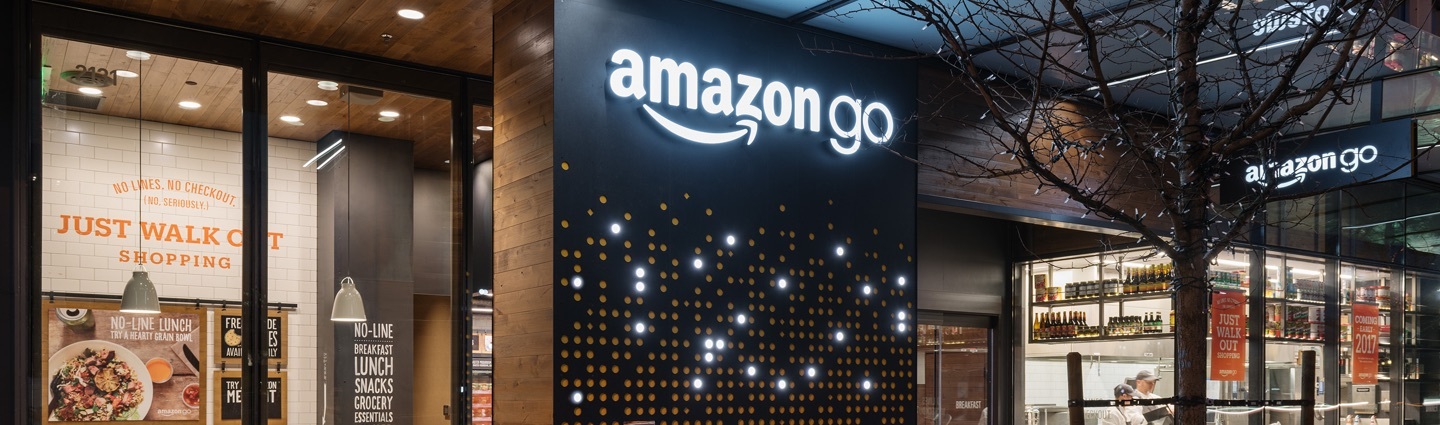
As the preeminent e-commerce retailer, Amazon (AMZN -0.34%) got its start selling books and now operates a marketplace enabling the online buying and selling of almost everything. Amazon also owns Whole Foods Market, which gives it a ready-made network of brick-and-mortar retail stores to further engage customers.
Brick-and-Mortar
In addition to growing its business, Amazon is focused on boosting productivity and trimming expenses. The bottom line has benefited tremendously. Amazon also has the leading cloud services platform, Amazon Web Services (AWS), which is also the fastest growing (and most profitable) part of its business.
With its immense scale, the online retail giant is well positioned to lead the e-commerce market in the long run. Smaller players without Amazon's scale and logistical muscle have struggled to compete, and that isn't likely to change anytime soon.
2. Home Depot

NYSE: HD
Key Data Points
The home improvement retailer is best known for its big box warehouse stores and extensive inventory. Serving both do-it-yourself homeowners and professional contractors, Home Depot (HD +3.67%) is consistently expanding both sales and earnings. The company has done an excellent job with omnichannel retail, featuring options such as ship-to-store and in-store pickup for mobile orders.
Home Depot's sales growth has been weak for several years due to slowing consumer spending after years of surging demand for renovation and remodeling projects during the pandemic. In the third quarter of 2025, comparable sales in the United States increased by just 0.1% year-over-year. Consumers continue to spend on smaller projects, but spending in big-ticket categories is weakening.
Elevated interest rates are a significant contributor to this lull, as they erode household spending power and make it challenging to tap into home equity to fund costly projects. However, in the long run, the company has ample room to grow within a fragmented industry.
3. Ulta Beauty

NASDAQ: ULTA
Key Data Points
Tapping into the trend of providing experiences that lure shoppers into stores, Ulta Beauty (ULTA +1.27%) offers in-store salon treatments to its customers. The concept has taken off, and its stores were attracting a large number of customers before the pandemic struck.
Ulta's sales continue to be strong in a challenging environment for discretionary spending, with net sales up approximately 13% year over year in the latest quarter. Some of the growth stemmed from new store openings, but comparable sales increased by 6.3%, which is impressive given the prevailing economic uncertainty.
Total revenue is expected to exceed $12 billion for 2025, once year-end numbers are available. A recession would likely hurt sales and profits in the short term, but Ulta's long-term growth prospects are very much intact.
With all of that in mind, Ulta could be well-positioned to thrive as inflation continues to cool and interest rates decline. Management appears to believe the stock is a bargain and spent nearly $1 billion on buybacks in 2025.
Revenue
4. Walmart

NASDAQ: WMT
Key Data Points
Walmart (NYSE:WMT) is a retail business that works in good times and bad. It's always a home for bargain-seekers, but it can do even better in times of inflation and economic weakness, when shoppers are compelled to cut back on spending. In fact, the resilient nature of Walmart's business enabled it to be the top-performing S&P 500 stock during the 2008 financial crisis.
Not only is the business resilient, but Walmart has done a fantastic job of building out its omnichannel platform. Its pickup and delivery options are among the best-run in the industry, and the company's results continue to show impressive growth for a mature company.
In fact, in the latest fiscal quarter, Walmart's revenue grew by nearly 6% year-over-year, led by 27% growth in global e-commerce volume.
Benefits and risks of investing in retail stocks
Retail stocks can be a great way to profit from consumer strength and the latest trends. However, the main risk factor to be aware of is that retail can be highly cyclical, especially when it comes to discretionary retail (companies that sell items people want, rather than things they need).
There's also a significant risk associated with e-commerce disrupting brick-and-mortar (store-based) retailers. In fact, several once-great retail brands have gone out of business over the past decade, with e-commerce competition being a primary factor.
How to identify the best retail stocks
Finding high-quality retail companies requires looking at some key aspects of the company's retail business. The strongest retailers perform well based on these key metrics:
- Sales growth: The best retail companies consistently expand the revenue they generate from the products they sell.
- Same-store sales: Same-store sales, or comparable-store sales, is a retail-specific revenue metric that evaluates revenue growth for stores in business for at least a year.
- Earnings growth: A retailer can grow revenue but remain unprofitable. Investors should be cautious about buying shares in retailers that struggle to increase their earnings as measured by earnings per share.
- Seasonality: Many retailers do a large part of their annual business during the holiday season in November and December.
- Real estate metrics: If a retailer owns a lot of real estate, its value can comprise a huge portion of the company's overall worth. Investors can also evaluate how efficiently a retail company uses its real estate with metrics such as sales per square foot.
- Growth of e-commerce sales: The best retailers use their network of stores to their advantage by offering services such as in-store pickup and local delivery. Retail businesses without a strong online presence will likely have increasing difficulty competing with their peers.
- Balance sheet strength: When considering investing in a retailer, look for plenty of cash and manageable debt on its balance sheet.
Strategies for investing in retail stocks
There's no right or wrong way to invest in retail stocks, but I'll offer a couple of strategies that can serve investors well:
First, focus on retailers that have a durable competitive advantage. For example, Walmart's scale enables it to source products more cost-effectively than its competitors and offer bargains that even e-commerce giants often struggle to match. Beyond the companies on the list, look for cost advantages, products that don't depend on short-term consumer preferences, and products that people will still buy even if the economy weakens.
Second, it can be wise to build positions in retail stocks over time, rather than buying all at once. Retail stocks (especially smaller and fast-growing retailers) can be rather volatile over short periods, so by averaging into a position, you can ensure you'll have a mathematically favorable average share price.
Related investing topics
Are retail stocks right for you?
It's always fun to invest in companies you know and love, and retail stocks often fit the bill. Focus on the retailers with the strongest business fundamentals -- low debt levels, healthy cash flows, and strong competitive positions -- to give yourself the best chance to make money for your investment portfolio.
FAQ
About the Author