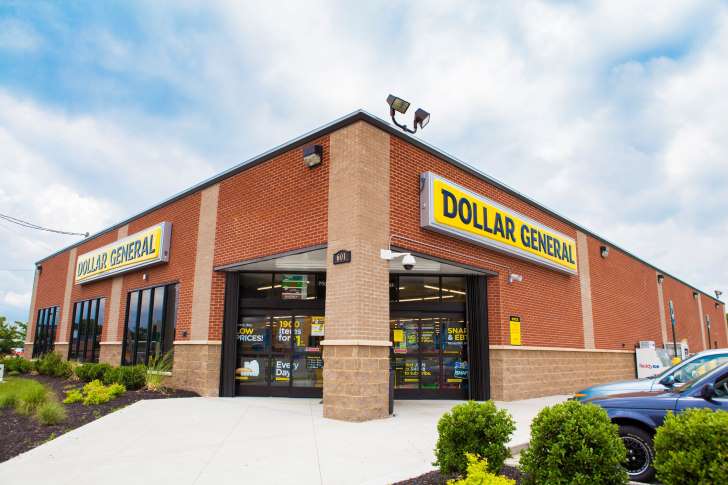
Dollar stores carry a range of cheap household products and random merchandise that fit even the tightest family budgets. While inflation has pressured the “everything costs $1 or less” niche, the concept of everyday staples at bargain prices endures nonetheless.
Let's explore the three big dollar store stocks so you can decide if one fits within your investment portfolio.
Top dollar store stocks in 2026
Industry consolidation has trimmed the dollar store space down to three main competitors: Dollar General (DG +0.70%), Dollar Tree (DLTR +1.75%), and Five Below (FIVE -2.02%). The table shows market capitalizations for each.
| Name and ticker | Market cap | Current price | Dividend yield |
|---|---|---|---|
| Dollar General (NYSE:DG) | $32.6 billion | $149.08 | 1.59% |
| Dollar Tree (NASDAQ:DLTR) | $23.8 billion | $121.78 | 0.00% |
| Five Below (NASDAQ:FIVE) | $10.9 billion | $192.76 | 0.00% |
1. Dollar General

NYSE: DG
Key Data Points
Dollar General (DG +0.70%) is the largest dollar store operator by annual sales and total store count.
The company also has the longest history of its competitors. Dollar General opened its first store in 1955 after founder Cal Turner was inspired by department store "dollar days" promotions. Thirteen years later, Dollar General went public on the New York Stock Exchange for $16.50 per share. Today, the company operates more than 20,000 stores around the U.S.
Financial performance
Dollar General has a long track record of revenue growth. In 2015, the company produced sales of about $18 billion. By fiscal year 2024, net sales had risen to $40.6 billion. The growth has come primarily from its expanding store footprint. During the same time, the chain added roughly 8,000 stores.
More recent periods have been challenging, involving budget-constrained customers who are feeling the impact of inflation, inventory management issues, and weather events that have increased selling, general, and administrative (SG&A) expenses.
Stock price performance
It's been a slow but steady recovery for Dollar General share prices. Between early 2023 and early 2025, the stock price plunged from more than $250 to about $75. In early 2026, however, prices had rebounded to around $150.
2. Dollar Tree

NASDAQ: DLTR
Key Data Points
Dollar Tree (DLTR +1.75%) is Dollar General's closest competitor by store footprint and annual sales. Dollar Tree acquired Family Dollar in 2015 and 170 stores from the 99 Cents Only chain in 2024. Today, Dollar Tree operates more than 16,000 stores in the United States and Canada. It generated about $17.5 billion in revenue during 2025 fiscal year, which ended Jan. 31, 2025.
Financial performance
Like Dollar General, Dollar Tree has produced good sales growth over the long term. Same-store sales rose 4.2% in its third quarter for 2025, and the company noted that an increasing number of its customers made $100,000 or more. Of the 3 million new households shopping at its store, the company estimated that 60% earned at least six figures.
Stock price performance
Like Dollar General shares, Dollar Tree stock was moving in the right direction in early 2026. After falling into the mid-$60s in late 2024, share prices had rebounded to roughly $140 by early 2026.
3. Five Below

NASDAQ: FIVE
Key Data Points
Five Below (FIVE -2.02%) opened its first store in 2002, which makes it a relative newcomer in the retail industry. The company targets young shoppers with an assortment of toys, party supplies, and other household basics -- many priced below $5.
Five Below trails its peers in store footprint and sales. The company has about 1,900 stores in the U.S. and generates about $3.9 billion in annual revenue.
Financial performance
Five Below has largely been a growth story since its 2012 initial public offering. Between fiscal years 2015 and 2019, the company delivered 20%-plus annual sales growth. By fiscal year 2024, the rate had leveled off somewhat to about 15%.
The company has the best operating margins of the three dollar stores, delivering more than 10% on this metric in most years. Although the figure had sagged to around 9% by Q3 2025, the company expected strong holiday sales to boost third-quarter margins to almost 16%, raising its margin for the full year.
Stock price performance
Five Below stock dove in mid-2023, dropping from more than $200 for a share to the mid-$60s in early 2025. By early 2026, however, share prices had rebounded to almost $150.
Dollar store competition
Dollar General, Dollar Tree, and Five Below compete most directly with one another, but there is fierce indirect competition in the broader shopping space. Big box stores like Walmart (NYSE:WMT), club stores Costco (COST +0.04%) and Sam's Club, and closeout retailers such as Big Lots all cater to value-oriented consumers.
Benefits and risks of dollar store stocks
As with almost any investment, there are pros and cons to investing in dollar stores. Some of the pros include:
- Dollar stores typically benefit from challenging economic times, such as recessions.
- Their size and scale can provide them with cost advantages over smaller businesses.
- They have plenty of room for new stores and different offerings.
Despite their advantages, dollar store stocks aren't without risks:
What to consider when investing in dollar store stocks
Many dollar store goods may be disposable and inexpensive, but that doesn't mean your investment should be the same. When investing in dollar store stocks, here are five things to think about:
Financial health. Look at variables like gross profit margins, operating margins, and net profit margins to see how efficiently the company is using its revenue. Make sure it's not overly leveraged with debt. Review any plans for share buybacks and dividends.
Competitive landscape. Not all dollar stores are created equal in the same areas. See if stores are concentrated in any one particular state or region, and compare it to potential competitors.
Economic factors. Dollar stores generally perform best during economic downturns. They can make money in good times, of course, but a buy-and-hold investor shouldn't assume that high profits posted during a recession will continue through good times.
Company factors. Is the company expanding, or is it closing stores, and why? Another key retail metric to consider is same-store sales. Review the company's annual report and keep tabs on top officers to make sure there's not excessive turnover in the C-suite.
Investment strategy. Make sure your investment aligns with your own personal goals and risk tolerance. As always, make sure you're buying a stock that will help you build wealth over the long term.
How to invest in dollar store stocks
Investing in dollar store stocks follows the same process as buying any other publicly traded company. To do so, just follow the steps below.
- Open your brokerage app: Log in to your brokerage account where you handle your investments.
- Search for the stock: Enter the ticker or company name into the search bar to bring up the stock's trading page.
- Decide how many shares to buy: Consider your investment goals and how much of your portfolio you want to allocate to this stock.
- Select order type: Choose between a market order to buy at the current price or a limit order to specify the maximum price you're willing to pay.
- Submit your order: Confirm the details and submit your buy order.
- Review your purchase: Check your portfolio to ensure your order was filled as expected and adjust your investment strategy accordingly.