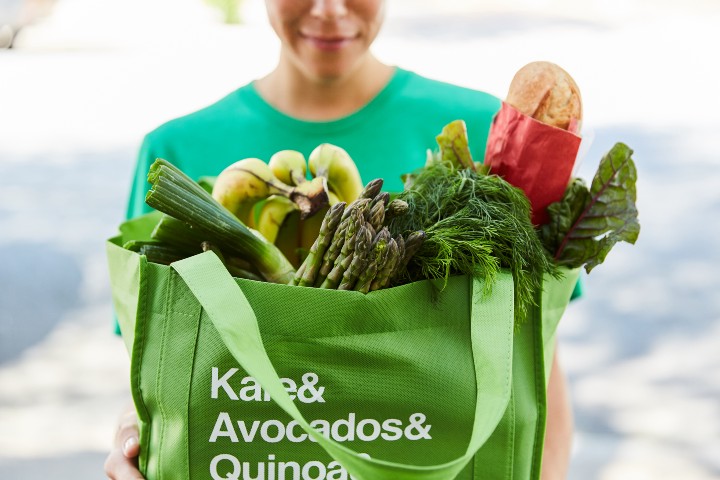
Consumer staples are the everyday essentials people keep buying no matter what’s happening in the economy: groceries, beverages, cleaning products, toiletries, and household goods.
That steady demand is why the sector is called consumer defensive. Unlike restaurants, apparel, or electronics, staples are needs, not wants.
In uncertain markets or late-cycle environments, investors often rotate toward staples for stability, income, and lower volatility. They won’t usually lead during roaring bull markets, but they can help smooth returns when growth stocks stumble.
What are consumer staples stocks?
Consumer staples stocks include companies that produce or sell essential goods people use regularly. This ranges from global brand owners like Procter & Gamble and PepsiCo to retailers like Costco.
Common traits include:
- Recurring demand
- Strong brand loyalty
- Global distribution
- Consistent cash flow
- Dividend track records
They’re sometimes called fast-moving consumer goods (FMCG) because products sell quickly and are repurchased often.
Top consumer staples stocks to consider
| Name and ticker | Market cap | Dividend yield | Industry |
|---|---|---|---|
| Procter & Gamble (NYSE:PG) | $356.0 billion | 2.76% | Household Products |
| PepsiCo (NASDAQ:PEP) | $212.2 billion | 3.62% | Beverages |
| Philip Morris International (NYSE:PM) | $280.1 billion | 3.13% | Tobacco |
| Costco Wholesale (NASDAQ:COST) | $429.8 billion | 0.66% | Food and Staples Retailing |
1. Procter & Gamble

NYSE: PG
Key Data Points
Procter & Gamble (PG +1.39%) is best known for its marquee brands such as Tide, Gillette, and Crest. The household and personal care company is almost 200 years old. A large number of its brands hold the No. 1 or No. 2 market share position in their categories, including paper products, laundry detergent, diapers, and beauty products. P&G is also a Dividend King.
P&G has recently developed a number of innovative products, including the nontoxic insect repellent Zevo; a dye-free, silicone-free, and sulfate-free version of Head & Shoulders called Head & Shoulders BARE; and Spruce, a weed killer that cuts off the weed's water supply on contact. Spruce is P&G's first entry into the large lawn care category.
P&G has performed well during the recent inflationary era since it can pass along price increases to its customers, although its growth has slowed down recently. P&G finished its fiscal 2025 ending on June 30 with flat net sales and 2% organic sales growth. Core, or organic, earnings per share grew 4% to $6.83. Given the uncertainty around tariffs and weakening consumer sentiment, this shows the company's ability to deliver at least modest growth in challenging environments.
2. PepsiCo

NASDAQ: PEP
Key Data Points
PepsiCo (PEP +5.06%) is much more than its namesake beverage brand. Pepsi also owns Frito-Lay and Quaker, as well as popular drink brands such as Mountain Dew and Gatorade. Its Frito-Lay snack business generates almost as much revenue in North America as its beverages, and that business has historically been a source of growth while soda sales have slowed in the U.S. and around the world. More recently, the snack business has declined due to general health trends and the adoption of weight-loss drugs like Ozempic. With its global brands and distribution, Pepsi enjoys many of the same advantages as industry giants P&G and beverage company competitor Coca-Cola.
Because of its exposure to the restaurant industry, Pepsi is subject to demand in the consumer discretionary channel, but with the help of the strength of its brands, it's been able to capitalize on inflation by raising prices, though headwinds from tariffs and consumption trends have affected profits. Through the first three quarters of 2025, organic revenue rose 1.5%, though core earnings per share (EPS) fell 3.5%.
Pepsi has also grown through acquisitions. In 2018, it acquired SodaStream, which gave the company a leading position in countertop soda-making. It also bought energy drink maker Rockstar Energy in 2020. Earlier in 2025, it acquired Siete Foods, a maker of grain-free tortillas and Mexican-American foods, and Poppi, a prebiotic soda brand.
PepsiCo recently became a Dividend King, having raised its quarterly payout for 50 years in a row, which shows that it’s an attractive stock for income investors. In late January 2026, it was offering a dividend yield of 4%.
3. Philip Morris

NYSE: PM
Key Data Points
Philip Morris (PM -1.53%) is one of the three global tobacco giants, but the company has the strongest position of the three. Philip Morris was formed when Altria (MO +3.10%) and Philip Morris split in 2008, with Altria retaining the domestic business, while Philip Morris took the international markets.
That's proven to favor Philip Morris since international tobacco markets have been much more resilient than the U.S., where smoking has been steadily declining for decades.
In addition to its exposure to more smoking-friendly markets, Philip Morris has also outperformed peers like Altria and British American Tobacco (BTI +1.42%) in next-gen, smoke-free products, which now make up more than 40% of Philip Morris' revenue and a higher percentage of its gross profit.
The company has found success in IQOS, its heat-not-burn tobacco sticks, which use tobacco rather than the e-liquid vapes use, and heat to a temperature where it turns into vapor rather than smoke. As of the end of 2024, there were more than 32 million IQOS users worldwide, and the number was growing. The company launched IQOS in the U.S. in March 2025.
Additionally, the company's acquisition of Swedish Match in 2023 has paid off, giving it ownership of the popular Zyn oral nicotine pouches, whose shipments jumped 36% to 224.6 million cans in the third quarter of 2025. Philip Morris is also expanding production at its Kentucky Zyn facility and adding a new one in Colorado.
Finally, Philip Morris offers a reliable dividend yield of 3.7%.
4. Costco Wholesale

NASDAQ: COST
Key Data Points
How to decide if consumer staples stocks belong in your portfolio
There are a number of things to consider if you are thinking about investing in consumer staples stocks.
- Consider your investing goals. If you're young and saving for retirement, you may prefer growth stocks over consumer staples. Consumer staples stocks are a good choice for investors looking for low-risk, defensive stocks and dividend stocks.
- Remember that consumer staples tend to underperform in bull markets, so you will have to be patient with this sector.
- Many consumer staples stocks have a long streak of raising their dividends, and some are even Dividend Kings, companies that have raised their dividends every year for 50 years straight. The sector is one of the most reliable for dividends.
- While most consumer staples stocks are considered safe, it's a good idea to be aware of trends in subsectors such as pressure on soda or the impact of tariffs.
- Investors generally choose consumer staples stocks for their income, safety, competitive advantages, and track record of performance.
The bottom line
Consumer staples aren’t flashy, but they’re dependable. The best companies combine strong brands, global scale, and consistent cash flow -- qualities that tend to shine when markets get rocky.
For investors seeking stability and income, staples can play a valuable supporting role in a diversified portfolio.
Related investing topics
FAQ
Investing in consumer staples stocks FAQ
About the Author