Tax-free municipal bonds are fixed-income investments that fund public projects, such as schools, highways, and parks. State and local governments issue municipal bonds, "munis" for short. Since these bonds are government debt, they're a low-risk (but not risk-free) investment.
As the name suggests, they also save you money on taxes. There are no federal taxes on interest earned from tax-free municipal bonds. There are also typically no state or local taxes if you buy a municipal bond issued in your home state.

The easiest way to invest is through municipal bond funds since selecting individual municipal bonds can be time-consuming. A municipal bond fund allows you to get exposure to hundreds or even thousands of munis for a diversified bond portfolio.
Best tax-free municipal bonds in 2026
Here are the seven best tax-free municipal bonds, along with the number of holdings, expense ratio, and 30-day Securities and Exchange Commission (SEC) yield for each bond fund.
1. Vanguard Tax-Exempt Bond ETF

NYSEMKT: VTEB
Key Data Points
The Vanguard Tax-Exempt Bond ETF (VTEB +0.14%) is an intermediate-term bond exchange-traded fund (ETF) that invests in about 10,000 bonds. Like just about all Vanguard tax-free municipal bond funds, the expense ratio is extremely low -- the cheapest on this list at 0.03%. The 30-day SEC yield was 3.36% as of Jan. 30, 2026.
For a municipal bond fund, this Vanguard ETF has a fairly high yield. It costs hardly anything in fees, and the large number of bonds keeps risk to a minimum.
2. iShares National Muni Bond ETF

NYSEMKT: MUB
Key Data Points
The iShares National Muni Bond ETF (MUB +0.07%) aims to track an index of investment-grade U.S. municipal bonds. It holds more than 6,000 bonds. Some of its top holdings are bonds issued in California, New York, Massachusetts, and New Jersey.
This bond ETF had a 30-day SEC yield of 3.21% in late January 2026, and iShares charges an expense ratio of 0.05%. The yield and annual fee are both highly competitive, as is the risk profile -- the fund invests primarily in AA and AAA bonds.
3. Vanguard High-Yield Tax-Exempt Fund

NASDAQMUTFUND: VWAHX
Key Data Points
For bond investors looking for a greater return, the Vanguard High-Yield Tax-Exempt Fund (VWAHX +0.09%) is hard to beat. Its 30-day SEC yield was an impressive 4.07% at the end of January 2026.
The expense ratio for this bond fund is 0.17%, which isn't the lowest, but it's reasonably priced. With the focus on generating a higher yield, this Vanguard bond ETF is more volatile compared to the average muni bond fund. However, it invests in more than 3,000 bonds, so it remains well diversified.
4. iShares California Muni Bond ETF

NYSEMKT: CMF
Key Data Points
If you live in California and have a high marginal tax rate, it's a good idea to invest in tax-free municipal bonds issued there so you can reduce state taxes. The iShares California Muni Bond ETF (CMF +0.07%) fits the bill. It invests in investment-grade municipal bonds issued in California, holds more than 1,400 munis, and charges an expense ratio of 0.08%.
This California bond ETF had a 30-day SEC yield of 2.87% as of Jan. 30. Because California has some of the highest income tax rates in the U.S., this fund's after-tax yield could be better than what you'd get from other bond funds.
5. iShares New York Muni Bond ETF

NYSEMKT: NYF
Key Data Points
New York is another state with high income taxes. If you live there, consider the iShares New York Muni Bond ETF (NYF +0.06%). This fund invests in high-quality municipal bonds issued in the state of New York.
The ETF holds about 800 bonds and charges a 0.09% expense ratio. The 30-day SEC yield was 3.15% at the end of January. The combination of low fees and a solid yield makes this fund the top option for New York residents.
6. Invesco National AMT-Free Municipal Bond ETF

NYSEMKT: PZA
Key Data Points
Some high-income investors need to pay the alternative minimum tax (AMT). The Invesco National AMT-Free Municipal Bond ETF (PZA +0.04%) invests specifically in municipal bonds that are exempt from the AMT.
This fund holds more than 5,000 bonds, and it's notable for investing in long-term bonds with at least 15 years remaining until maturity. Bonds with longer terms generally pay more, which was reflected in the Invesco fund's 30-day SEC yield of 3.91% as of Feb. 3, 2026. The expense ratio is 0.28%.
7. Vanguard Short-Term Tax-Exempt Bond ETF

NYSEMKT: VTES
Key Data Points
The Vanguard Short-Term Tax-Exempt Bond ETF (VTES -0.07%) provides exposure to short-term munis, specifically those with one month to seven years until maturity. An advantage of short-term bonds is that they carry less interest rate risk. If rates rise, the bondholder isn't locked into a lower rate for long.
The expense ratio for this Vanguard bond ETF is a low 0.05%, and it holds about 3,000 bonds. The 30-day SEC yield was 2.34% at the end of January. Short-term bonds tend to have lower rates, which is the trade-off for less interest rate risk.
How do tax-free municipal bonds work?
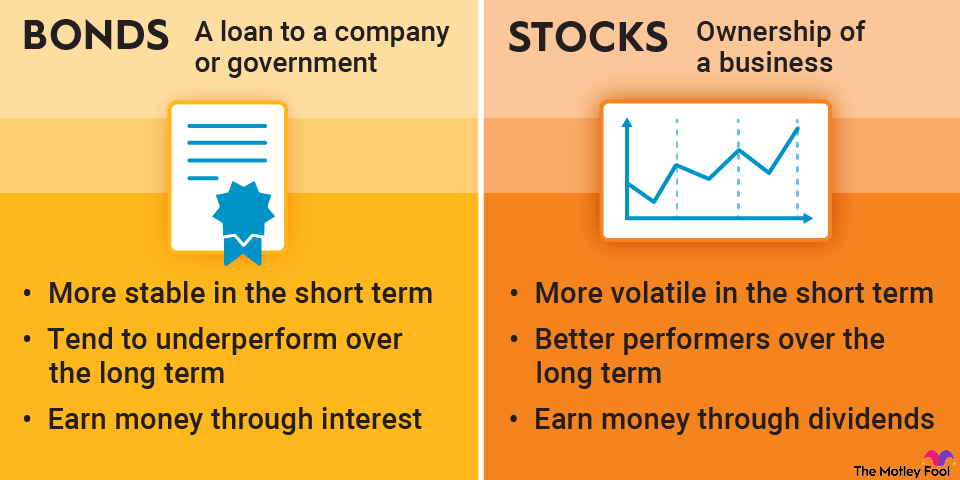
A bond is a debt instrument, and municipal bonds are those issued by state governments, local governments, and other government entities to raise funds.
When you own a municipal bond, the issuer pays you interest on a fixed schedule and returns the principal to you on the bond's maturity date. Tax-free municipal bonds are normally exempt from federal income taxes, and possibly state and local taxes, as well.
Why are municipal bonds tax-free?
In 1895, the Supreme Court ruled that the federal government had no power to tax interest on municipal bonds issued by state and local governments. The 16th Amendment to the U.S. Constitution, which authorized federal income taxes, included this exemption for municipal bonds.
One reason the exemption has stuck around is that it enables states and governments to borrow money at a lower cost. This makes it more economically viable for them to invest in public projects.
Benefits and risks of investing in tax-free municipal bonds
Here are the biggest benefits of investing in tax-free municipal bonds:
- You save on taxes: If you're in a high tax bracket, tax-free munis could reduce your tax burden.
- They're safe: Their default rate from 1970 to 2022 was less than 0.1%, according to Moody's Investor Service.
- They provide a predictable income: Tax-free municipal bonds generally pay interest twice a year.
Like any investment, tax-free municipal bonds also have their downsides:
- They have low returns: Municipal bonds tend to pay less than other bonds, and over long periods, their average returns are less than the average stock market return.
- They have interest rate risk: If interest rates rise, the value of older municipal bonds with lower rates will decline.
- They're not always easy to sell: This can be an issue with smaller municipal bonds, but it probably won't be a problem if you stick to tax-free municipal bond funds.
Criteria for choosing tax-free municipal bonds
If you're looking for tax-free municipal bonds or bond funds, there are a few factors that can help you choose:
- Location of the issuer: If you want to avoid state and local taxes, you typically need to invest in munis issued in your home state.
- Types of bonds: Bond market options include short-, intermediate-, and long-term bonds, as well as investment-grade and high-yield bonds.
- Yield: All things being equal, bonds with higher yields are preferable, since they make you more money.
- Bond rating: The bond rating measures the safety of the bond issuer. Municipal bonds rarely default, but it's still good to check bond ratings before you invest.

Should I invest in tax-free municipal bonds?
Consider investing in tax-free municipal bonds if you're looking for fixed-income investments and want to reduce your tax liability. Bonds are a good way to reduce volatility in your investment portfolio and are particularly well suited for older investors who are retired or nearing retirement.
Your marginal tax rate can help you figure out if tax-free municipal bonds are the right type of bond investment to buy. If a bond fund has a 5% yield but you'll pay 35% in taxes on the interest, then you'll net 3.25%. In that case, tax-free municipal bond funds paying 3.5% to 4% would offer a greater after-tax yield, making them a more profitable investment.
Related investing topics
FAQ
Tax-free municipal bonds FAQ
About the Author
Lyle Daly has no position in any of the stocks mentioned. The Motley Fool has no position in any of the stocks mentioned. The Motley Fool has a disclosure policy.