About the Author
Lee Samaha has no position in any of the stocks mentioned. The Motley Fool has positions in and recommends Cheniere Energy, Chevron, EQT, and Kinder Morgan. The Motley Fool has a disclosure policy.
Invest better with The Motley Fool. Get stock recommendations, portfolio guidance, and more from The Motley Fool's premium services.
Investing in natural gas stocks means supporting the growth of one of the most important fuels in the global energy system. Natural gas plays a critical role in power generation, home heating, and industrial use. It is widely viewed as a bridge fuel as the world transitions toward lower-carbon energy sources.
It's also increasingly becoming the fuel of choice to meet the insatiable demand for power from artificial intelligence (AI) data centers, driven by the boom in AI applications. Indeed, Elon Musk bought a natural gas turbine provider in 2026, and SpaceX and Tesla are relying on natural gas to power the semiconductor manufacturing joint venture, Terafab.
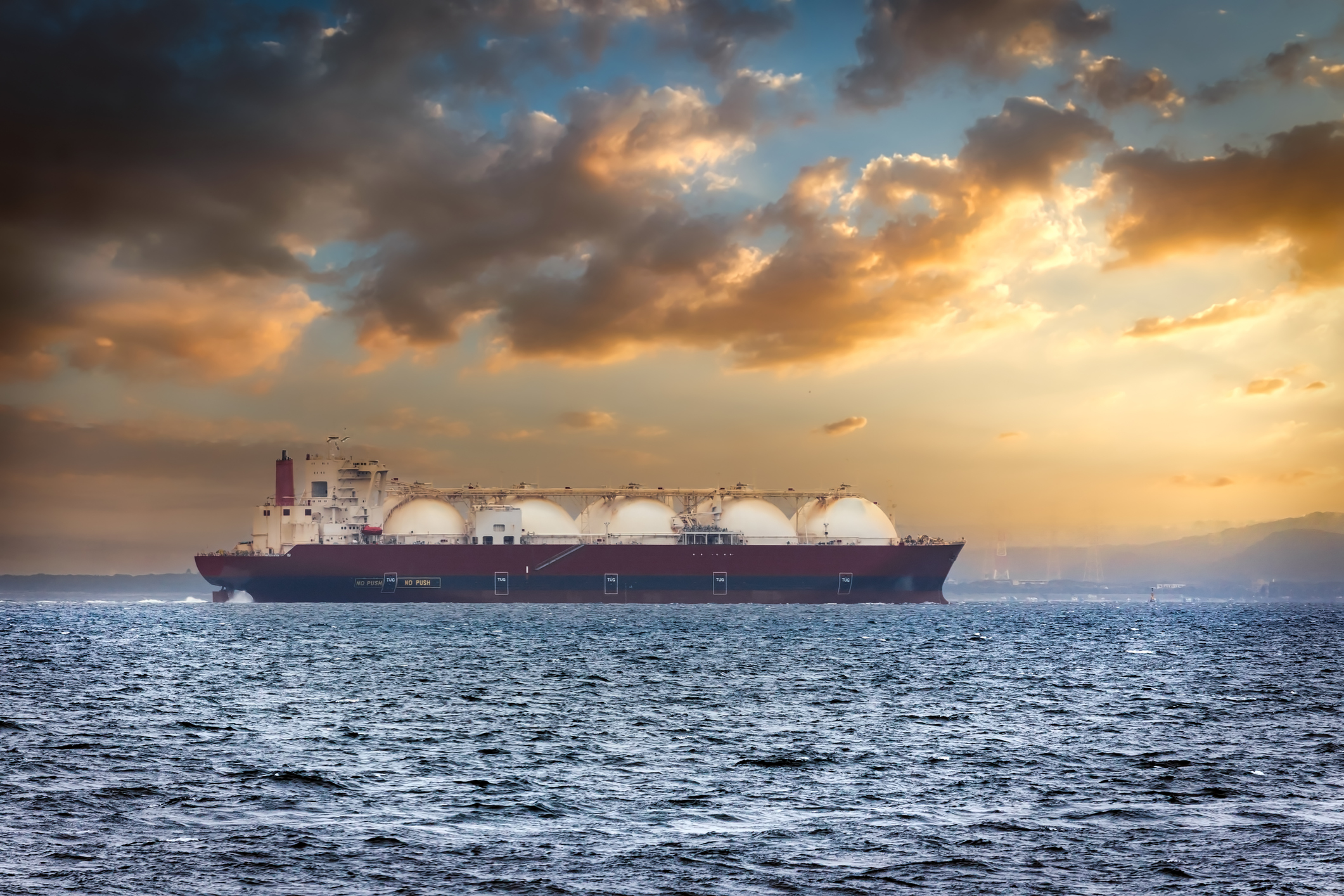
Natural gas is abundant, but it relies heavily on infrastructure. In its gaseous form, it must be transported through pipelines, and when shipped overseas, it must first be converted to liquefied natural gas (LNG). That makes midstream and LNG infrastructure essential to the industry.
For investors, this structure matters. Infrastructure-focused natural gas companies tend to be less exposed to commodity price swings and often generate stable, fee-based cash flow -- a “toll booth” model that supports disciplined capital allocation and reliable returns.
These stocks were chosen because they illustrate all parts of the natural gas value chain and the different risk exposures of companies across it. For example, EQT tends to have high exposure to natural gas price volatility because, outside the CPV deal, it sells gas at market prices. Its key variables are the price of natural gas and the volume it sells.
Contrast and compare this with Kinder Morgan, whose exposure to natural gas pricing is actually very low due to its long-term take-or-pay contracts. In fact, Kinder Morgan could benefit from lower prices that would cause demand to rise. That said, a buoyant natural gas market is obviously good news for Kinder Morgan, as it encourages customers to sign more contracts with it.
Finally, Cheniere has low-to-moderate exposure to natural gas and LNG price volatility due to its combination of long-term contracts and its ability to sell on the spot market.
The medium-term outlook is very positive. The booming demand for gas turbines to power data centers, the electrification of everything, and industrial applications in an increasingly connected world support the natural gas investment thesis. In addition, the current administration is actively encouraging and backing LNG exports to reduce trade deficits, and the conflict in the Persian Gulf may hurt LNG investment in the region and Qatar's willingness to sign supply agreements.
In the longer term, ongoing cost reductions and the adoption of renewable energy may challenge the gas industry's growth outlook by rendering current capacity expansions unproductive.
However, if you are comfortable with the view that the long-term threat from renewable energy isn't a major risk, then the long-term outlook for U.S. natural gas companies is excellent.
These three stocks represent different elements in the U.S. natural gas value chain: EQT is a large natural gas producer, focusing on extraction in the Appalachian Basin. Kinder Morgan is the leading infrastructure, transportation, and storage provider in the U.S., transporting fuel to both domestic and export markets. Finally, Cheniere Energy liquefies natural gas and operates massive LNG export terminals. As such, the three stocks offer investors different risk-return profiles that align with their positions in the natural gas value chain.


| Name and ticker | Current price | Market capMarket cap calculated using publicly traded shares outstanding only. Does not include unlisted, private, or dual-class non-traded shares. Implied market cap may vary. | Dividend yield |
|---|---|---|---|
| Cheniere Energy (NYSE:LNG) | $279.17 | $56.7 billion | 0.81% |
| EQT (NYSE:EQT) | $53.89 | $33.6 billion | 1.23% |
| Kinder Morgan (NYSE:KMI) | $31.61 | $71.4 billion | 3.68% |
Cheniere Energy (LNG +1.77%) is the largest LNG producer in the U.S. and the second-largest in the world. It’s a major full-service LNG provider that obtains, transports, liquefies, and delivers natural gas. Cheniere also has vessel-chartering capabilities.
The case for buying Cheniere rests on its reliance on long-term take-or-pay contracts, which provide a reliable cash flow stream for investors. At the same time, Cheniere is expanding capacity to capitalize on the opportunity created by increased instability in the Middle East and the Gulf region's LNG exports. Indeed, supply chain restrictions due to the closure of the Strait of Hormuz have tightened LNG supply, further enhancing Cheniere's importance in the global LNG market.
It has one of the world's largest LNG platforms. Cheniere Energy owns interests in and operates two liquefaction and export facilities on the U.S. Gulf Coast:
The natural gas export company plans to allocate its cash flow to dividend payments (initiated in late 2021), share repurchases, debt paydowns, and funding for Corpus Christi Stage 3. Its balanced capital allocation plan should enable Cheniere to create significant value for its shareholders in the coming years.
Kinder Morgan (KMI -1.47%) is a leader in operating energy infrastructure in North America. It controls the nation's largest natural gas transmission network, which moves 40% of the natural gas produced in the U.S. As of mid-2026, it had 78,000 miles of natural gas pipelines and 706 billion cubic feet of storage capacity -- about 15% of U.S. storage capacity. Kinder Morgan's infrastructure connects every major natural gas resource play to key demand centers.
In addition to natural gas, Kinder Morgan is also the largest independent transporter of refined petroleum products, an independent terminal operator, and a carbon dioxide transporter. The company transports oil, renewable natural gas (RNG), and LNG.
Kinder Morgan's leading natural gas infrastructure business generates a very stable cash flow. Overall, 96% of its cash flow comes from take-or-pay contracts, other fee-based arrangements, and hedges, which have enabled it to generate substantial, recurring cash flows for investors.
Kinder Morgan allocates its cash flow toward paying a high-yielding dividend, repurchasing shares, and expanding its natural gas network through capital projects and acquisitions. A string of acquisitions has added pipeline and storage capacity in recent years. In addition, Kinder Morgan has expanded its gas gathering and processing capability.
Kinder Morgan's extensive natural gas infrastructure makes it well-suited to store and transport lower-carbon fuel sources such as RNG and hydrogen, positioning it for the future of energy. In addition, it has a $9.6 billion project backlog to build out gas infrastructure to meet power demand.
EQT Corporation (EQT +0.47%) is the second-largest natural gas producer in the U.S., behind only Expand Energy. The company focuses on producing low-cost gas from the Appalachian Basin, which stretches across Pennsylvania, West Virginia, and Ohio.
EQT is a consolidator in the natural gas sector. It purchased Alta Resource Development for $2.9 billion in 2021 and Chevron's (CVX +0.01%) Appalachian Basin assets for $735 million in 2020. EQT also acquired Tug Hill's upstream assets and XcL Midstream's gathering and processing assets in 2023 for $2.4 billion in cash and 49.6 million in EQT stock.
However, its most significant merger and acquisition (M&A) occurred in 2024 with the acquisition of Equitrans Midstream in an all-stock transaction. Adding the Equitrans pipeline infrastructure transformed EQT into a truly vertically integrated natural gas company. In addition, EQT is a joint venture partner and operator of the Mountain Valley pipeline.
EQT's size gives it scale advantages, and the Equitrans purchase makes it one of the world's lowest-cost natural gas producers. EQT's expansion also continued in 2025 with the $1.8 billion acquisition and integration of Olympus Energy's upstream and midstream assets.
This powerful position enabled EQT to sign a transformative 10-year supply deal with Competitive Power Ventures (CPV) that is tied to power rather than gas prices. This links EQT's sales directly to surging demand for power from data centers, the electrification-of-everything megatrend, and industrial demand in general, rather than to highly volatile gas prices.
EQT has the best credit profile in its peer group, giving it access to low-cost debt and further reducing costs, which positions EQT to generate significant free cash flow. The CPV deal helps derisk the stock by providing more resilient revenue streams. As such, EQT is strengthening its business model both internally through acquisitions and in its end-market revenue streams.