Artificial intelligence (AI) in education isn’t theoretical anymore. Tools like ChatGPT made it easy for students to get instant help with homework, writing, and studying, and forced schools to respond quickly.
Some districts initially tried bans, then shifted toward policies that focus on how to use AI responsibly. That pattern is likely to continue: AI will be disruptive in the short term, but it’s more likely to reshape education than replace it.
What is artificial intelligence?
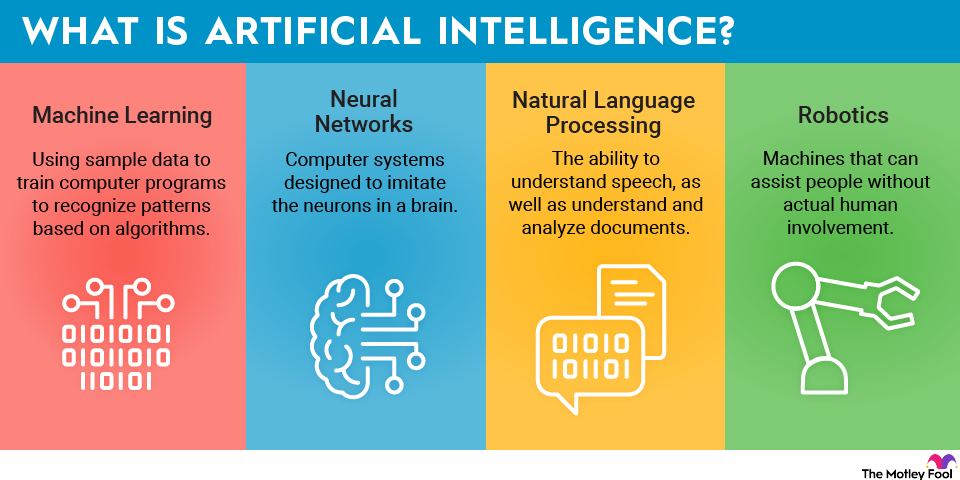
Artificial intelligence is the ability of computers and machines to perform tasks normally associated with human intelligence. This can include anything from machine learning, natural language processing, and computer vision (such as driving) to robotics and neural networks.
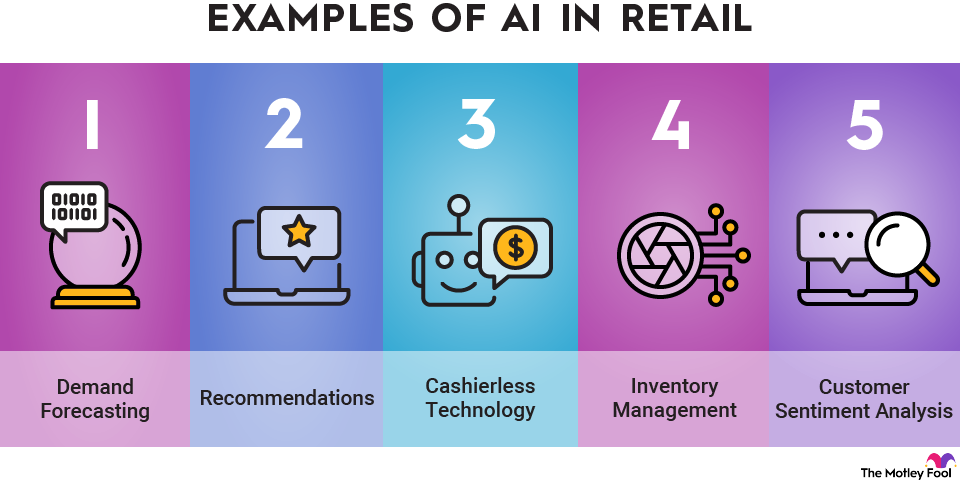
Generative AI (ChatGPT-style tools) gets the headlines, but AI has been widely used for years in things like:
- Recommendations (what you watch, buy, or read next)
- Content moderation and fraud detection
- Voice assistants and chatbots
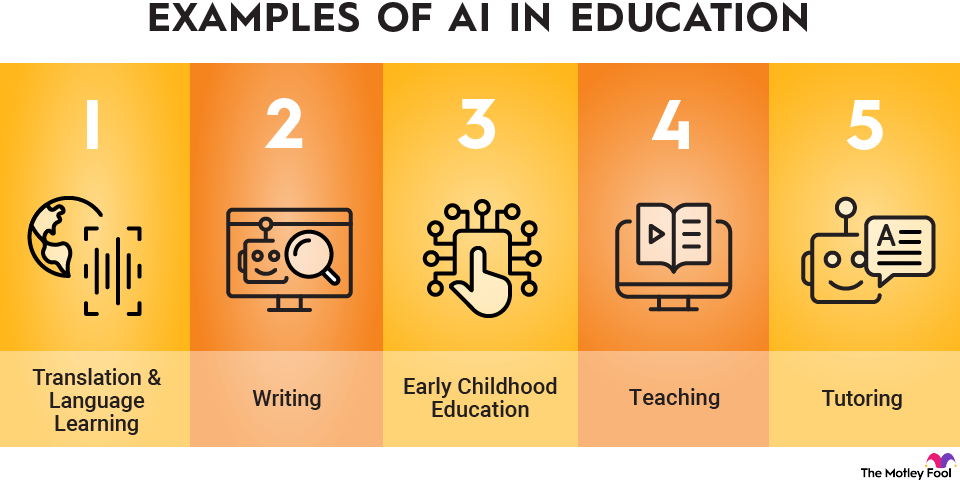
Five practical ways AI is used in education
1. Translation and language learning
One of the most direct applications of AI in education is translation and language learning. ChatGPT can handle translations capably and serve as a language learning tool, helping students check their work and teaching them vocabulary and grammar.
Among the stocks that fell in the wake of Chegg's announcement about the challenge from ChatGPT was Duolingo (DUOL -2.91%), the popular language learning app. It rebounded and moved higher after that. But in 2025, it cooled off on concerns about slowing user growth, though revenue rose 41% in the second quarter. As of December 2025, it was down by more than 60% from its spring peak.
Investors feared that Duolingo users might stop paying for its services and instead just use free AI tools like ChatGPT. However, Duolingo has already integrated some of ChatGPT's features into its product and incorporated other AI tools.
For example, in March 2023, the company launched Duolingo Max, which uses GPT-4 technology to add two new features to Duolingo Super. Those features explain wrong answers to users and offer a role-playing feature that allows users to practice conversations in different scenarios.
In early 2024, the company laid off contract workers, saying it plans to use AI to create more lessons. It also introduced a generative AI subscription plan and has launched a feature called Video Call with an AI character, as well as a game-based experience called Adventures. As AI adoption increases, the opportunities for AI language learning are likely to expand.
2. AI in writing
While some students have already discovered that ChatGPT can be a useful tool for outsourcing homework, the generative AI technology also offers real benefits for students who are learning how to write or trying to write more clearly.
Grammarly, the AI-based spelling and grammar check tool, is one well-known example of an AI tool that is used to help with writing. The program offers advice for clarity, tone, and other qualities for better prose, and web browsers like Microsoft (MSFT -2.86%) Edge have introduced similar tools.
Similarly, ChatGPT and other generative AI programs can rewrite, edit, or make changes to documents in other ways as needed. For creative writers, AI tools can also help with writing prompts, story ideas, dialogue, and other needs, and they can help writing teachers come up with similar ideas to help with teaching.
Although plagiarism will always be unethical, it's a mistake for educators to ignore the potential for AI programs to help students become better writers.

3. Early childhood education
There is also a wide range of existing and potential applications for AI in early childhood education. AI can be used to create interactive games and other teaching tools that can teach young children academic or social skills.
Artificial intelligence can also be used to power monitoring systems to help track children's behavior and glean insights into their development. It can function as a teacher's helper, paying attention to children when the instructor is busy. Some studies have shown that AI can enhance teaching and learning in early childhood education, including the development of language skills.
There are also AI-powered toys that can help introduce children to artificial intelligence concepts and improve early learning. AI gives teachers the ability to customize lessons to hold kids' attention and offer assistance in areas like speech development.
4. AI in teaching
Although a number of jobs are at risk from AI, teaching does not appear to be one of them -- at least not at the K-12 level. The COVID-19 pandemic showed the value of in-school learning, and school offers other benefits for students, like socialization.
AI technologies can provide many benefits to teachers, saving them time and redirecting their energy to more valuable tasks. They can assist with things like lesson plans and creating tests. Programs like ChatGPT can also help with grading papers and homework, offering personalized help to students, and even creating videos from textbooks.
The potential is vast, and classroom teachers are likely to take full advantage of this technological breakthrough.
5. AI in tutoring
While AI isn't a substitute for classroom learning, it can help students who are falling behind and need extra practice. AI programs can drill students in any subject and coach them on areas that require extra study.
AI is especially useful for tutoring because it can be personalized. Programs like ChatGPT allow users to come up with a specific and unique study plan that will work for the student.
The classes that AI is best suited for include geography, languages, physics, math, computer programming, chemistry, and more. Teachers can also work with students to design AI tutoring programs that can help students master a subject in a learning style that works best for them.
Pros and cons of AI in education
AI is a controversial topic in most fields, especially in education. Let's take a look at the pros and cons of AI in education.
Pros
- AI can save time and labor.
- It can write tests and make lesson plans.
- It can serve as an assistant to teachers in the classroom.
- AI can offer instant feedback to students in areas such as writing.
Cons
- It's easy to rely too much on the technology, which can limit critical thinking.
- AI can make it easier to cheat.
- AI can be a distraction to students and contribute to learning loss.
- It can discourage learning by making answers readily available.
Cost of AI in education
Any technology has a cost, and that's certainly true for artificial intelligence. However, there's no simple answer as to how much it costs in education.
Generative AI tools like ChatGPT are free for individuals to use, but they typically cost money at an institutional level. The California University System announced a partnership with OpenAI, giving 500,000 users access to ChatGPT Edu for a reported $17 million, or less than $3/month. For teachers, generative AI systems designed for lesson planning can cost as little as $25/month.
Elsewhere, millions of dollars are pouring into AI initiatives. Google.org, Alphabet's (GOOG -1.22%)(GOOGL -1.12%) philanthropy arm, planned to invest $25 million in five education nonprofits to help educators and students use AI. There's a broad range of tools available for AI education, and students and teachers can find everything from basic, free assistants to specialized tools for needs like lesson planning.
The changing role of educators in the AI era
AI is changing the role of teachers and educators in a number of ways. First, school districts across the country are facing teacher shortages, and AI can mitigate those shortages by easing teacher workloads and reducing the risk of burnout.
But AI can be more than just a time-saver for teachers. It can also help them formulate different instruction plans for students with different learning styles.
AI can also free teachers in the classroom to focus on tasks that only a teacher can provide, like forming connections with students and having a dialogue around feedback. Much like AI can be used the wrong way by students -- to do homework assignments, for instance -- AI can also be misused by teachers. However, if used properly, AI can help improve instruction and enhance outcomes for students.
Future of AI in education
AI education won't fully disrupt the school system, and students and teachers are already taking advantage of new technologies like ChatGPT. AI is likely to supplement the existing educational infrastructure rather than disrupt it, and learning how to use such tools should become a priority for students and teachers, much like computer science has become more valuable over the last three decades.
Above all, AI tools could improve learning outcomes and allow teachers to focus on areas where they can add more value. However, there are risks to using AI in education.
There are signs that AI is contributing to learning loss, and some schools are struggling to push back against AI as students use it for homework help or even plagiarize from it. Some schools are going back to in-person exams, wary of students using ChatGPT at home.
From an investing perspective, there doesn't appear to be many great investment opportunities in AI for education at the moment, as a number of education stocks have fallen on the threat from ChatGPT and related tools. Still, investors looking to invest in AI stocks can also consider AI exchange-traded funds (ETFs) and even AI chatbots.
As generative AI technology continues to develop, there are likely to be more investment opportunities available.
Related investing topics
FAQ
FAQ: AI in education
About the Author