What is a Roth IRA?
A Roth IRA is an individual retirement account that enables your money to grow tax-free. What's unique about Roth IRAs is that you can withdraw money without increasing your tax liability if you follow certain rules. Unlike with most other retirement accounts, the IRS doesn't consider Roth IRA distributions in retirement to be taxable income.
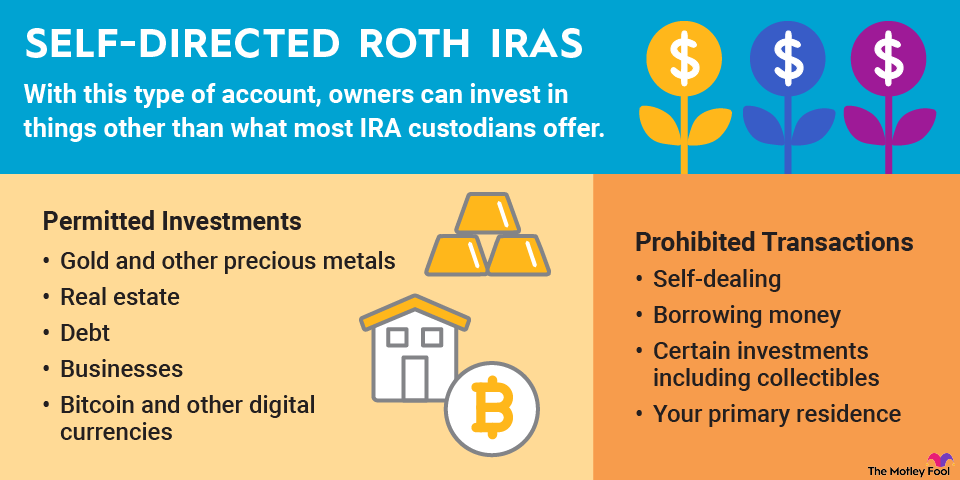
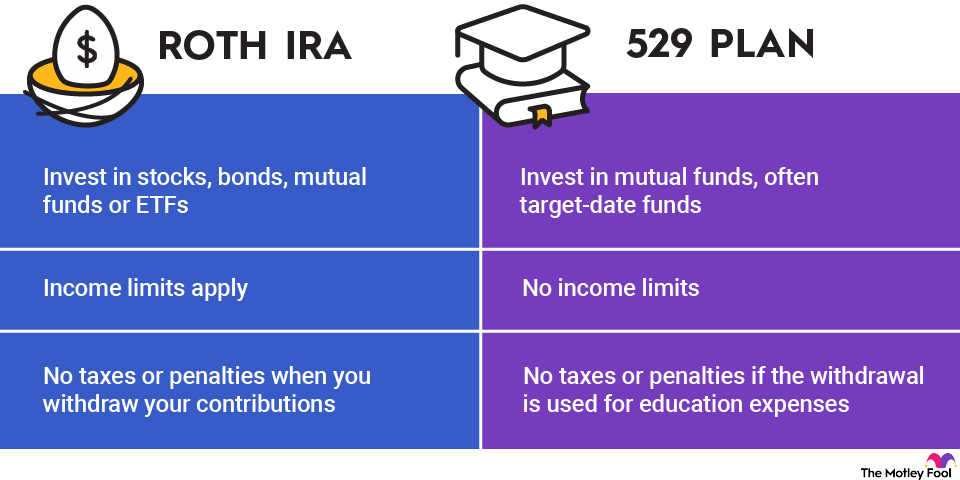
A Roth IRA isn't a specific type of investment, but rather a type of investment account. You still choose which specific securities, such as stocks, bonds, certificates of deposit, mutual funds, and exchange-traded funds (ETFs), to hold in your Roth IRA. The overall performance of your chosen securities determines whether your Roth IRA gains or loses money. (You can invest in things other than what most IRA custodians offer, like cryptocurrency, if you choose a self-directed Roth IRA.)
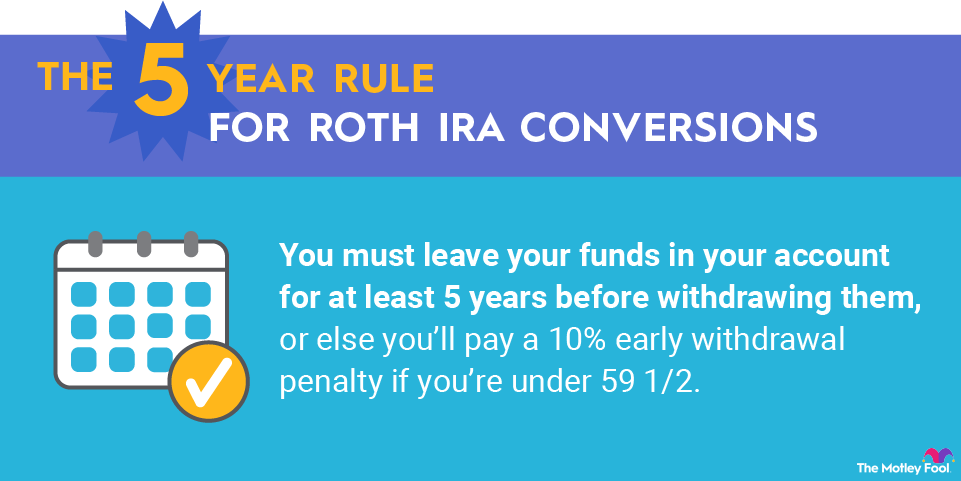
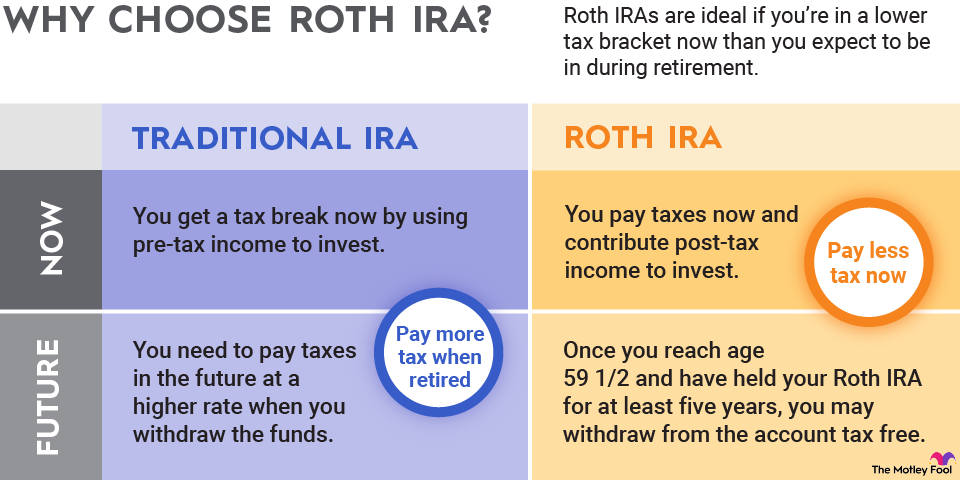
You cannot deduct Roth IRA contributions from your taxable income as you can with contributions to traditional IRAs and 401(k)s. But once you reach age 59 1/2 and have held your Roth IRA for at least five years, you may withdraw any amount of money from the account completely tax-free. Because you make Roth IRA contributions with after-tax dollars, you can withdraw those contributions (but not their earnings) at any time without taxes or penalties.

Roth IRA Eligibility
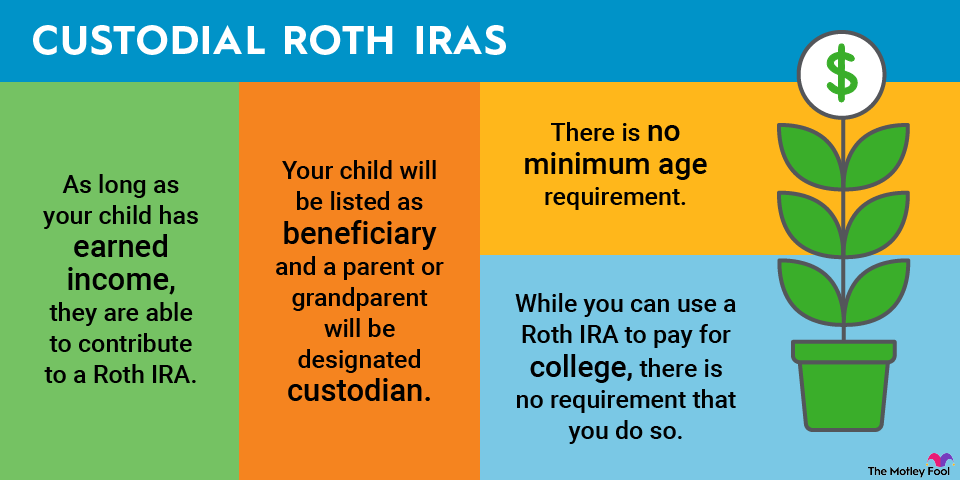
To be eligible to contribute to a Roth IRA, you need to generate earned income. Salary, hourly wages, bonuses, tips, self-employment income, and commissions -- all of which you generate by working -- qualify as earned income. Investment income, Social Security benefits, retirement distributions, unemployment compensation, and alimony do not qualify as earned income.
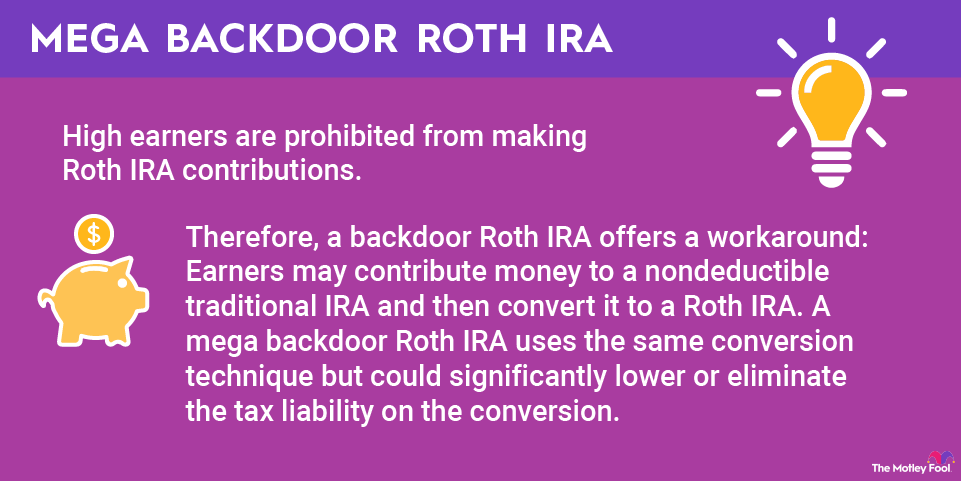
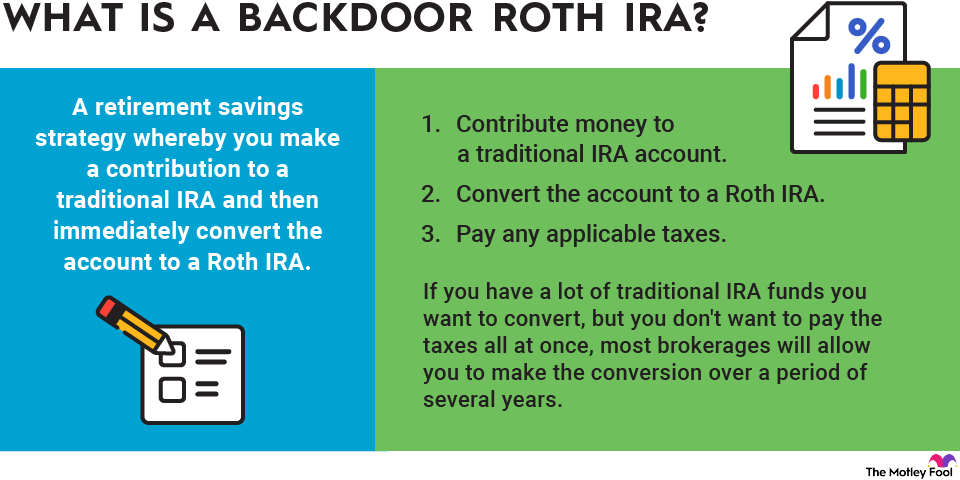
Your eligibility for a Roth IRA also depends on how much money you earn. If your income exceeds a certain amount, which varies based on your tax filing status and living situation, you are prohibited from contributing to a Roth IRA. The only way for a high earner to still fund a Roth IRA is to use a backdoor Roth IRA strategy, which entails contributing to a traditional IRA and then converting it to a Roth IRA. This workaround, while permissible, requires you to pay tax when you convert the funds.
To determine whether you are eligible to contribute to a Roth IRA, you'll need to know your modified adjusted gross income (MAGI). To calculate your MAGI, you'll first need to know your adjusted gross income (AGI). Your AGI and MAGI will either be identical or very similar. The IRS website states that your MAGI is typically your AGI plus any tax deduction that you receive for making student loan interest payments.
Modified Adjusted Gross Income
Roth IRA income and contribution limits
Roth IRAs are subject to both income and contribution limits. Not only are you prevented from contributing to a Roth IRA if your income exceeds a certain amount, but also, for those eligible to contribute, there's a cap on the amount of money annually that you may invest. (You need to make sure not to make excess contributions.)
The Roth IRA contribution limit is $7,000 in 2025 and $7,500 in 2026 if you are younger than age 50. If you are 50 or older, then the contribution limit increases to $8,000 in 2025 and $8,600 in 2026. That extra $1,000 (or $1,100 in 2026), known as the catch-up contribution, is intended to help older individuals "catch up" on investing as they approach retirement.
Based on your tax filing status and MAGI, the table below specifies how much -- if anything -- you can contribute to a Roth IRA.
2025 and 2026 Roth IRA income and contribution limits
Tax filing status | 2025 MAGI | 2026 MAGI | Contribution limit |
|---|---|---|---|
Single, head of household, or married person filing separately who did not live with spouse during the tax year | Less than $150,000 | Less than $153,000 | $7,000 ($8,000 for ages 50 and older) in 2025; $7,500 ($8,600 for ages 50 and older) in 2026 |
$150,000 to $165,000 | $153,000 to $168,000 | Reduced in proportion to amount of income over MAGI limit | |
$165,000 or more | $168,000 or more | $0 (no contribution allowed) |
Tax filing status | 2025 MAGI | 2026 MAGI | Contribution limit |
Married couple filing jointly or qualifying widow/widower | Less than $236,000 | Less than $242,000 | $7,000 ($8,000 for ages 50 and older) in 2025; $7,500 ($8,600 for ages 50 and older) |
$236,000 to $246,000 | $242,000 to $252,000 | Reduced in proportion to amount of income over MAGI limit | |
$246,000 or more | $252,000 or more | $0 (no contribution allowed) |
Benefits of a Roth IRA
The way that Roth IRAs work, they confer many benefits, including:
- Tax-free income in retirement: Depending on how much you contribute to a Roth IRA and how well the investments in the account perform, withdrawing money tax-free in retirement from your Roth IRA can result in substantial income tax savings. In addition, if you are retired and use money from your Roth IRA to make a large purchase one year, you don't have to worry about an abnormally high income tax bill or the possibility of being bumped into a higher tax bracket for that year.
- Tax- and penalty-free withdrawals for first-time homebuyers: If you purchase a home, and you and your spouse haven’t owned a home within the past two years, then you are considered a first-time homebuyer. This enables you to withdraw up to $10,000 of earnings from your Roth IRA without paying income tax or the early withdrawal penalty. The $10,000 limit, however, is a lifetime cap that does not reset each year.
- Unrestricted withdrawals of contributions: You can withdraw your original contributions to a Roth IRA at any time without paying a penalty or tax. Because you paid income tax on the money in the year that you earned it, you may withdraw that same money without restriction, regardless of your age or when you opened the Roth IRA.
- No required minimum distributions: Also known as RMDs, required minimum distributions are specific dollar amounts that owners of other types of retirement accounts must accept starting at age 73 (previously age 72). Roth IRAs are exempt from RMDs because receiving distributions from this type of account doesn't change how much you owe in taxes.
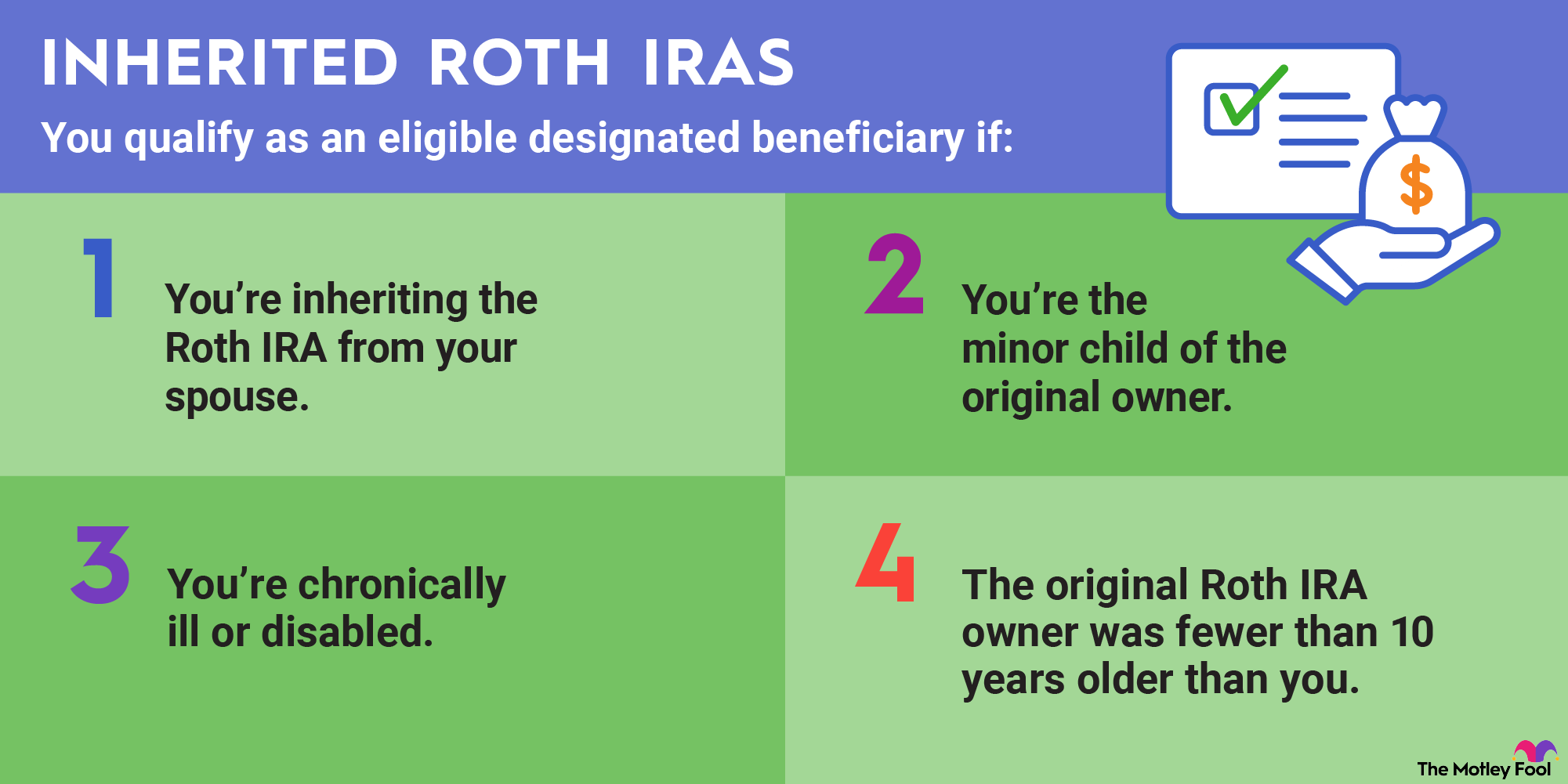
- Tax-efficient inheritance strategy: You can will a Roth IRA to your heirs, who can receive the account's balance tax-free.
- Education: Some account holders leverage a Roth IRA instead of a 529 for education savings.
Related Retirement Topics
Roth IRA vs. traditional IRA
The Roth IRA and traditional IRA have many features in common and a few crucial differences. You can generally use both types of accounts to invest in the same types of securities, like stocks, bonds, mutual funds, and ETFs. Additionally, with both types of accounts, your investments grow tax-free.
The key differences between Roth and traditional IRAs include:
- Tax deductions: With a traditional IRA, you may be able to deduct your contributions from your taxable income. However, traditional IRAs have income limits that could affect how much you are allowed to deduct. Contributing to a traditional IRA lowers your income tax liability now, while contributing to a Roth IRA helps you to avoid income taxes in retirement.
- Retirement withdrawals: The government doesn't tax Roth IRA withdrawals in retirement because you already paid taxes on the contributions in the years in which they occurred. You don't pay taxes on traditional IRA contributions in the years you make them; instead, you owe ordinary income tax on withdrawals from traditional IRAs in retirement.
- Required minimum distributions: With a traditional IRA, once you turn age 73, you are required to accept a minimum amount of money as a distribution every year. You are also required to pay income tax on that distribution. Roth IRAs, for which the distributions in retirement are tax-free, do not have RMDs.
Roth IRA FAQs
Roth IRA frequently asked questions (FAQs)
About the Author