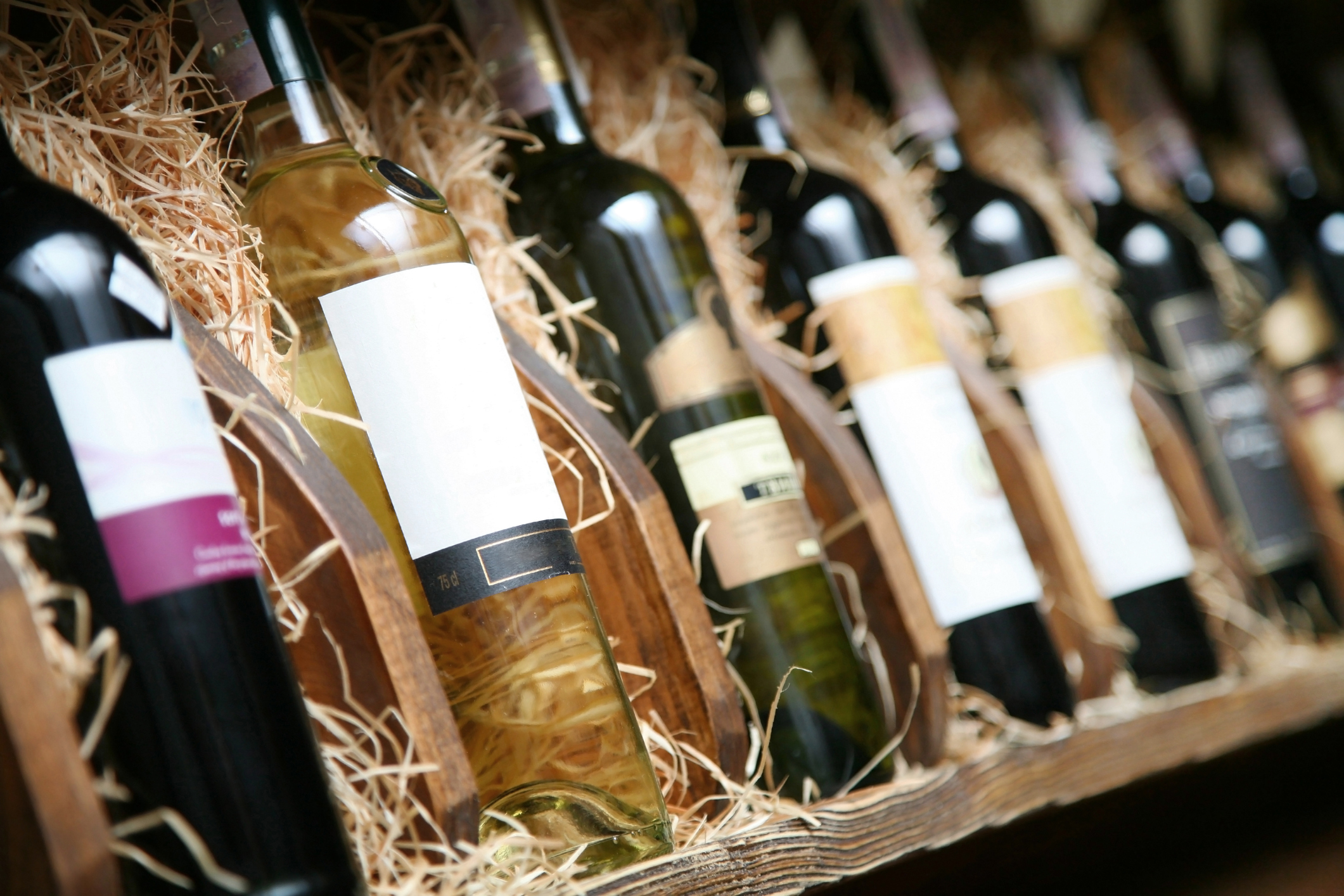
Alcohol was discovered not long after the dawn of civilization. Given its age, the global alcohol industry is hardly a fast-growing investment. However, through good and bad economic times, alcohol stocks enjoy steady rates of consumer consumption. Alcohol stocks are publicly traded companies that make money primarily from selling beer, wine, spirits, and other alcoholic drinks.

The alcohol industry, as well as the related beer and wine industries, is dominated by massive conglomerates. Since most small-batch craft producers are privately owned, the alcohol sector is mostly devoid of small, fast-growing, publicly traded companies. Nevertheless, alcohol stocks are worth considering for investors seeking stable growth and dividend income over time.
Eight top alcohol stocks for 2026
Alcohol is a big business. It overlaps the water utility segment of the economy a bit because the alcohol-distilling process consumes a significant amount of local water supplies. Alcohol production is also adjacent to wheat, grains, and farming and agriculture, so there are stocks to consider in those areas as well.
But when it comes to slow-and-steady beverage businesses, alcohol tends to enjoy stable sales, even when general consumer spending takes a hit elsewhere. Sometimes, alcohol sales even increase when the economy takes a turn for the worse, as they did during the COVID-19 pandemic and the Great Recession of 2008-2009.
There's some overlap with the beer-making business, too. For example, Budweiser parent AB InBev (BUD +1.56%) and smaller peers Constellation Brands (STZ +2.96%), which makes Corona and Modelo, and Boston Beer Company (SAM +2.90%), which produces Samuel Adams, all own brands that lie outside their core brewing operations. However, the following eight stocks are known for their top-shelf alcohol offerings.
1. LVMH Moët Hennessy Louis Vuitton
France's LVMH Moët Hennessy Louis Vuitton (LVMUY +0.74%) is the premier name in all things luxury goods. But champagne and other ultra-high-end spirits feature prominently in this diverse portfolio of high fashion. In fact, the company's name says as much. LVMH owns champagne house Moët Chandon, cognac maker Hennessy, and other brands, including Dom Pérignon, Krug, Veuve Clicquot, and more.

OTC: LVMUY
Key Data Points
LVMH -- whose CEO Bernard Arnault was one of the world's richest people in 2025 -- has been a winner on the stock market historically. Its diversified portfolio of luxury goods, which includes fashion and leather goods, jewelry and watches, wines and spirits, and perfumes and cosmetics, has delivered steady growth.
However, recently the company has struggled due to challenges in China. The wines and spirits business, which makes up less than 10% of the company's total revenue, has been a sore spot, with organic sales down 4% through the first three quarters of the year.
Still, this is a long-term growth business. Its fashion collection is highly sought-after worldwide, and it's been able to grow through acquisitions, taking over Tiffany in 2021, for example. LVMH also pays a modest dividend, yielding 2% in December 2025 to complement the steady expansion of its portfolio of fashion, champagne, and other luxury goods.
2. Diageo
Diageo (DEO +3.45%) is the U.K.'s largest alcohol producer. It's also one of the world's largest businesses that is almost solely devoted to distilled products. Although it has a beer business -- Irish brewer Guinness is one of its subsidiaries -- Scotch whisky is the real breadwinner here.

NYSE: DEO
Key Data Points
Diageo is the parent of Johnnie Walker, Buchanan's, J&B, and Lagavulin. Other spirits brands outside its ample whisky business include Smirnoff, Baileys, and Tanqueray. It's an enviable stable of alcohol names, and Diageo has been able to coax steady growth from its portfolio for years.
It's also a highly profitable operation, historically generating an operating profit margin that tops 30% annually and with an adjusted operating margin of 28.2% in fiscal 2025, while organic revenue ticked up by 1.7%. Additionally, the company took $910 million in impairment charges, primarily due to a write-down in its Distill Ventures start-up incubator program and on the value of Aviation Gin.
Broader challenges, including slowing demand in key markets like North America and China, have weighed on the stock. Nevertheless, due to its exceptional profitability, Diageo is a top dividend income stock to consider from the alcohol stock universe, paying a yield of 4.8% in December 2025.
3. Pernod Ricard
Pernod Ricard (OTC:PDRDY) is another house of alcohol brands tailored to wide-ranging tastes. The French company owns Pernod and Ricard, two anise-flavored liqueurs from which the company's name is derived. It also owns Absolut vodka, Beefeater gin, Chivas Regal Scotch whisky, Jameson Irish whiskey, Kahlua, Malibu, and many other labels.

OTC: PRNDY
Key Data Points
Much like the other brands on this list, Pernod Ricard isn't the fastest-growing business around. In fact, organic revenue fell 3% in fiscal 2025 due to weakness in the U.S., where sales were down 6%, and in China, which had a decline of 21% due in part to macroeconomic weakness. In June, the company launched a restructuring plan, which would include job cuts.

OTC: REMY.Y
Key Data Points
Remy Cointreau has struggled of late. The company reported an organic sales decline of 18% in fiscal 2025, as demand has been sluggish in China, in part due to an increase in import duties.
Retailers in the U.S. have also pulled back on high-end products amid a shift in demand and inflationary pressure. That trend continued into the first half of fiscal 2026 with organic sales down 4.2%.
The company is working on fostering growth in its portfolio by elevating its brands' profiles as premium choices. It expects to return to organic sales growth in the second half of fiscal 2026.
6. Anheuser-Busch/InBev
Anheuser-Busch InBev (BUD +1.56%) is one of the biggest alcohol companies in the world. It was formed by the merger of Anheuser-Busch, the Budweiser parent, and InBev, the Belgian owner of beer brands such as Stella Artois and Beck's and liquor brands like Skol.
In 2016, AB InBev got even bigger with its acquisition of SAB Miller, though the beer maker was forced to divest several brands for the deal to pass regulatory muster. Today, AB InBev is massive, but it is still subject to the larger trends in the alcohol industry, including the fact that the young adult generation seems to be drinking less than their predecessors.
In the second quarter of 2025, organic volume sales were down 1.9%, though the company has seen success with its megabrands, such as Corona, which continues to gain market share around the world (although AB InBev doesn't own the U.S. rights to sell Corona).
7. Constellation Brands
Constellation Brands (STZ +2.96%) is best known as the domestic seller of Corona, Modelo, and other Grupo Modelo brands as part of a 2013 deal with AB InBev after regulators forced AB InBev to sell the domestic rights to those beers to allow its acquisition of Grupo Modelo. As a result, Constellation Brands' stock surged over a five-year period following the deal, though its growth has since faded.

NYSE: STZ
Key Data Points
In addition to the beer business, Constellation also owns liquor brands like High West Whiskey. However, it has been selling off its wine business in recent years.
The stock has recently attracted the interest of Warren Buffett's Berkshire Hathaway (BRK.A +0.93%)(BRK.B +1.38%), which invested in the stock, even though the business has struggled in 2025. Sales of Corona and Modelo have fallen, in part due to weakness among Hispanic consumers because of the immigration crackdown.
8. Molson Coors
Molson Coors (TAP +3.63%) is a pure-play beer maker known for its namesake brands and the Miller family of beers. Additionally, it owns Blue Moon, Foster's, Grolsch, and Peroni, among others. The company acquired the Miller brands when SAB Miller divested them to combine with AB InBev.

NYSE: TAP
Key Data Points
Like other beer makers and alcohol stocks, Molson Coors has struggled with the macroeconomic climate and broader trends in beer consumption. As of the third quarter of 2025, the company expected revenue to decline 3%-4% for the year. The company also took a $3.65 billion goodwill impairment charge in Q3 on the value of its Americas business.
New CEO Rahul Goyal also laid off 9% of its Americas workforce in October 2025, shortly after taking the reins. While Molson Coors enjoys double-digit operating margins, the business is likely to struggle until the macroeconomic climate improves.
Pros and cons of investing in alcohol stocks
Alcohol production is an age-old business, and the alcohol industry is far from the fastest-growing segment of the stock market. The investable portion of the industry is dominated by a few giants that are slow-and-steady stalwarts.
However, for investors looking to generate some income and enjoy stable returns over time, alcohol stocks and their beer stock cousins are worth a look. Let's take a look at some pros and cons of investing in alcohol stocks.
Pros
- Alcohol stocks tend to generate wide profit margins.
- Alcohol has proven itself to be a timeless product.
- Most alcohol stocks pay dividends.
Cons
- Alcohol companies have been struggling with demand and pressure related to tariffs.
- The category is mature. Even in a better macroenvironment, overall growth is likely to be modest.
- There is some evidence that alcohol consumption is declining in the U.S.
Factors to consider before investing in alcohol stocks
If you're considering investing in alcohol stocks, here are some questions you should ask before doing so. Since most alcohol stocks are subject to similar macroeconomic forces, you'll want to make sure the sector aligns with your investing style.
- Are you looking for defensive consumer staples stocks that pay dividends?
- Are you willing to hold stocks that are expected to deliver only modest growth over the long term?
- The industry is currently facing a number of macro challenges. Do you have the patience to ride those out and wait for a possible turnaround?
As far as picking individual stocks within the sector, some key points to consider are:
- What growth drivers does the company have?
- What is its history of growth and profitability?
- Does it have a strong stable of brands?
- Does it have a history of asset impairments?
- Are there new markets it can expand into?
- Is it releasing new products?
- How strong is its dividend?
Occasionally, alcohol stocks have broken out with surging growth, as Boston Beer did briefly with the hard seltzer craze during the COVID-19 pandemic and Constellation Brands did in the 2010s after acquiring the U.S. distribution rights to Corona and Modelo. However, more recent growth has been hard to come by for any company in the sector.
Related investing topics
How to invest in alcohol stocks
If you're interested in investing in alcohol stocks, the process is the same as it is for any other publicly traded company.
- Open your brokerage app: Log in to your brokerage account where you handle your investments.
- Search for the stock: Enter the ticker or company name into the search bar to bring up the stock's trading page.
- Decide how many shares to buy: Consider your investment goals and how much of your portfolio you want to allocate to this stock.
- Select order type: Choose between a market order to buy at the current price or a limit order to specify the maximum price you're willing to pay.
- Submit your order: Confirm the details and submit your buy order.
- Review your purchase: Check your portfolio to ensure your order was filled as expected and adjust your investment strategy accordingly
FAQ
Alcohol stocks FAQ
About the Author