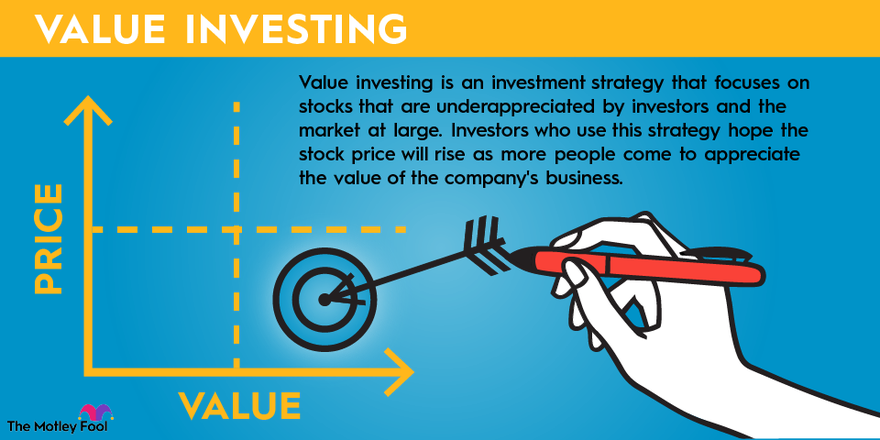
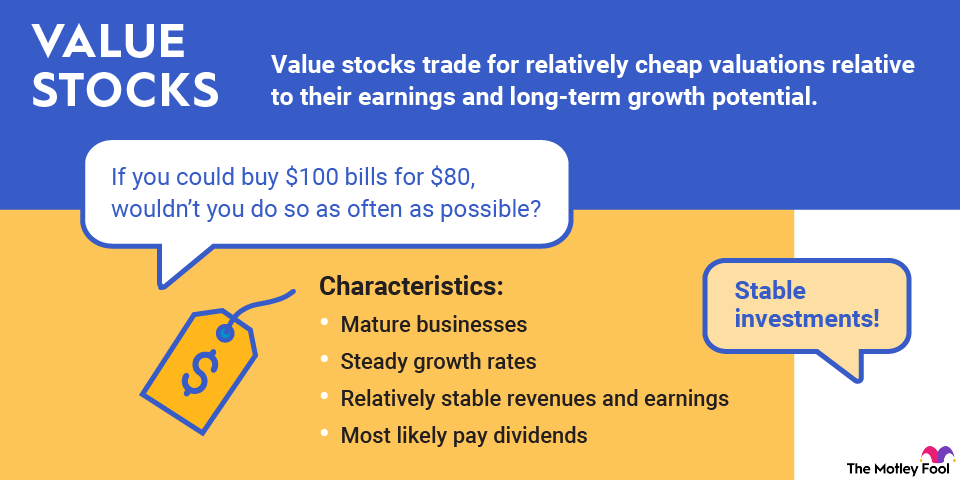
Value investors want to buy stocks for less than they're worth, like buying $100 bills for $80. Even high-quality companies with strong fundamentals see share prices fall when the overall stock market drops, and that's when value investors go shopping.
Here's an overview of some excellent beginner-friendly value stocks and key concepts that value investors should know.
Top value stocks to consider
| Name and ticker | Market cap | Dividend yield | Industry |
|---|---|---|---|
| Berkshire Hathaway (NYSE:BRKB) | $1.1 trillion | 0.00% | Diversified Financial Services |
| Target (NYSE:TGT) | $54.4 billion | 3.78% | Food and Staples Retailing |
| General Motors (NYSE:GM) | $67.5 billion | 0.84% | Automobiles |
| Signet Jewelers (NYSE:SIG) | $3.7 billion | 1.40% | Specialty Retail |
| AT&T (NYSE:T) | $192.7 billion | 4.03% | Diversified Telecommunication Services |
| Bank of America (NYSE:BAC) | $343.8 billion | 2.30% | Banks |
1. Berkshire Hathaway

NYSE: BRKB
Key Data Points
2. Target

NYSE: TGT
Key Data Points
3. General Motors

NYSE: GM
Key Data Points

NYSE: SIG
Key Data Points

NYSE: T
Key Data Points
AT&T is a classic value stock in many ways. It's one of three large telecom companies in the country, and it competes in an industry with high barriers to entry, high capital expenditures, and wide profit margins.
It trades at a P/E ratio of 9.5 and offers a dividend yield of 3.8%.
Over the last few years, AT&T has worked hard to rebuild its business after making misguided investments in media companies like Time Warner. The company has invested in its core infrastructure and operations, and that's helped drive a recovery in the stock. It also acquired Lumen Technologies in 2025 to expand its fiber business to the western U.S.
6. Bank of America

NYSE: BAC
Key Data Points
Bank of America is the second-largest bank by assets in the U.S., behind JPMorgan Chase, and its business covers both commercial banking and investment banking thanks to its ownership of Merrill Lynch.
Financial stocks tend to trade at low valuations due to their cyclical risk, and as of March 2026, Bank of America currently has a P/E ratio of 13, and offers a dividend yield of 2.2%.
The company has been opening new locations, entering new markets like Louisville and Milwaukee, as having a physical presence is key to attracting new customers. It also acquired a $9 billion mortgage portfolio from TD, and its CEO Brian Moynihan is a favorite of Warren Buffett.
What makes a stock a value stock?
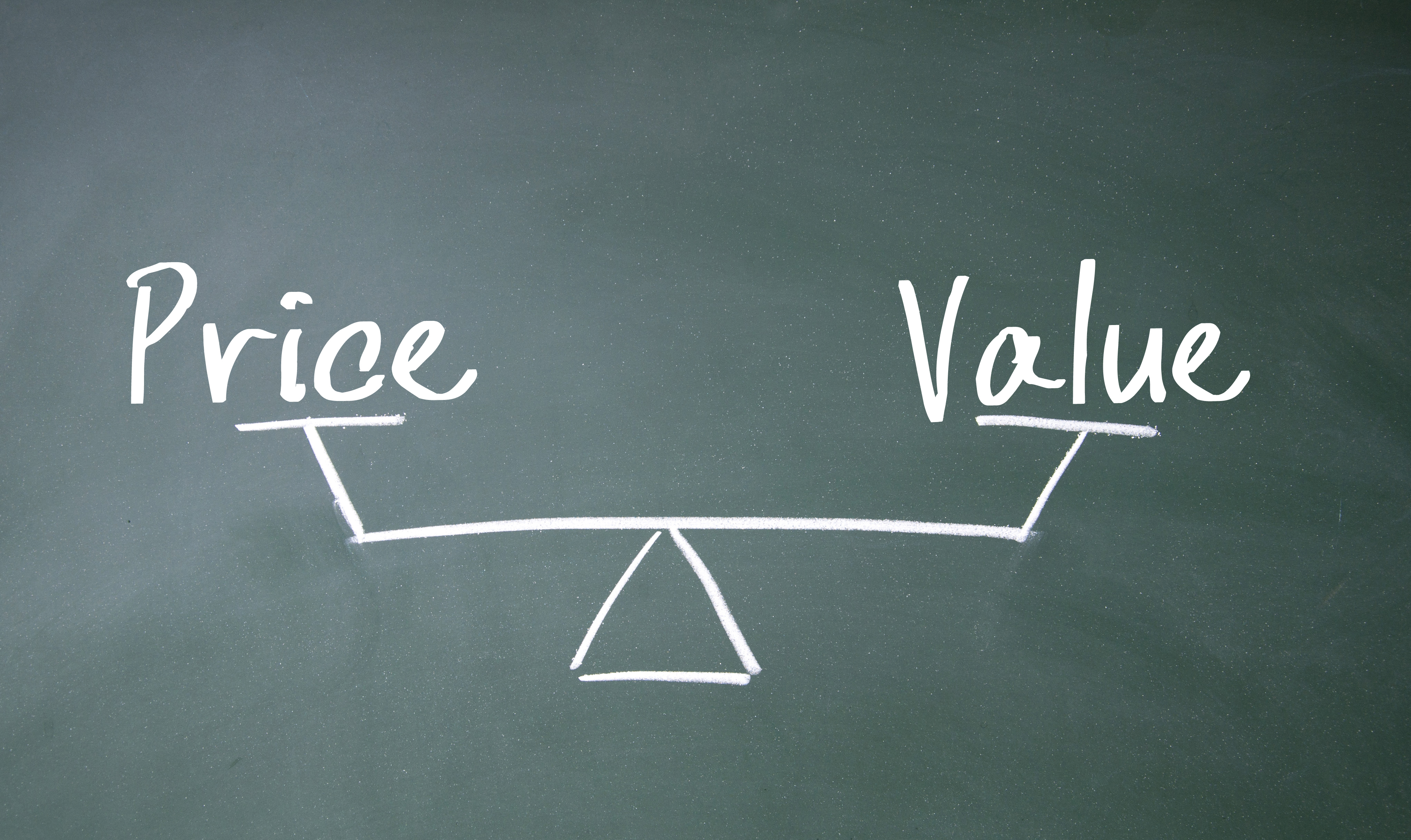
A value stock is one that trades at a lower price than its financials suggest it's worth. That gap between price and intrinsic value is what value investors are hunting for.
Most value stocks share a few common traits: they're typically mature, established businesses with stable revenues and earnings, modest but steady growth, and often a dividend. They're not exciting, and that's the point. Their share prices tend to be lower precisely because the market isn't pricing in much future growth.
It's worth noting that a cheap stock isn't automatically a value stock. Sometimes a low valuation reflects real, lasting problems rather than a temporary discount. The goal is to find stocks where the market has overreacted, and where the underlying business remains sound.
Don't underestimate the power of value stocks
While they may not be quite as thrilling as their growth stock counterparts, it's important to realize that value stocks can have just as much long-term potential, if not more. After all, a $1,000 investment in Berkshire Hathaway at the beginning of 1965 would be worth more than $28 million today.
Finding companies that trade for less than they are truly worth is a time-tested investment style that can pay off tremendously.
Related investing topics
FAQ
Investing in value stocks FAQ
About the Author

Jeremy Bowman has positions in Amazon, Netflix, Nike, RH, and Target. The Motley Fool has positions in and recommends Amazon, Apple, Berkshire Hathaway, Costco Wholesale, Microsoft, Netflix, Nike, Target, and Tesla. The Motley Fool recommends FedEx, General Motors, and RH. The Motley Fool has a disclosure policy.