There's no official definition of a high-yield dividend stock. However, most investors would classify it as a stock with a dividend yield above a common benchmark, such as the S&P 500 index or a 10-year U.S. Treasury note.
In early February 2026, the dividend yield on the S&P 500 averaged around 1.1%, approaching its record low. Meanwhile, the yield on the 10-year note was around 4.2%, down from its recent peak above 4.8% in early 2025 after the Federal Reserve started lowering interest rates.

Many investors would consider a stock to have a high dividend yield if it were twice the S&P 500 yield; others would require a payout at or above the 10-year Treasury yield. Those baseline measurements aside, investors shouldn't buy a stock solely because of its dividend yield.
They need to make sure the dividend payments are sustainable. The company should be high-quality, with durable cash flow, a strong balance sheet, and visible growth potential. With all that in mind, here are 20 high-yield dividend stocks to consider buying for dividend income.
Twenty high-yield dividend stocks to watch
Here's a brief look at what makes each of these high-yield dividend stocks look like attractive buys in 2026.
1. AbbVie

NYSE: ABBV
Key Data Points

NYSE: MAA
Key Data Points

NYSE: BIP
Key Data Points
Brookfield Infrastructure (BIP +0.19%) operates a diversified portfolio of infrastructure businesses focused on utilities, transportation, energy (midstream), and data. The businesses generate relatively stable cash flow to support Brookfield's growing dividend. The infrastructure stock delivered its 17th consecutive annual payout increase in 2026, up 6% from the prior level.
Brookfield envisions increasing its dividend at an annual rate of 5% to 9% over the long term. The company's organic growth drivers of inflation-linked rate increases, volume growth as the global economy expands, and expansion projects should grow its funds from operations (FFO) by 6% to 9% per share over the next few years. Meanwhile, it sees future acquisitions boosting its FFO per share growth rate above 10% annually.
3. Brookfield Renewable

NYSE: BEP
Key Data Points

NYSE: DUK
Key Data Points
Duke Energy (DUK +0.45%) is a leading utility. The company's electric utilities serve 8.2 million customers across six states, while its natural gas utilities serve 1.6 million customers across five states. Its businesses generate very stable cash flows backed by government-regulated rate structures, enabling Duke to pay dividends since 1926.
Duke has a large-scale investment program underway (between $95 billion and $105 billion of capital spending from 2026 through 2030) to expand its transmission and distribution network. These investments should grow its earnings per share by 5% to 7% annually through 2029. Earnings growth should enable the utility to continue increasing its dividends, which it has done each year since 2007.
6. Main Street Capital

NYSE: MAIN
Key Data Points
Main Street Capital (MAIN -1.18%) is a business development company (BDC) focused on providing capital solutions (private debt and private equity) to lower middle market companies (those with annual revenues between $10 million and $150 million). It also provides debt capital to middle-market companies ($150 million+ in annual revenue).
The company's debt investments generate interest income, while most of its equity investments provide it with dividend income. As a BDC, Main Street Capital must pay out 90% of its taxable net income to shareholders. It does that through a sustainable and steadily rising monthly dividend (136% growth since its IPO in 2007). Main Street Capital also periodically pays a supplemental quarterly dividend. The company has increased its base monthly dividend payment by 4% over the past year, including a 2% increase in November 2025.
7. Chevron

NYSE: CVX
Key Data Points
The big oil giant's top financial priority is to sustain and grow its dividend. In 2026, the company delivered its 39th consecutive annual dividend increase, one of the longest streaks among oil stocks. Chevron (CVX +1.77%) has delivered peer-leading dividend growth over the past decade.
Its integrated operations, low-cost oil business, and lower-carbon energy investments position Chevron to sustain and grow its dividend. The oil giant has also been an active acquirer.
It closed its acquisition of Hess in mid-2025. The deal will enhance and extend its production and free cash flow growth outlook into the 2030s, with Chevron expected to grow its free cash flow at a more than 10% compound annual rate through 2030. As a result, Chevron should have plenty of fuel to continue increasing its high-yielding dividend.
8. Enbridge

NYSE: ENB
Key Data Points
Canadian pipeline and utility giant Enbridge (ENB +1.68%) has been an outstanding dividend stock over the years. It has paid dividends for over 70 years and has increased its payout (in Canadian dollars) in each of the past 31 years.
While the world is transitioning its fuel supply from oil to cleaner alternatives, Enbridge is adapting by investing in infrastructure to support natural gas projects and renewable energy. The investments have the company on track to increase its cash flow per share by a 3% to 5% annual rate for the next several years, which should support continued dividend growth. Enbridge raised its dividend payment by 3% in December 2025.
9. Enterprise Products Partners

NYSE: EPD
Key Data Points

NASDAQ: GILD
Key Data Points
14. NNN REIT

NYSE: NNN
Key Data Points

NYSE: PFE
Key Data Points
Pfizer (PFE +4.08%) has paid dividends for 349 consecutive quarters, increasing them for 16 consecutive years. The pharmaceutical giant's investments in research and development (R&D) are paying off. The company developed one of the first vaccines against COVID-19 and followed that up with a successful oral treatment.
The commercial successes have enabled Pfizer to continue making research and development investments and strategic acquisitions (it bought Metsera for up to $10 billion in cash in late 2025). These investments should grow Pfizer's cash flow in the future, allowing it to continue increasing its dividend payments.
16. VICI Properties

NYSE: VICI
Key Data Points

NYSE: O
Key Data Points

18. Verizon Communications

NYSE: VZ
Key Data Points

NASDAQ: TROW
Key Data Points

NASDAQ: PEP
Key Data Points
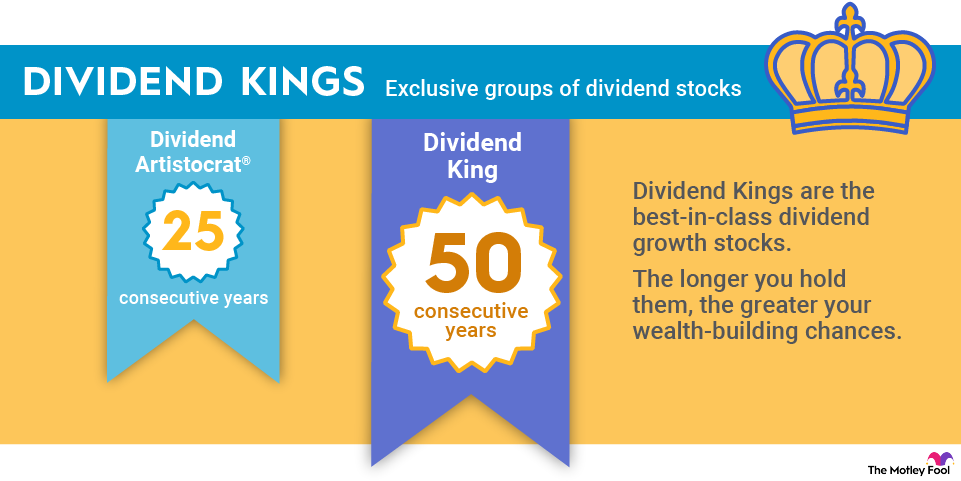
PepsiCo (PEP +2.04%) has an illustrious record of paying dividends. The global snacking and beverage giant extended its dividend growth streak to 53 in a row in 2025. That put it in the elite group of Dividend Kings, a company with 50 or more years of annual dividend increases.
The iconic company invests heavily in new product innovation, productivity enhancements, and other drivers to grow its revenue and profit margins. It also routinely acquires snack and drink brands that consumers love (it paid almost $1.7 billion for Poppi in 2025). PepsiCo's continued investments should enable it to maintain its exceptional track record of dividend growth.
What to Consider Before Investing in High-Yield Dividend Stocks
You should consider the following factors before buying high-yield dividend stocks:
- Whether the company has the financial strength to sustain its high-yielding dividend if market conditions deteriorate.
- If investing in a company with a lower yield but higher growth and total return potential is better for your financial situation.
- Signs that the stock might be a dividend yield trap.
- If the company can increase its dividend in the future.
How to invest in high-yield dividend stocks
It's easy to add a high-yield dividend stock to your portfolio. Here's a step-by-step guide on investing in high-yield dividend stocks:
- Open your brokerage app: Log in to your brokerage account where you handle your investments.
- Search for the stock: Enter the ticker or company name into the search bar to bring up the stock's trading page.
- Decide how many shares to buy: Consider your investment goals and how much of your portfolio you want to allocate to this stock.
- Select order type: Choose between a market order to buy at the current price or a limit order to specify the maximum price you're willing to pay.
- Submit your order: Confirm the details and submit your buy order.
- Review your purchase: Check your portfolio to ensure your order was filled as expected and adjust your investment strategy accordingly.
Pros and cons of investing in high-yield dividend stocks
Investing in high-yield dividend stocks has its share of benefits and drawbacks. Some of the pros include:
- More income: Investing in high-yield dividend stocks enables you to generate more dividend income from every dollar you invest compared to lower-yielding stocks or those that don't pay a dividend.
- Lower volatility: High-yielding dividend stocks tend to be slower-growing companies and are often less volatile.
- Higher long-term total return potential: Higher-yielding dividend stocks can often produce higher total returns over the long term as the dividend income adds up.
On the other hand, here are some cons of investing in higher-yielding dividend stocks:
- Potentially higher risk profile: Some higher-yielding dividend stocks are at greater risk of dividend reductions due to high payout ratios or weaker financial profiles.
- Slower growth: Most higher-yielding dividend stocks tend to be slower-growing companies.
High-yield dividend stocks versus other dividend strategies
There are three primary dividend investment strategies:
- High-yield dividend strategy: This strategy aims to generate passive income, making it ideal for retirees and investors seeking regular cash flow. It can be a lower-risk strategy as long as investors avoid yield traps.
- Dividend growth strategy: This strategy focuses on investing in companies with a history of dividend increases. While this approach initially generates less income, it has historically delivered the highest total returns over the long term.
- Dividend capture strategy: This active, short-term strategy involves buying a stock right before its ex-dividend date and selling it shortly after to capture the dividend. It aims to generate more income on your invested capital. However, it's more challenging due to the active management, tax implications (you'd receive non-qualified dividends and potentially incur capital gains taxes), and the risk of losing money on the stock purchases.
Related investing topics
Lots of income now, and even more later
All 20 of these dividend stocks offer above-average yields, making them stand out in a time when many companies don't pay high dividends. Even better, each one has a solid track record of steadily increasing its dividend and showing no signs of stopping. That makes them great income stocks to buy and hold for the long haul.