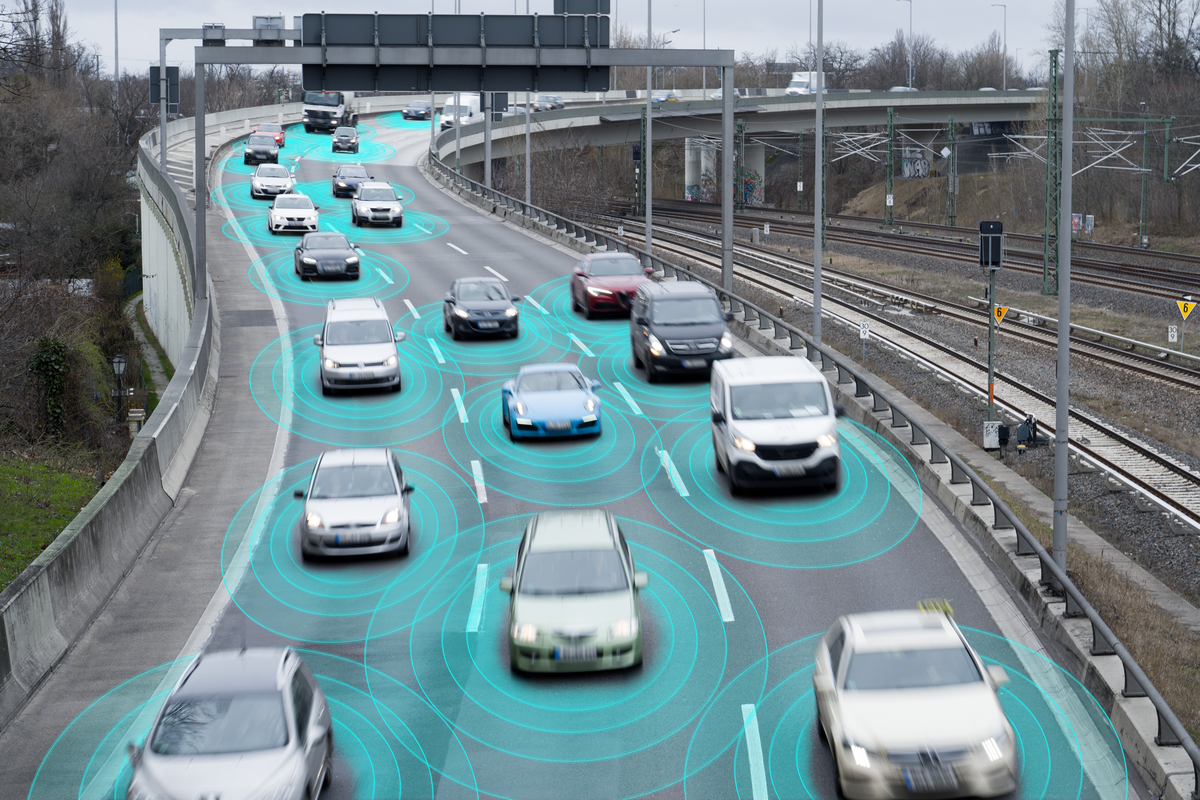
It may still be a rare sight to look at the vehicle next to you and find there's no one behind the wheel. But this may soon change.
Unsurprisingly, many investors have steered into self-driving car exchange-traded funds (ETFs). According to business intelligence firm ResearchAndMarkets.com, the autonomous car market was valued at $1.7 trillion in 2024 and will climb at an 8.6% compound annual growth rate (CAGR) until 2034, when it's expected to reach $3.9 trillion.
Exchange-Traded Fund (ETF)
Investors would be wrong to think that it's only automotive stocks and, specifically, self-driving car stocks that are found in self-driving car ETFs. From companies that produce electric vehicles (EVs) to sensor manufacturers, autonomous vehicle ETFs include a variety of stocks that help drive the development of self-driving vehicle capabilities.
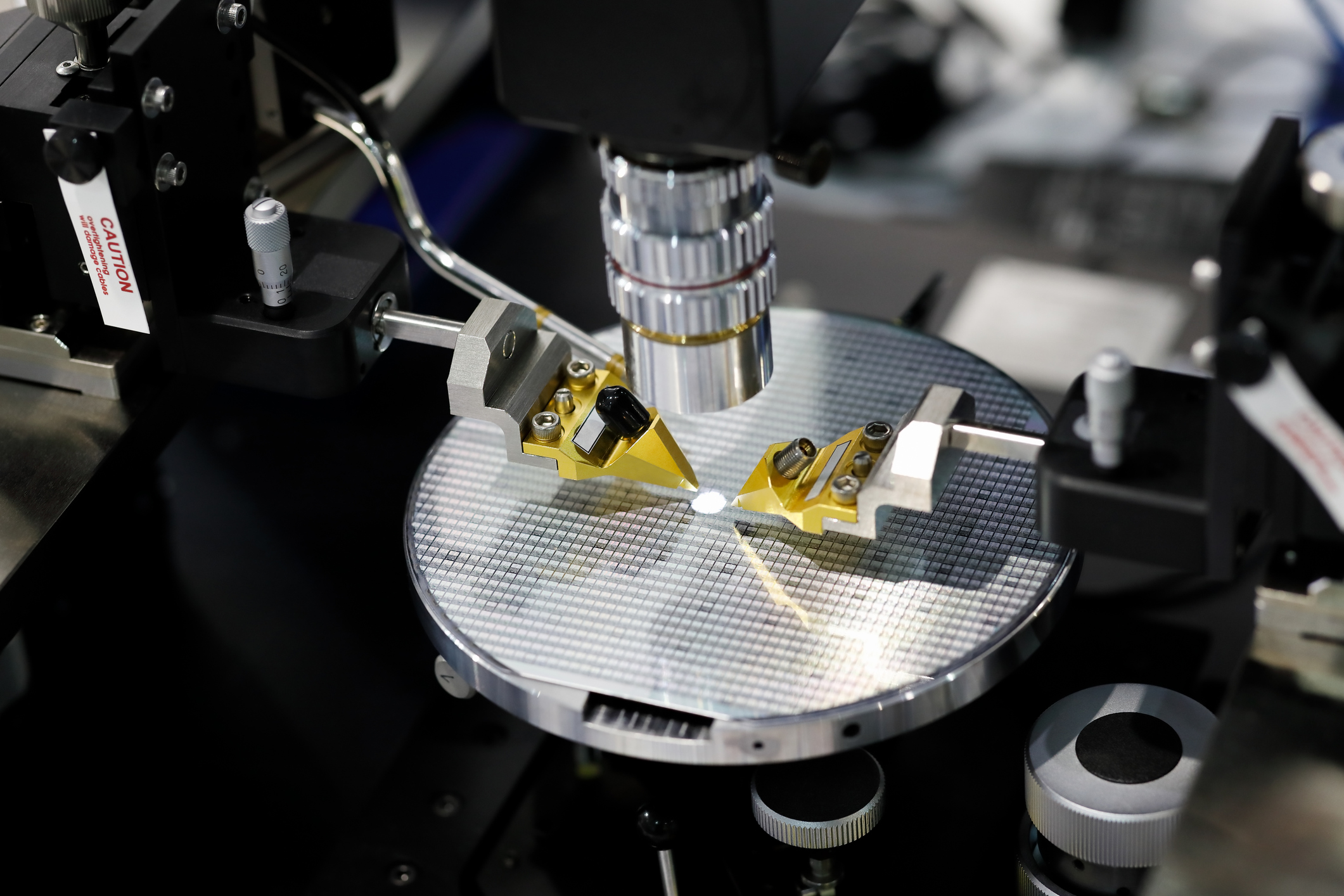
Semiconductor stocks like Nvidia (NVDA -1.35%) and Qualcomm (QCOM -8.43%) that are closely linked to artificial intelligence (AI) often represent major positions in the best self-driving car ETFs. EV makers that offer autonomous driving capabilities, such as Tesla (TSLA -2.17%), are also prominently featured in these funds, providing investors with a wide range of exposure to the burgeoning field.
Why invest in self-driving car ETFs?
Some driver assistance technologies, like cruise control, have been around for decades. However, the introduction of truly autonomous features came in the early 21st century when tools like automatic parallel-parking assistance -- available in the 2003 Toyota (TM -1.74%) Prius -- emerged.
Vehicles now demonstrate a wide range of self-driving capabilities, including vehicles made by Aurora Innovation (AUR -9.47%), which began operations of its self-driving trucks in May 2025. With notable advancements in autonomous driving capabilities, there are plenty of reasons to consider a self-driving car position, including:
- It's still the early innings for the autonomous driving industry, making it an exciting opportunity for growth investors.
- Investing in self-driving car ETFs can help investors achieve portfolio diversification.
- Those with low risk tolerances may take advantage of an ETF option.

NYSEMKT: IDRV
Key Data Points
The iShares Self-Driving EV and Tech ETF had 57 holdings as of January 2026, including several foreign EV makers. Chinese companies are well represented in the fund. BYD (BYDDY +2.13%) -- the largest EV manufacturer -- and Li Auto (LI +2.71%) were among the top 10 largest positions.
Making distributions on a semiannual basis, the ETF had a 12-month trailing yield of 1.7% as of the end of December 2025. It has an expense ratio of 0.48%. From its inception in April 2019 through Jan. 30, 2026, the iShares Self-Driving EV and Tech ETF had produced a total return of 67%.
2. Global X Autonomous & Electric Vehicles ETF
Attempting to track the investment results of the Solactive Autonomous & Electric Vehicles Index -- comprised of EV makers, producers of components found in EVs, companies that produce materials used in the manufacturing of EVs, and other EV-related stocks -- the Global X Autonomous & Electric Vehicles ETF (DRIV -2.58%) had 75 holdings and about $398.8 million in net assets in February 2026.

NASDAQ: DRIV
Key Data Points
For investors more interested in exposure to the semiconductor and software companies that help to make autonomous driving technology possible, the Global X Autonomous & Electric Vehicles ETF is a smart choice. Tesla, Alphabet (GOOG -0.26%) (GOOGL -0.20%), and Intel (INTC -0.80%) represent three of the six largest positions in the fund.
Helping to cover the fund's 0.68% total expense ratio, the Global X Autonomous & Electric Vehicles ETF makes distributions on a semiannual basis. As of January 2026, the fund had a 12-month yield of 1.5%. From its 2018 launch through January 2026, the Global X Autonomous & Electric Vehicles ETF has provided a total return of about 120%.
3. ARK Autonomous Technology & Robotics ETF
Those looking for a more measured approach to investing in self-driving cars might consider hitching a ride with the ARK Autonomous Tech & Robotics ETF (ARKQ -3.13%). Led by Cathie Wood, the ETF had net assets of $1.7 billion at the end of 2025. It aims to invest 80% of its assets in companies that specialize in automated technologies.

NYSEMKT: ARKQ
Key Data Points
With exposure to a variety of industries, such as smart devices and 3D printing, autonomous mobility (which includes smart cars) represents the largest technology in the ETF -- about 43% at the end of Q3 2025.
Tesla, the second-largest position, provides considerable exposure with its 10% weighting. The ETF typically has between 30 and 50 holdings. Other self-driving car makers in the ETF include Aurora Innovation and BYD.
Investors who bought the ETF when it launched in 2014 have enjoyed market-beating returns: The ARK fund had provided a total return of 567% from its inception through the middle of January 2026, compared to the S&P 500's return of 313%. The ARK Autonomous Tech & Robotics ETF doesn't currently pay a dividend and has an expense ratio of 0.75%.
Factors to consider before investing in self-driving car ETFs
The thought of investing in self-driving car ETFs may rev some investors' engines, but before they proceed with an investment, there are a few important considerations:
- Is there extensive exposure to tech and industrial stocks in your portfolio? Many investors need to maintain a well-diversified portfolio.
- If there is a heavier concentration toward tech and industrial stocks, are you comfortable with the risks of concentration in one sector?
- Are you prioritizing passive income? While many self-driving car ETFs pay dividends, their yields are often below 2%.
- Are you patient and willing to endure some bumps in the road? Growth in the self-driving car industry will be slow -- not overnight.
Should I invest in self-driving car ETFs?
The widespread acceptance of self-driving cars certainly won't happen overnight, and there are sure to be some bumps in the road as the industry matures. For investors looking to mitigate the risks associated with investment in individual stocks, a self-driving car ETF is a logical option.
From the concentrated exposure to EV carmakers, such as in the iShares Self-Driving EV and Tech ETF, to the more diverse range of self-driving car-related companies held in the Global X Autonomous & Electric Vehicle ETF, to the various technologies represented in the ARK Autonomous Technology & Robotics ETF, investors have a range of choices that will surely meet their individual investment goals.
Related investing topics
Future outlook for the self-driving car industry
Self-driving capabilities have come a long way over the past decade, and there's a lot more to come. Even though investing in the self-driving industry is a long-term play, investors will recognize plenty of signs that are already emerging as green flags. Long gone are the days when cruise control was the most sophisticated form of self-driving; companies are making inroads toward advanced levels of self-driving.
At the CES in January 2026, for example, Nvidia introduced the Nvidia Alpamayo family of open AI models. These models comprise simulation tools and data sets intended to expedite advancements in safe, reasoning‑based autonomous vehicles.
Speaking to the merits of Alpamayo and its potential to help advance self-driving capabilities, Sarfraz Maredia, global head of autonomous mobility and delivery at Uber (UBER +1.60%), said, "Alpamayo creates exciting new opportunities for the industry to accelerate physical AI, improve transparency and increase safe level 4 deployments."
FAQ
Self-driving car ETFs FAQ
About the Author

Scott Levine has no position in any of the stocks mentioned. The Motley Fool has positions in and recommends Alphabet, Intel, Nvidia, Qualcomm, and Tesla. The Motley Fool recommends BYD Company and recommends the following options: short November 2025 $21 puts on Intel. The Motley Fool has a disclosure policy.