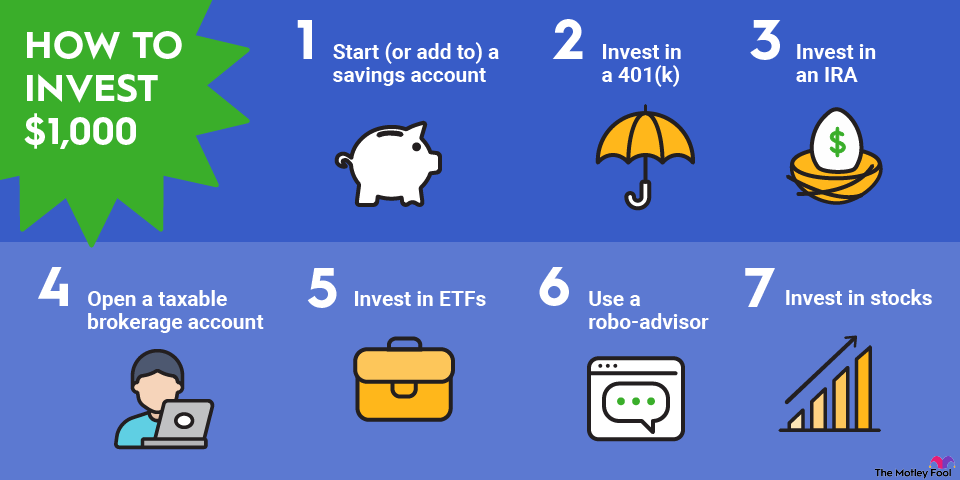
The goal of a savings account is to make sure an unexpected car repair or medical bill doesn't derail everything else. Even the best savings rates rarely beat the stock market over time, but that's not the point. A savings or money market account keeps emergency money accessible and stable. Aim to have at least three to six months of expenses set aside, and more if you're a homeowner or have dependents.
Certificates of deposit (CDs) and Series I savings bonds can also supplement a rainy-day fund with slightly higher interest rates. However, the tradeoff is that they're harder to access quickly if you need the money in a pinch.
2. Invest in a 401(k)
If your employer offers a matching contribution to your 401(k) or similar retirement plan, contributing enough to capture the full match should be your next priority. It's essentially free money on top of your salary.
The mechanics are simple. If your employer offers a 3% match, they'll contribute $3 for every $100 you earn, up to that limit. If you contribute only 2%, you get only a 2% match. Contributions are generally pretax, which also lowers your taxable income for the year.
Beyond the match, contribution limits for 2026 allow for $24,500 in total employee contributions, up from $23,500 in 2025, with additional catch-up contributions available if you're 50 or older. If you have $1,000 to invest, check with your HR department about directing some or all of it toward your retirement plan.
3. Invest in an IRA (including Roth)
If you don't have access to a workplace retirement plan, or you've already maxed out your 401(k) match and want to do more, an IRA is a powerful next step. There are two main types.
A traditional IRA may allow you to deduct contributions from your taxable income now, with earnings growing tax-deferred until withdrawal. A Roth IRA is funded with after-tax dollars, but your earnings grow tax-free, and qualified withdrawals in retirement are completely untaxed. Roth contributions can also be withdrawn at any time without penalty, which adds flexibility.
For 2026, IRA contribution limits are $7,500 per year, with an additional catch-up contribution available if you're 50 or older. Roth IRAs have income limits, so check whether you're eligible before contributing. Not sure where to open one? Motley Fool Money has reviewed and ranked the best IRA accounts available today, so you can find the right fit and start putting your money to work.