Cloud computing stocks offer exposure to companies that provide internet-based computing services, infrastructure, platforms, or software. These companies enable businesses and individuals to store, process, and access data and applications remotely rather than on local servers or personal computers.
Cloud Computing
Although cloud computing boomed during the 2010s, this next-gen IT industry is still in the early innings. For years, organizations around the globe have been migrating their operations to the cloud -- digital data and services stored within a remote data center and accessed via the internet.
However, the rise of remote work during the COVID-19 pandemic accelerated the trend. Now, generative artificial intelligence (AI) has kicked off the next wave of cloud expansion.

Business research provider Grand View Research projects that spending on global cloud computing (including data center infrastructure and edge computing) will increase at a 21.2% compound annual growth rate (CAGR) from an estimated $752.4 billion in 2024 to $2.4 trillion in 2030.
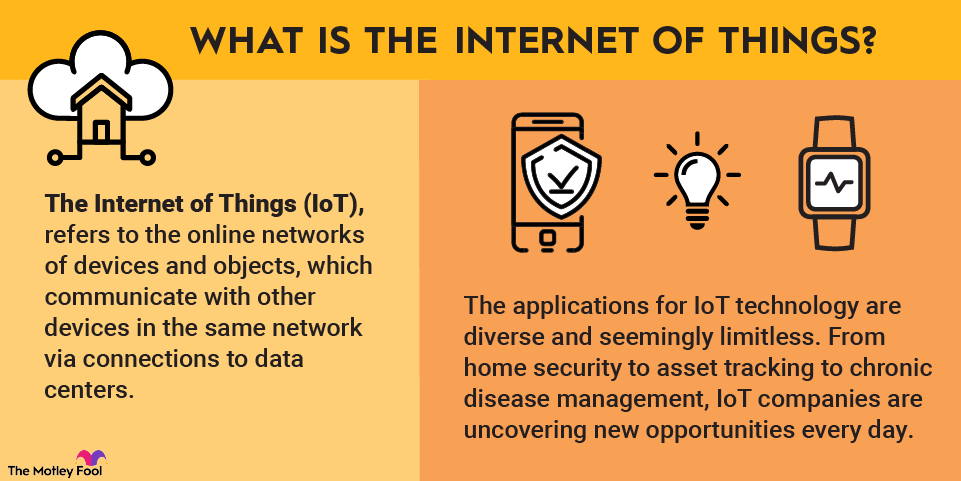
Cloud computing is also closely tied to other tech developments such as mobile 5G networks, the Internet of Things (IoT), and artificial intelligence (AI). Clearly, cloud computing stocks are a top investment theme for 2025 and the decade to follow.
Artificial Intelligence
Investing in the best cloud computing stocks of 2026
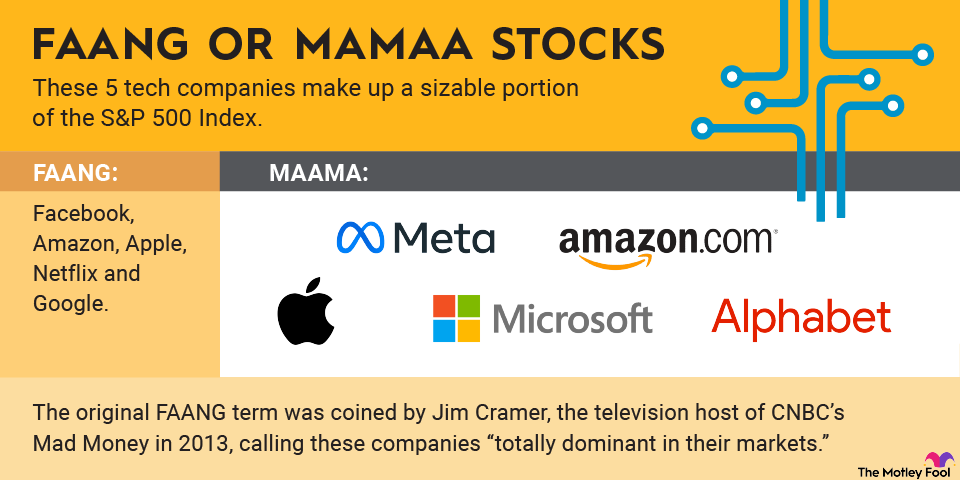
To get started, the best cloud stocks to invest in are the five largest public cloud giants:
- Amazon (AMZN +0.50%) Web Services (AWS)
- Microsoft (MSFT +0.24%) Azure
- Alphabet's (GOOGL +1.02%) (GOOG +1.05%) Google Cloud
- Oracle (ORCL +4.95%) Cloud
- IBM (IBM +0.50%) Cloud
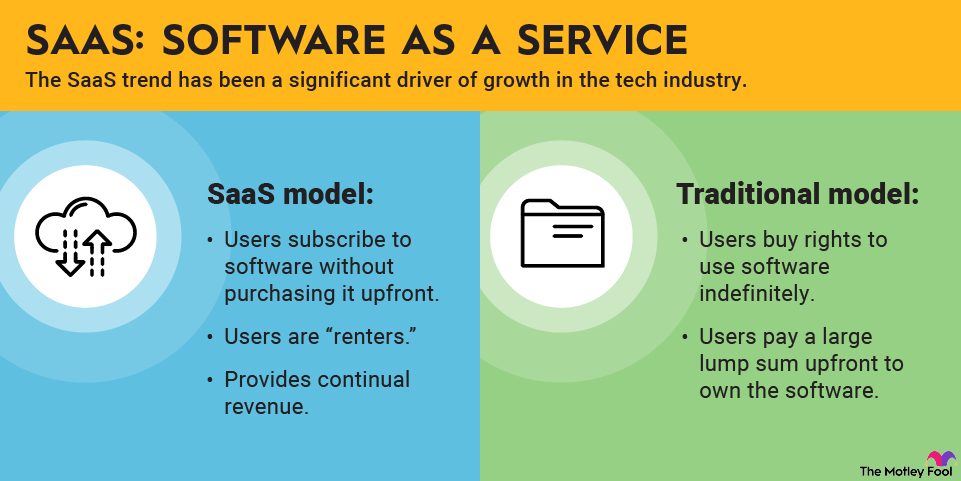
Although these companies aren't pure plays in the cloud industry, all five provide infrastructure and services for organizations undertaking a digital transformation (a phrase that encompasses the migration to cloud-based operations). They have the most complete ecosystems of software and partnerships with third-party software-as-a-service (SaaS) providers.
Beyond those big five, here are seven more focused companies that provide portfolio exposure to the development of the cloud:
| Name and ticker | Market cap | Dividend yield | Industry |
|---|---|---|---|
| Salesforce (NYSE:CRM) | $243.6 billion | 0.64% | Software |
| Adobe (NASDAQ:ADBE) | $139.8 billion | 0.00% | Software |
| Snowflake (NYSE:SNOW) | $75.0 billion | 0.00% | IT Services |
| Zoom Communications (NASDAQ:ZM) | $25.2 billion | 0.00% | Software |
| ServiceNow (NYSE:NOW) | $147.2 billion | 0.00% | Software |
| The Trade Desk (NASDAQ:TTD) | $18.0 billion | 0.00% | Media |
| DigitalOcean (NYSE:DOCN) | $4.9 billion | 0.00% | IT Services |
1. Salesforce
When talking about cloud computing, Salesforce (CRM -0.23%) needs to be part of the conversation. The customer relationship management (CRM) specialist was a pioneer of software that used cloud technology, which started in the late 1990s. Salesforce has since branched out to other areas of enterprise software via organic growth and a steady stream of acquisitions.

NYSE: CRM
Key Data Points

NASDAQ: ADBE
Key Data Points

NYSE: SNOW
Key Data Points

NASDAQ: ZM
Key Data Points

NYSE: NOW
Key Data Points
ServiceNow helps about 8,400 companies around the world find chokepoints in their digital customer experiences, employee workflow management, or software development operations. Once these pain points are found, ServiceNow can help suggest and automate fixes.
In a new era of AI, ServiceNow could be a big winner, building on its recent success. After growing subscription revenue by 23% from fiscal 2023 to fiscal 2024, ServiceNow forecasted a year-over-year increase in subscription revenue of about 20% for fiscal 2025 when the company reported its third-quarter 2025 financial results.

NASDAQ: TTD
Key Data Points

NYSE: DOCN
Key Data Points

Types of cloud computing
Just as a variety of clouds drift over our heads, various sorts of clouds exist in the world of computing. A public cloud, for example, exists when third-party providers provide cloud computing services over the public internet, making them available to anyone who wants to use or purchase them.
On the other hand, a private cloud is a cloud infrastructure operated solely for a single organization. Private clouds may be managed internally or by a third party, and they may be hosted either on-premises or externally. A hybrid cloud infrastructure provides a unified, interconnected system in which data and applications can move between environments.
Cloud computing is a long-term growth trend
Cloud computing picked up steam during the COVID-19 pandemic and has remained an enduring growth story throughout the ensuing years for the following reasons:
- More efficient than legacy IT, it enhances technology such as AI, machine learning, and gaming.
- Organizations and their employees gain more flexibility with important functions such as remote work.
- Adopting cloud computing solutions is more cost-effective than developing more expensive hardware.
- It provides more sophisticated safety measures, helping users to protect their data against cyberattacks.
As is the case with all high-growth stocks, though, investing in cloud companies will have bumps in the road. Investors should stay focused on the long-term potential, not just stock price performance over the course of a year or two.
Related investing topics
How to invest in cloud computing stocks
If you think you're ready to start investing in adtech stocks, there are a few basic steps you must take.
- Open your brokerage app: Log in to your brokerage account where you handle your investments.
- Search for the stock: Enter the ticker or company name into the search bar to bring up the stock's trading page.
- Decide how many shares to buy: Consider your investment goals and how much of your portfolio you want to allocate to this stock.
- Select order type: Choose between a market order to buy at the current price or a limit order to specify the maximum price you're willing to pay.
- Submit your order: Confirm the details and submit your buy order.
- Review your purchase: Check your portfolio to ensure your order was filled as expected and adjust your investment strategy accordingly.