About the Author
The Motley Fool has a disclosure policy.
Invest better with The Motley Fool. Get stock recommendations, portfolio guidance, and more from The Motley Fool's premium services.

Stock investing means putting your money to work in publicly traded companies. By buying a stock, you get a slice of ownership and a share of its future profits.
According to The Motley Fool's research on stock ownership in America, about 62% of U.S. adults, roughly 167 million people, already own stock, most through mutual funds, index funds, or retirement accounts like a 401(k). But ownership is far from equally distributed. The wealthiest 1% hold 50% of all stocks, while the bottom 50% own just 1%.
That gap is one reason getting started matters. The stock market has historically returned around 10% per year, and for the 38% of Americans who don't yet own stocks, that's a significant wealth-building opportunity being left on the table.
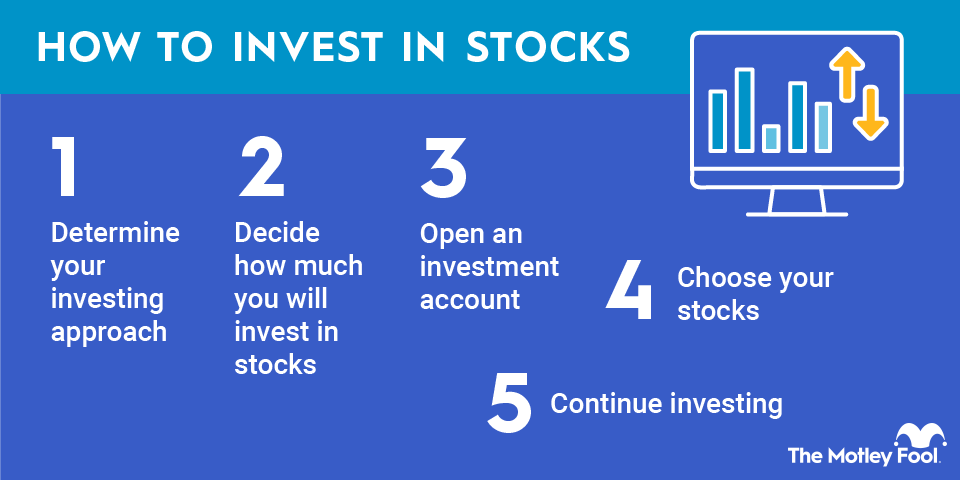
When done correctly, investing in stocks is one of the most effective ways to build long-term wealth. Here's a step-by-step guide to doing it right.
The first thing to consider is whether you want to manage your own investments or hand that job to someone else. The honest answer is that both approaches can work well, and the right choice depends on your personality, available time, and interest level.
If you enjoy researching companies, following business news, and making your own decisions about where to put your money, then managing your own stock portfolio is likely a good fit. Self-directed investing puts you fully in control. You choose which stocks to buy, when to buy them, and when to sell.
This approach does require a meaningful time commitment. You'll need to evaluate companies on an ongoing basis, stay current with earnings reports, and periodically review your portfolio to ensure it still reflects your goals. If that sounds appealing rather than burdensome, you're probably well-suited for the do-it-yourself path.
If you'd rather not spend time researching individual companies, a robo-advisor may be a better fit. A robo-advisor is an automated investing platform that builds and manages a portfolio of index funds on your behalf, based on your age, risk tolerance, and investing goals. Many will also optimize for tax efficiency and automatically rebalance your portfolio over time.
Robo-advisors have exploded in popularity in recent years because they make investing accessible without requiring deep financial knowledge. You contribute money regularly, and the platform handles the rest. The trade-off is that you give up control over individual investment decisions, and your returns will generally mirror the broader market rather than outperform it.
Neither approach is inherently better. The best one is whichever you'll actually stick with over the long term.
First, let's talk about the money you shouldn't invest in stocks. In simple terms, the stock market is no place for money you might need within the next five years, at a minimum. Money you need to pay your kids' tuition or pay day-to-day expenses in retirement should be kept in less-volatile investment vehicles.
The stock market is likely to rise over the long term. However, there's simply too much short-term uncertainty in stock prices. Historically, the stock market declines in roughly one out of every three years. In fact, a 20% drawdown in any given year isn't unusual, and occasional drops of 40% or more do occur. Stock market volatility is normal and should be expected. So, here's what money you shouldn't be investing:
How you allocate your investable money is called asset allocation. Several factors come into play here, including your age, risk tolerance, and investment objectives.
The general idea is that as you get older, stocks become a less desirable place to keep your money. If you're young, you have decades ahead of you to ride out any ups and downs in the stock market. That's not the case if you're retired and relying on your investments for income.
A quick guideline, the Rule of 110, can help you establish a ballpark asset allocation. Simply subtract your age from 110. The result is the approximate percentage of your investable money that should be in stocks. The remainder should be in fixed-income investments, such as bonds or high-yield certificates of deposit (CDs).
For example, if you are 40 years old, this rule suggests allocating 70% of your investable money to stocks and 30% to fixed-income investments.
To buy stocks, you'll need a brokerage account. But you're in luck -- Motley Fool Money's actually done the hard part for you already and reviewed dozens of accounts to help you find the right one.
Opening a brokerage account is typically quick and painless, taking only minutes. Most will allow you to invest with play money first to make sure the platform is a good fit for you. You can fund your account via electronic transfer, check, or wire. Before choosing a broker, consider the following:
First, determine the type of brokerage account you need. For most people who are just trying to learn stock market investing, this means choosing between a standard brokerage account and an individual retirement account (IRA).
Both account types will allow you to buy stocks, mutual funds, and ETFs. The primary considerations here are why you're investing in stocks and how easily you want to access your money. If you want easy access to your money or are just investing for a rainy day, you'll probably want a standard brokerage account.
On the other hand, if your goal is to build up a retirement nest egg, an IRA is a great way to go. These accounts come in two main varieties -- traditional and Roth IRAs --, and there are some specialized types of IRAs for self-employed people and small business owners, including the SEP-IRA and SIMPLE IRA.
A key point is that IRAs are highly tax-advantaged vehicles for purchasing stocks. However, the downside is that it can be difficult to withdraw your money before a certain age.
There are also specific qualifications for investing in IRAs and taking the tax benefits, such as Roth IRA income limits, so be sure to meet the requirements before investing. One potentially appealing feature of Roth IRAs is the ability to withdraw your contributions (but not your investment profits) at any time and for any reason.
Most online stockbrokers have eliminated trading commissions for standard stock trades, so most are on a level playing field when it comes to costs, unless you're trading options or cryptocurrencies, which often still carry fees. Beyond cost, consider the educational tools on offer, access to investment research, the availability of physical branches if you prefer in-person guidance, and the usability of the trading platform itself. Many brokers let you try a demo version before committing any money, which is certainly worth doing.
Once your account is open, it's time to start choosing what stocks to buy. Here are the most important concepts to master before you get started:
Diversification means owning a variety of companies, though too much diversification can dilute your returns. Stick with businesses you understand, and if you find you're comfortable evaluating a particular type of stock, there's nothing wrong with one industry making up a meaningful portion of your portfolio.
If you want to buy individual stocks, familiarize yourself with basic methods for evaluating them. Learning the fundamentals of value investing is a great starting point, as it helps you identify stocks trading at attractive valuations.
There are different types of orders for stock purchases. For our purposes, there are two types of orders you should know about.
For example, let's say a stock is currently trading for $20.50 per share. You want to buy it only when the price is less than $20, so you place a limit order. Your broker then buys shares on your behalf only if the stock's price dips below $20.
To place a stock order, go to the appropriate section of your online broker's platform and enter the required information. You will enter the company name or stock ticker, and whether you want to buy or sell shares (the exact process varies slightly). You'll also enter either the dollar amount you want to spend or the number of shares you want to buy.
After you tap the button to place your order, your stock purchase should be executed in seconds (if you've made a market order).
Here's one of the biggest secrets of investing, courtesy of Warren Buffett: you don't need to do extraordinary things to achieve extraordinary results.
The most reliable way to make money in the stock market is to buy shares of great businesses at reasonable prices and hold them for as long as those businesses remain great. If you do this, you'll experience some volatility along the way. But over time, you'll most likely enjoy excellent investment returns.
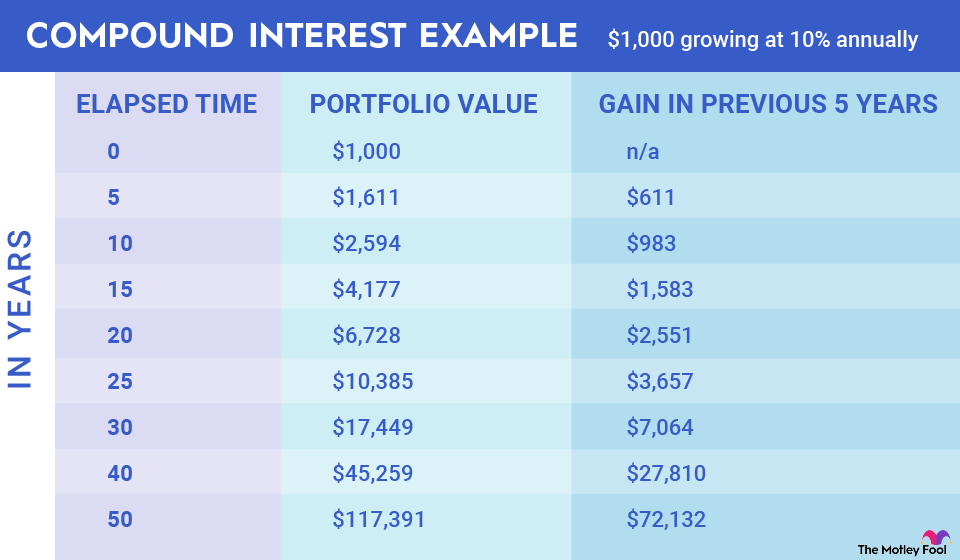
Over several decades, major stock market averages have consistently produced returns of between 9% and 10% annually. Based on an expected 10% long-term rate of return, if you invest $5,000 in stocks every year for 30 years, you would have a nest egg worth more than $900,000. Other benefits include:
The primary risks are associated with short-term volatility. Swings of 10% are relatively common, occurring roughly once a year, and declines of 20% or more are rarer but do happen. When investing in individual companies, you can also lose money due to competitors taking market share, interest rate changes, political headwinds, inflation, geopolitical tensions, or negative news about a specific business.
There are many potential mistakes new stock investors can make, and here are some of the most common. Avoiding these can save you a lot of money and aggravation as you build your investment portfolio:
To be clear, different strategies work for different investors, and there are too many potential stock investing strategies to list them all here. But in addition to the general strategy of buy-and-hold, which is the best way to create long-term wealth, here are some that are pretty universal:
When you're just getting started, avoid putting too much of your money into a single company or industry. As a general rule, aim for a portfolio of 25-50 stocks across a variety of industries. This doesn't mean you need to own stocks from every sector. If you aren't comfortable evaluating pharmaceutical stocks, for example, it's fine to avoid them. The point is simply that you don't want the bulk of your money concentrated in any single type of business.