How to invest in Beta Technologies
If you're ready to take flight with Beta Technologies, there are only a few simple steps to take to become a shareholder:
- Open your brokerage app: Log in to your brokerage account where you handle your investments. If you don't have one yet, take a look at our favorite brokers and trading platforms to find the right one for you.
- Search for Beta Technologies: Enter the ticker "BETA" into the search bar to bring up the stock's trading page.
- Decide how many shares to buy: Consider your investment goals and how much of your portfolio you want to allocate to this stock.
- Select order type: Choose between a market order to buy at the current price or a limit order to specify the maximum price you're willing to pay.
- Submit your order: Confirm the details and submit your buy order.
- Review your purchase: Check your portfolio to ensure your order was filled as expected and adjust your investment strategy accordingly.
Should you invest in Beta Technologies?
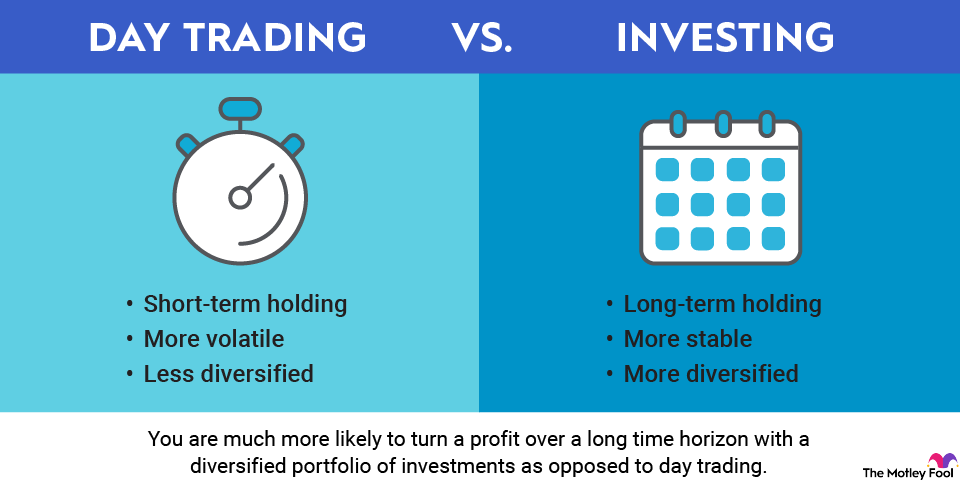
Because IPO stocks offer unique investment opportunities that represent the potential for considerable returns, Beta stock will certainly appeal to growth investors. Investing in the burgeoning industry can help diversify your portfolio, as well as offer the potential for high returns since the eVTOL industry is still in its nascent phase of development.
As to be expected, though, Beta stock has demonstrated some volatility in its short time as a public company. In the month following its IPO, shares sank 17%.
For those who are wary of speculative investments and have a lower tolerances for risk, Beta will be a stock better watched from the sidelines. Similarly, since Beta stock doesn't pay a dividend, investors interested in receiving passive income will want to look elsewhere.

NYSE: BETA
Key Data Points
Is Beta Technologies profitable?
With the September 2025 submission of Beta's S-1 filing, investors have gained greater insight into the company's financial situation. While the company is generating sales -- revenue of $15.4 million and $15.1 million in 2023 and 2024, respectively -- it continues to incur net losses. After reporting a net loss of $201.9 million in 2023, Beta posted a net loss of $306.3 million in 2024.
Though it generates revenue from sales of ground equipment and charging services, Beta's business model is dedicated to the eventual selling of its eVTOL aircraft to generate revenue, which will, in turn, lead to revenue from services related to the aircraft's upkeep. In its S-1, for example, the company claims that "servicing batteries, charging, maintenance, and parts, [create] a compelling opportunity for long-term profitability."
Does Beta Technologies pay a dividend?
As of December 2025, Beta Technologies had not paid a dividend, and it's unlikely that the company will start returning capital to shareholders in the form of dividends anytime soon. In its S-1, the company states plainly that it "anticipate[s] that all of our earnings in the foreseeable future will be used for working capital, to support our operations and to finance the growth and development of our business."
How to invest in Beta Technologies through ETFs
Because its time on public markets is extremely limited, the opportunity to gain exposure to Beta stock through an exchange-traded fund (ETF) is also limited. However, there are other ETF options for investors to consider, such as those that provide weighted exposure to aerospace stocks.
SPDR S&P Aerospace & Defense ETF
Investors seeking a conservative approach to aerospace and defense industry exposure will find the SPDR S&P Aerospace & Defense ETF (XAR +1.12%) a great choice. With $4.6 billion in assets under management, the fund's 39 holdings provide exposure to various niches of the aerospace industry.
Specialty materials manufacturer ATI (ATI -0.83%) and space stock Rocket Lab (RKLB +6.03%) are the two largest positions, while defense stalwart and drone manufacturer Kratos Defense & Security (KTOS +4.90%) is also found among the top 10 largest positions. The ETF has a gross expense ratio of 0.35%.
U.S. Global Jets ETF
Investors interested in concentrated exposure to airline stocks might want to consider piloting the U.S. Global Jets ETF (JETS -0.14%) into their portfolio. The fund includes the world's leading airlines.
It also provides indirect exposure to eVTOL leaders Archer and Joby Aviation (JOBY +0.85%) due to the inclusion of United Airlines (UAL -2.18%) (a 10% weighting) and Delta Air Lines (DAL -1.28%) (an 11.4% weighting). The U.S. Global Jets ETF has $824 million in net assets and an expense ratio of 0.60%.
The bottom line
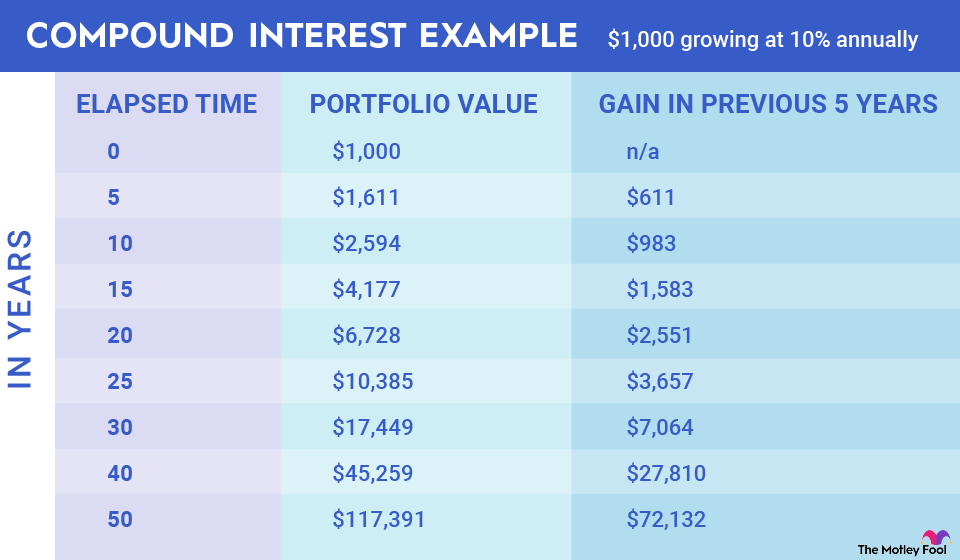
According to Grand View Research, the global eVTOL market was valued at $1.4 billion in 2023, and it's expected to rise at a 55% compound annual growth rate to $28.6 billion in 2030. So, it's not surprising that investors are paying close attention to aerospace companies like Beta.
At this time, however, only investors with high risk tolerances should consider soaring into the wild blue yonder with Beta. If the stock is on your radar, though, confirming that it's making progress in achieving FAA certifications and working through its backlog may suggest Beta shares are worth purchasing.
Related investing topics
FAQ
About the Author